
Concrete slab repair comes before a coating when cracks, offset edges, or a weak surface would be locked under the finish. A hairline line that has not changed is a different job from a crack that is widening or sitting at two heights. Measure what you can, photograph the rest, and get the slab assessed before you pick a color.
Book a free in-home estimate for your slab
What should you check before concrete slab repair?
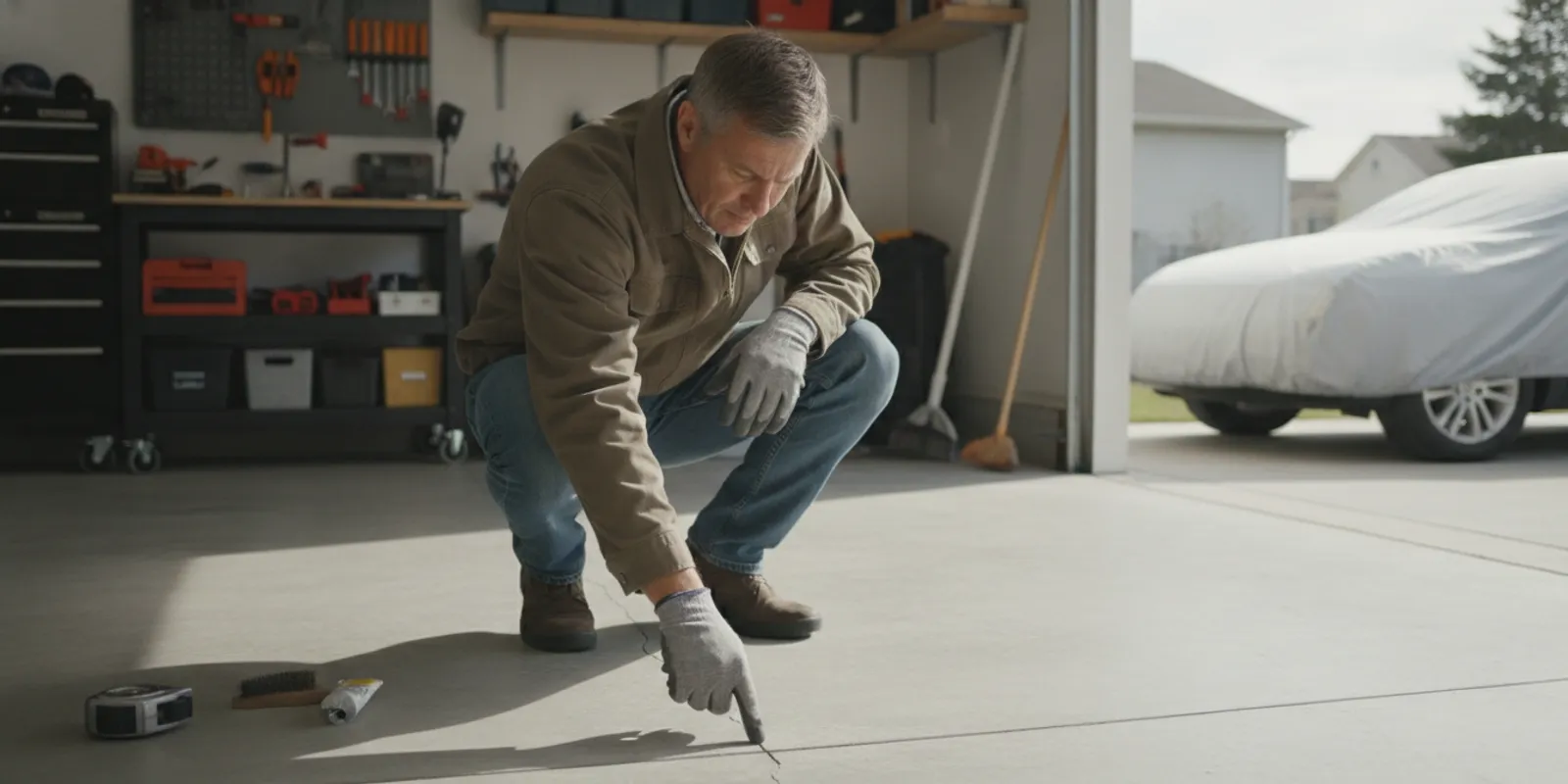
Clear enough of the garage to see the full slab, including the edges by the door and walls. Good light matters. A crack under a cabinet is easy to miss until the coating crew has to stop.
- Cracks: Note direction, approximate width, and whether they branch or form a map pattern.
- Offset: Feel for one side of a crack sitting higher than the other, or a section that rocks underfoot.
- Surface sound: Look for flaking, scaling, pitting, or a powdery film you can rub off.
- Contamination: Mark oil, paint, adhesive, and old sealer. Coatings fail where the surface is dirty.
- Water: Record damp spots, puddles after rain, and white mineral deposits.
Write the date next to each note. A one-time photo cannot show whether a crack is moving. ACI’s field guide to epoxy injection says to assess and correct the cause before the repair. A crack that will keep moving is a poor candidate for a rigid epoxy fill.
Which crack signs change the repair plan?
Width is a clue, not a diagnosis. ACI’s field guide says epoxy injection can be used on cracks about 0.002 inch (0.05 mm) and wider, but only after the cause is understood. For cracks about 0.010 inch (0.3 mm) or smaller, it calls for a low-viscosity epoxy. Wider cracks may need a thicker material. If the crack will move again, the same guide says a rigid epoxy repair will not hold.
| What you see | A practical reading | What to do next |
|---|---|---|
| Stable crack about 0.010 inch or smaller. No offset. | In the range where a low-viscosity epoxy is discussed, if the crack will not move. | Record it. Ask if ordinary prep can fill it before coating. |
| Clean crack about 0.002 inch or wider. Dry. Not growing. | ACI treats this as a possible injection candidate only after the cause is corrected. | Do not fill it yourself. Ask which repair matches the finish. |
| Damp crack that cannot be dried. | A standard epoxy may not bond. ACI says to consider a moisture-tolerant product. | Find the water source before any coating conversation. |
| Widening crack, vertical offset, or a rocking section. | The crack is still moving. A rigid fill is the wrong tool. | Pause cosmetic work. Get a qualified assessment. |
Those figures describe structural crack injection, not a garage-floor warranty. The guide also says cracks caused by corroding steel should not be injected, because the steel will crack the concrete again. Drying shrinkage is one of the common causes it lists, and a coating does not correct it. A floor finish is not a substitute for that diagnosis.
Offset is the detail most homeowners skip. Run a straightedge across the crack. If one side is higher, the slab has moved. Covering that lip with a floor finish does not put the concrete back in plane. Spalling and a hollow sound under a light tap mean the surface layer is loose. Treat defects and contamination as items to find before coating, not after.
How do repair, resurfacing, and a coating differ?
Repair fixes a defined defect. Resurfacing renews a worn but sound surface. A coating is the finished layer on concrete that has already been prepared. Garage Kings does all three as part of floor work: grinding, crack and surface repair, then an epoxy or polyaspartic system. The concrete resurfacing service is the restoration path. The garage floor coatings page is the finished-floor path. The concrete resurfacing guide explains when an overlay fits a sound slab.
| Step | What it is for | What it does not do |
|---|---|---|
| Localized repair | A crack, chip, or spall that is stable enough to patch. | It does not stop an active crack. It does not level a settled bay. |
| Resurfacing | Broader wear on concrete that can still support an overlay. | It is not a fix for a slab that is breaking up or moving. |
| Floor coating | A protective, cleanable finish after prep and any needed repair. | It does not diagnose moisture. It does not rebuild the slab. |
| Further evaluation | Ongoing movement, large offset, or water that keeps returning. | A coating quote is the wrong first step. |
If you are choosing a finish after the slab checks out, the epoxy floor features guide and the epoxy versus polyaspartic cost breakdown compare products. They do not replace the inspection above. A concrete sealer is a lighter treatment again, and it still needs a sound surface.
When should moisture stop a coating plan?
A slab can look dry at noon and still feed vapor into a coating. Note when the floor darkens: after rain, after a car pulls in wet, or along the wall that faces the yard. White powder and a musty smell are worth writing down. So is a previous coating that peeled in sheets, which often points back to moisture or a poorly prepared surface.
ACI’s injection guide is direct about water. If the crack is damp and cannot be dried, it says to consider an epoxy that tolerates moisture, not to pretend the slab is dry. If the crack will move again, it says to correct that condition before injection. A coating over a wet, moving crack skips both steps.
Tell the installer every wet spot, even if the floor is dry on estimate day. Garage Kings floor work can include a moisture-control step in the coating system, but only after someone has seen the slab. Do not assume a topcoat will solve a drainage problem outside the garage door.
What can you measure in an afternoon?
You do not need lab gear to make the visit useful. A tape, a straightedge, and a pencil will sort most garage slabs into “prep and coat” versus “stop and assess.”
- Width: Compare the crack with a card or the tip of a tape as a simple visual check. If a credit card edge drops in, the crack is wider than a hairline and belongs in the notes as its own item.
- Length and pattern: A single line from a control joint is different from cracks that spider across a bay. Map patterns often mean the surface is wearing, not that the slab has split.
- Offset: Lay a level or a yardstick across the crack. Any daylight under the straightedge, or a lip you can catch with a shoe, means one side has moved.
- Hollow spots: Tap with a screwdriver handle. A dull thud next to a solid click marks loose concrete. Circle those spots with chalk so they show up in photos.
- Change: Mark the crack ends with a pencil date and check again periodically. Growth or a new offset is the reason to pause a coating.
None of this replaces a structural opinion if the garage door no longer sits square, the slab drops toward one corner, or a crack keeps opening. It does stop you from buying a finish for a floor you have not looked at.
How does Garage Kings sequence slab work?
On a typical floor project, the crew grinds the concrete, repairs cracks and damaged spots that are stable, then builds the coating. Resurfacing follows the same idea when the wear is broad but the slab can still hold an overlay. The live concrete resurfacing service describes that path: evaluation, grinding and cleaning, crack and damage repair, then a high-performance epoxy or polyaspartic surface.
Garage floor systems on the site are sold as multi-coat installs, including options with a moisture barrier and an anti-slip topcoat. Warranties on those systems run from 10 years to lifetime, depending on the system. That warranty covers the installed finish. It is not a promise that an active crack or a wet slab was ignored. If grinding finds hollow concrete or a crack that is still moving, the honest next step is to stop and re-scope, not to coat over it.
Timing on sound concrete is often one to three days, faster when the slab only needs cleaning and a coating. A slab with offset, widespread scaling, or recurring water takes longer because the repair has to be chosen first. Ask which of those conditions the estimate assumes.
How should you prepare for the estimate?
A short record makes two proposals comparable. Take photos with a coin or tape in the frame. Sketch the garage and mark crack locations. Note anything already patched, and the product name if you still have it.
- Clear a path to the cracks, the garage-door edge, and any area that stays damp.
- Photograph offset, stains, and old patches before you move storage back.
- List heavy or fixed items the crew cannot slide, such as a bolted cabinet.
- Say how you use the floor: parking, a workbench, storage, or all three.
- Ask which defects are included, which are excluded, and what would change the scope.
Plan vehicle and storage parking before install day, but do not treat access as a separate project decision. The condition of the concrete decides the sequence: evaluation, preparation, any agreed repair or resurfacing, then the coating. Browse Garage Kings project photos for finished floors, and the garage makeover planning guide if the floor is one piece of a larger job.
What should you compare in the written scope?
Two estimates can both say “repair and coat” and describe different work. Compare tasks.
| Line item | Ask this | Why it matters |
|---|---|---|
| Observed condition | Which cracks, offsets, and stains are in the notes? | Both proposals should describe the same floor. |
| Preparation | Will the surface be ground? How is oil or old sealer handled? | Adhesion depends on this step. |
| Repair scope | Which cracks are filled? Which are left or referred out? | You should not pay for a coating that assumes a repair you did not buy. |
| Moisture | What happens if the slab is wetter than it looked today? | This sets a pause point before materials go down. |
| Changes | How are extra repairs priced if grinding uncovers hollow concrete? | This avoids a surprise change order with no process. |
Skip a store-bought filler the weekend before the visit. It hides the crack edges and can block the repair material the installer would have used. If you already filled something, say so. Price follows condition, system, and square footage, so a generic per-foot figure will not tell you what this slab needs. The services overview shows how flooring sits next to storage and garage-door work if you are planning more than the floor.
Use the visit to pin down sequence, not just color. A useful proposal names the prep, the repairs included, and the point at which movement or moisture would stop the job. Ongoing care after a coating is a separate topic; the garage floor care guide covers that once the slab is actually finished.
Schedule a free estimate before you coat
Frequently Asked Questions
Can a floor coating hide cracks?
It can hide a stable, filled crack. It cannot hold a moving crack still or level an offset edge. Have the slab checked, then decide whether a fill is part of prep.
Does a hairline crack need major concrete slab repair?
Not by itself. A stable crack around 0.010 inch or smaller, with no offset, is often surface shrinkage. Watch it for a few weeks. If the line widens or one side rises, stop and get an assessment.
Should I coat a garage slab that gets wet?
Not until you know why it gets wet. ACI says a damp crack that cannot be dried needs a moisture-tolerant approach, and a crack that will keep moving should be corrected before any rigid repair.
What should I bring to a Garage Kings estimate?
Photos with a scale, a sketch of crack locations, notes on whether anything has changed, and a list of old patches or coatings. Say how you use the garage.
Match the repair to the slab you have
Measure the cracks, check for offset, and write down where water shows up. Then ask for a scope that separates repair, resurfacing, and the coating. That is the decision concrete slab repair is actually about.