
Concrete sealer can help protect a driveway, patio, or walkway, but a garage floor has a tougher job. Hot tires, oil, dropped tools, moisture, and daily traffic can expose the limits of a basic sealer. The right choice depends on the condition of the slab, how you use the garage, and whether you want light protection or a durable finished surface.
Talk with Garage Kings about the right concrete floor solution for your garage.
What Is Concrete Sealer?
Concrete sealer is a protective product applied to a cured concrete surface. It can reduce water absorption, help resist stains, limit surface dust, or change the appearance of the slab, depending on its chemistry and finish. A sealer is not a universal fix: it cannot replace crack repair, correct a poorly prepared surface, or make every garage floor ready for heavy use.
People use the term concrete sealer broadly. Some products soak into the pores of concrete, while others form a film on top. Some are intended for exterior decorative concrete, and others are formulated for interior floors. Read the product label carefully, because a product suitable for a patio may not be suitable for a garage floor exposed to hot tires and chemical spills.
How Does Concrete Sealer Work?
Penetrating sealers enter the pores of the slab and change how water or other liquids move through the concrete. Film-forming sealers create a layer on the surface. That layer may add sheen and provide a barrier against stains, but it also has to bond well and tolerate the movement, abrasion, and moisture conditions of the floor.
In both cases, the concrete must be clean, sound, and dry enough for the selected product. Oil residue, dust, old coatings, moisture vapor, cracks, and surface contamination can interfere with adhesion. Product instructions are the final authority for application conditions, coverage, cure time, and safety equipment.
What Are The Main Types Of Concrete Sealer?
The main types of concrete sealer differ in where they work, what they protect against, and how they change the surface. Penetrating sealers preserve more of the concrete’s original appearance, while film-forming products create a visible surface layer. A garage floor coating goes further by building a designed flooring system over prepared concrete.
| Type | How It Works | Common Fit | Key Limitation |
|---|---|---|---|
| Penetrating sealer | Soaks into the concrete pores | Driveways, walkways, and some outdoor slabs | Does not create a thick wear surface |
| Acrylic or similar film-forming sealer | Leaves a thin protective film | Decorative or lightly used concrete | May need maintenance as the film wears |
| Epoxy or urethane system | Builds a harder film over prepared concrete | Interior areas with greater wear demands | Requires careful preparation and product matching |
| Polyaspartic floor coating | Forms part of a professional multi-coat flooring system | Garages and other demanding concrete floors | Needs professional evaluation and installation for the intended system |
Penetrating Sealers
Penetrating sealers are often chosen when the goal is to help limit water absorption without covering the concrete with a thick visible film. They can be useful for suitable exterior surfaces, especially when preserving the slab’s natural appearance matters. They are not designed to turn a rough, stained, cracked garage slab into a finished floor.
Film-Forming Sealers
Film-forming sealers sit on the surface and can provide a different look, from low sheen to a more noticeable finish. Because the film is exposed to abrasion, sunlight, moisture, and traffic, the product must match the surface and the environment. A failed film can peel, haze, or wear unevenly when preparation or application is inadequate.
Epoxy, Urethane, And Polyaspartic Systems
Epoxy, urethane, and polyaspartic products are often discussed alongside concrete sealers, but a professional garage floor coating is more than a single sealer application. It is a system that may include concrete preparation, repairs, a base coat, decorative flakes, and one or more protective top coats. The system should be selected around the garage’s use and the slab’s condition.
Is Concrete Sealer Right For A Garage Floor?
A basic concrete sealer can be appropriate for a garage that receives light use and mainly needs modest dust or moisture control. It may not be the right answer for a garage used for parking, projects, storage, or frequent maintenance. In those conditions, a purpose-built floor coating can provide a more durable, easier-to-clean finished surface.
Garage Kings’ garage floor coating service is designed around professional preparation and multi-coat flooring options. The live service page describes resistance to stains, chemicals, and moisture, as well as slip-resistant and easy-maintenance benefits. Those are system-level goals, not promises that every sealer or every concrete slab will perform the same way.
When A Sealer May Be Enough
- The garage is lightly used and does not see frequent vehicle traffic.
- The slab is in sound condition without significant cracking, spalling, or oil contamination.
- You want limited protection while preserving the natural concrete appearance.
- You understand that surface maintenance and future reapplication may be part of ownership.
- The product label specifically approves the intended garage conditions.
When A Floor Coating Is The Better Fit
- The floor needs to handle hot tires, oil, cleaning chemicals, and dropped tools.
- The slab has stains, pitting, cracks, or an old coating that needs professional evaluation.
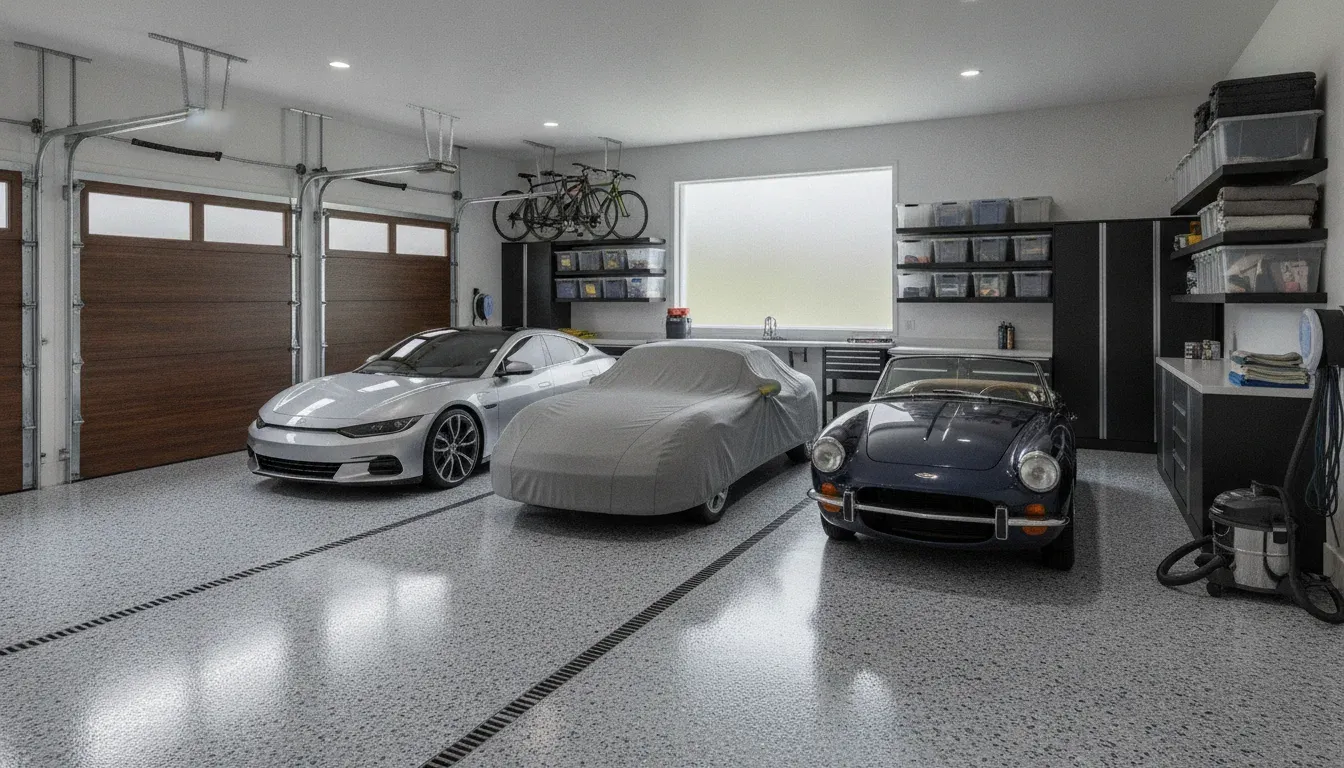
- You want a finished floor with decorative flakes, a more consistent appearance, and easier cleaning.
- You would rather address preparation, repairs, and coating selection as one coordinated project.
- The garage is part of a larger home transformation and needs to look finished, not merely sealed.

What Should You Check Before Sealing Concrete?
Before applying any concrete sealer, inspect the slab instead of treating the product as a shortcut. Surface condition, moisture, contaminants, prior coatings, temperature, and intended use all affect the result. A product can be technically well made and still fail when the concrete is not compatible or the preparation is incomplete.
Surface Condition
Look for cracks, loose concrete, pitting, spalling, dusting, and uneven areas. A sealer may follow the existing surface rather than correct it. If the slab has damage, repairs and preparation should be part of the plan before the protective finish is selected.
Oil And Chemical Contamination
Oil, grease, tire residue, and household chemicals can prevent adhesion. Cleaning is not always enough if contaminants have penetrated the slab. A professional evaluation can help determine whether the surface needs mechanical preparation, repair, or a different flooring approach.
Moisture And Vapor
Moisture can move through concrete from below or enter from the surrounding environment. Trapped moisture can contribute to clouding, bubbling, peeling, or other coating problems. The correct test and mitigation approach depends on the slab and product system, so do not assume that a dry-looking surface is automatically ready.
Existing Paint Or Coating
Old paint, sealer, epoxy, or another coating can become the weak layer under a new application. A new product may not bond reliably to it. Removing or mechanically preparing the existing material may be necessary, and the product manufacturer may specify limits on what can remain.
How Do You Apply Concrete Sealer Correctly?
Successful concrete sealer application depends more on preparation and conditions than on simply spreading product across the floor. The surface should be evaluated, cleaned, repaired when needed, and prepared according to the product instructions. Application thickness, temperature, humidity, ventilation, and cure time all matter.
- Evaluate the slab. Identify cracks, pitting, oil, old coatings, moisture concerns, and areas that are not sound.
- Prepare the surface. Remove dirt and contaminants, and use the preparation method required by the chosen product.
- Follow the application window. Check temperature, humidity, sunlight, and weather requirements rather than relying on a general rule.
- Apply the correct amount. Thin, even coats are often safer than applying excess material, but always follow the label.
- Protect the cure. Keep people, pets, vehicles, and moisture away for the full product-recommended period.
- Inspect before use. Confirm that the surface is fully cured and that the finish has bonded evenly before returning the garage to service.
For a garage floor, professional preparation can include diamond grinding, crack or pit repair, and a system selected for the slab. Garage Kings’ concrete resurfacing process describes diamond-grinding technology, high-strength repair products, and preparation intended to support adhesion to an industrial-grade coating.
Concrete Sealer Vs. Garage Floor Coating: Which Is Better?
Concrete sealer is usually a lighter protective treatment, while a garage floor coating is a designed surface system. The better option depends on the slab, traffic, chemicals, appearance, maintenance expectations, and desired service life. For a high-use garage, comparing the complete system is more useful than comparing two product labels.
- Choose a sealer when: the slab is suitable, use is light, and limited protection is the main goal.
- Choose a coating when: you want a finished floor that is easier to clean and built around heavier use.
- Choose an evaluation first when: the slab has moisture, repairs, oil contamination, an old coating, or unclear surface history.
Garage Kings’ garage floor process includes preparation and repair, a pigmented base coat, vinyl flakes, a receiver coat, and an industrial-grade top coat in its described options. The exact system should be matched to the garage and the concrete rather than promised from a photograph or a generic product description.
How Can You Maintain A Sealed Or Coated Garage Floor?
Maintenance begins with using the floor as intended and following the product-specific care instructions. Remove grit before it is ground into the finish, clean spills promptly, use compatible cleaners, and avoid harsh tools or chemicals that can damage the surface. Inspect the floor periodically for wear, peeling, cracks, or moisture-related changes.
- Sweep or dust mop regularly to reduce abrasive grit.
- Clean spills before they sit on the surface.
- Use a cleaner approved for the installed system.
- Do not drag heavy equipment across the floor without protection.
- Keep sharp edges and aggressive chemicals from contacting the finish unnecessarily.
- Ask a flooring professional about any peeling, bubbling, or recurring moisture.
A durable finish still depends on the concrete below it and the conditions around it. If the floor has persistent moisture, new cracking, or a failed coating, adding another layer may hide the problem temporarily rather than solve it.
Request a Garage Kings consultation to compare sealing and coating options for your concrete floor.
Frequently Asked Questions About Concrete Sealer
Concrete sealer questions usually come down to fit: what the product can protect, what the garage floor demands, and whether the slab needs preparation or repair first. These answers provide a practical starting point, but the product instructions and a site-specific evaluation should guide the final choice.
What Is Concrete Sealer Used For?
Concrete sealer is used to help protect a suitable concrete surface from water absorption, stains, dust, or wear, depending on the product. It may be a fit for some driveways, patios, walkways, and lightly used floors. It is not a substitute for repairing damaged concrete or choosing a garage coating for heavy use.
Can You Put Concrete Sealer On A Garage Floor?
Yes, but the product must be approved for garage conditions and applied to properly prepared concrete. A basic sealer may not provide the thick, durable surface needed for hot tires, oil, chemicals, and vehicle traffic. A professional floor coating may be a better fit for a high-use garage.
What Is The Difference Between Concrete Sealer And Concrete Coating?
A sealer generally provides a protective treatment that either penetrates concrete or forms a thinner film. A coating is typically a more substantial surface system with a designed build, finish, and wear properties. The distinction depends on the products, but a garage coating should be evaluated as a complete system, including preparation.
Does Concrete Sealer Fix Cracks?
No. Sealer can protect a suitable surface, but it does not correct structural movement, open cracks, spalling, pitting, or a weak concrete surface. Those conditions should be evaluated and addressed before a sealer or coating is applied.
How Long Does Concrete Sealer Take To Cure?
Cure time varies by product, thickness, temperature, humidity, and ventilation. Follow the manufacturer’s instructions for foot traffic, vehicle traffic, and exposure to water or chemicals. A surface that feels dry is not necessarily fully cured.
Is A Professional Garage Floor Coating Worth Considering?
It is worth considering when the garage needs more than light protection, especially if the slab has damage, contamination, moisture concerns, or heavy daily use. Garage Kings evaluates and prepares concrete before installing its garage floor coating systems. A consultation can help you compare the floor’s condition and intended use with the available options.
Each FAQ above answers a common concrete sealer question in plain language. For a garage with heavy use or a damaged slab, a site-specific recommendation is safer than choosing a product from a generic checklist.