
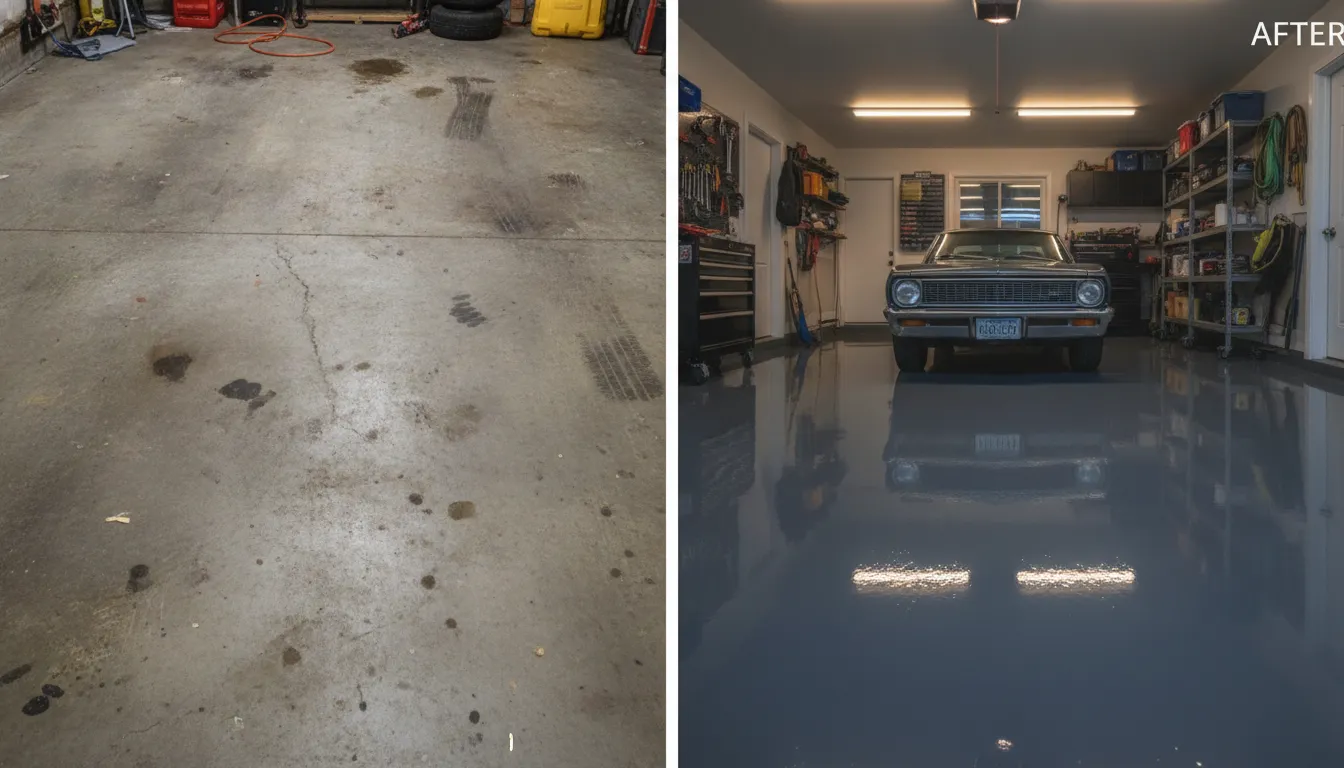
Cracked, stained, and worn concrete surfaces can ruin the curb appeal of your home and lower its value. Instead of paying thousands of dollars to tear out and replace your entire slab, you can choose a smarter way to refresh your property. Professional resurfacing breathes new life into tired driveways, patios, and garage floors without the noise, mess, or high cost of a full replacement.
Get your free in-home estimate
Concrete resurfacing is a highly effective restoration process that repairs and updates structurally sound concrete slabs by applying a new. Durable overlay directly on top of the existing surface. This method is an excellent alternative to costly demolition, with average resurfacing costs ranging from $3 to $7 per square foot according to data from Angi. While a full replacement can be expensive and time-consuming, professional resurfacing seals small cracks, fixes surface scaling, and adds a beautiful, protective finish. Homeowners can use this process on driveways, patios, and garage floors to achieve a clean, modern look. The entire project can often be completed in just one day when using premium polyaspartic coatings that cure rapidly and resist heavy wear.
Before you commit to a renovation project, it is important to know if your existing slab is a good fit for this quick and affordable update. You need to understand how this restoration works and whether your surfaces are in the right condition for a fresh overlay. To help you plan your next home improvement project, let us start by looking at what is concrete resurfacing.
What Is Concrete Resurfacing?
Concrete resurfacing is a process that restores the appearance and functionality of an existing concrete surface, offering a cost-effective alternative to full replacement. Over time, outdoor slabs and garage floors develop chips, stains, and minor cracks from daily wear and harsh weather. Instead of tearing out the old slab, we apply a new, thin overlay directly on top. This process bonds to the sound concrete base to hide surface flaws and form a fresh, clean face. It is a smart way to get a like-new surface without the high cost and mess of a full demo.
Common Materials Used to Restore Concrete
There are several types of materials used to coat and repair worn concrete. Cementitious overlays use a mix of sand, cement, and polymer modifiers to fix driveways and patios. These overlays bond well to old concrete and help stop future moisture damage. Epoxy coatings are another common option, especially for indoor spaces. Epoxy rolls on as a liquid and cures into a hard plastic shell, but it can yellow over time when exposed to sunlight. Each material has different cure times, strengths, and limits depending on where you apply them.
Why Polyaspartic Is the Premium Option
For high-use spaces like garage floors, durable polyaspartic overlays are the premium choice. Polyaspartic coatings, a form of advanced concrete resurfacing, are known for their rapid cure time and high durability, making them ideal for quick garage floor transformations. This advanced material is four times stronger than standard epoxy, and it will not yellow under sunlight. It resists stains, chemicals, and hot-tire pickup, which happens when hot tires peel standard paint off a garage floor. A professional system can even be applied and fully cured in just one day.
Resurfacing Versus a Simple Paint Job
Many homeowners confuse professional concrete resurfacing with a simple DIY paint job. Floor paint only sits on top of the concrete as a thin, weak layer that chips and wears away in a few months. In contrast, resurfacing uses advanced chemical binders or physical grinders to create a deep, permanent bond with the concrete pores. Resurfacing actually repairs small surface flaws and adds real structural strength to the slab. A painted floor only hides stains for a short time and does nothing to protect the floor from heavy loads or weather.
Concrete Resurfacing vs. Replacement: Which Do You Need?
When your outdoor or garage concrete begins to wear, you must decide how to fix it. Many people think they have to tear out the old slab and start over. But you often have a simpler, more cost-effective path. Choosing between these options depends on the condition of your existing slab.
When to Resurface Your Concrete
You can use a concrete resurfacing process when the structural base of your slab is still strong. If your concrete only has surface wear, it is a prime candidate for a refresh. This includes minor issues like superficial stains, scaling, or spalling from weather. You can also repair minor cracks that are less than one-quarter of an inch deep. Resurfacing places a fresh, durable overlay on top of your existing base. This extends the service life of your slab without the mess and hassle of heavy demolition.
Using a polymer-modified overlay is a proven way to protect your solid slab. These materials offer great bond strength to the old concrete. They also feature low shrinkage and low permeability, which helps block moisture from seeping into the slab. You can read more about these protective benefits from research on the U.S. Environmental Protection Agency database. This method preserves your slab and keeps it functional for years.
When You Must Replace the Slab
Sometimes, concrete damage goes too deep for a simple overlay. You must replace the slab if it suffers from major structural failure. Look for signs of soil movement underneath the surface. These signs include deep, intersecting cracks and sections that have settled or heaved. If one side of a crack sits higher than the other, the slab has shifted. Resurfacing over shifting concrete will not work. The new layer will soon crack in the exact same spots. In these cases, your only real option is to break up the old concrete, prep the soil, and pour a fresh slab.
A Clear Look at the Costs
Cost is a major factor for most home improvement projects. Tearing out and replacing concrete is a labor-heavy process. It requires heavy machines, disposal fees, and new material. Because of this, a full replacement costs much more than an overlay. You can compare the average costs for both methods in the table below to see which path fits your budget.
| Factor | Concrete Resurfacing | Full Concrete Replacement |
|---|---|---|
| Average Cost per Sq. Ft. | $3 to $7 | $8 to $15 |
| Standard Project Cost | $600 to $3,000 | $2,000 to $7,500 |
| Primary Material Used | Polyaspartic or polymer overlay | Fresh Portland cement mix |
| Base Slab Condition | Must be structurally sound | Can be cracked, sunken, or broken |
| Installation Time | Often finished in one day | Several days for prep, pour, and cure |
These average cost figures come from national home services data on Angi. While an overlay is much more budget-friendly, you must ensure your slab is in the right condition. A professional check can help you make the best choice for your home.
The Concrete Resurfacing Process: What to Expect
Getting a smooth, long lasting floor requires a clear, step by step method. A professional concrete resurfacing job transforms your worn slab through careful prep and application. If you want to resurface your patio or garage, the team must plan and prep the site first.
Prep Steps and Key Rules
To start, professionals check the local weather. The air temperature must stay above 50 degrees F for 24 hours before and after the project. This rule comes from the concrete mixing experts at Sakrete. Large slabs must be split into small sections to keep the pour easy to manage and neat.
- Inspection and assessment: First, installers check the concrete slab for structural cracks, settling, or deep damage to ensure it is strong enough to support a new coating.
- Cleaning and degreasing: The crew must clear away any weak surface cement, grease, oil, dirt, or old paint. According to Prosoco, removing these contaminants is the first step to a strong, clean bond.
- Crack repair and surface preparation: The team repairs cracks and holes so the final top coat is flat. If any damage is more than 1/4 inch deep, they fill it with a strong repair mortar first.
- Mechanical profiling: The installers use a grinder to rough up the concrete surface. This process is called mechanical profiling, and it is vital for creating a mechanical bond between the old concrete and the new overlay.
- Applying the polyaspartic overlay: The team rolls out the base coat. They use durable polyaspartic overlays because they cure fast, handle hot tires, and resist sun damage.
- Adding decorative flakes: Next, the crew spreads colorful vinyl flakes over the wet base coat to add style and make the floor slip resistant.
- Seal coat and curing: Finally, the crew scrapes off any loose flakes and applies a clear, protective top coat that dries and cures in just a few hours.
Where Can You Resurface Concrete? Driveways, Patios, and Garage Floors
You can use concrete resurfacing on many areas around your home. As long as your base slab does not have deep structural damage, a new overlay can restore both its look and strength. This process works well for both interior and exterior spaces, which makes it a highly flexible home repair option. For details on how these overlays can save damaged slabs, see research on polymer-modified concrete at the U.S. Environmental Protection Agency. Different areas of your home face different types of wear, so you must choose the right coating system for each location.
Heavy wear on garage floors
Garage floors must withstand heavy cars, hot tires, and chemical spills. Traditional epoxy coatings often peel up under hot tires. This common issue is called hot-tire pickup. To avoid this problem, premium polyaspartic coatings are the best choice. These systems are hot-tire pickup resistant and four times stronger than standard epoxy. They bond deep into the concrete so they will not peel or crack under pressure. You can also customize your space with 14 decorative flake blends to create a clean, professional look.
Weather protection for driveways
Driveways face constant sunlight, rain, and changing temperatures. UV rays from the sun can make standard epoxy coatings yellow and turn brittle over time. Outdoor concrete resurfacing projects require UV stable coatings that will not fade or crack in the sun. Polyaspartic overlays keep their color and strength even in direct sunlight. These durable coatings seal out moisture, which stops water from soaking into the concrete and freezing. Keeping water out helps prevent cracks from forming during winter freeze cycles.
Safe and beautiful patios
Your patio is a space for relaxation and hosting guests, so it needs to look great and stay safe. Resurfacing can turn a stained, gray slab into a beautiful outdoor feature. When you resurface your patio, you can choose from many colors and texture options. Safety is also key for outdoor living areas. You can add slip-resistant textures to the final topcoat. These textures keep the surface safe to walk on even when it gets wet from rain or pool water.
Why Choose Polyaspartic for Concrete Resurfacing?
Choosing the right material is the most important decision for your resurfacing project. Traditional options like standard epoxy have been common for years. However, advanced polyaspartic coatings offer far better performance and long-term value. Let’s look at why polyaspartic has become the preferred option for home and business owners alike.
Strength and Durability
Polyaspartic coatings are built to last under heavy use. Research shows that polymer-modified concrete overlays offer excellent bond strength to the existing slab, high tensile strength, and very low permeability. This high strength protects the concrete beneath. When we look at concrete repairs, drying shrinkage is one of the biggest factors that can hurt durability. Polyaspartic systems do not shrink as they cure, which prevents peeling and cracking. In fact, premium polyaspartic is four times stronger than standard epoxy.
Sunlight and Chemical Protection
Unlike epoxy, polyaspartic coatings are completely UV stable. Standard epoxy will turn yellow and get brittle when exposed to sunlight over time. Polyaspartic stays clear and bright even in direct sun. It also resists hot-tire pickup, which happens when hot tires stick to and peel up weak coatings. This makes polyaspartic the perfect choice for garage floors and driveways. We offer different warranty tiers depending on your needs, including a lifetime warranty on our premium six-coat systems.
Fast Cure Time and Professional Setup
Epoxy projects can take several days to cure before you can walk or drive on them. Polyaspartic cures in just a few hours. This rapid cure rate allows us to complete most jobs in just a single day. While DIY epoxy kits may seem easy, they lack the strength of professional systems and often peel within a year. A professional crew uses heavy equipment to prep the slab and apply the product. This creates a strong, uniform bond that DIY kits simply cannot match. If you want to learn more, read about how these systems compare to other durable polyaspartic overlays on the market.
Frequently Asked Questions
Can existing concrete be resurfaced instead of replaced?
Yes, you can resurface concrete if the slab is structurally sound. If your floor has only surface damage like minor stains, small cracks under a quarter inch, or scaling, resurfacing is a great choice. According to Prosoco, this process restores your floor without the high cost of tearing out old concrete.
How much does professional concrete resurfacing cost?
According to Angi, the average cost to resurface concrete runs between $3 and $7 per square foot. This makes the process much more affordable than full replacement, which often costs twice as much. Your final cost depends on the size of the area and the type of finish you choose.
Can you resurface outdoor concrete in cold weather?
No, you should not apply overlays in freezing weather. According to Sakrete, the air temperature must stay above 50 degrees Fahrenheit for at least 24 hours before and after the project. Applying coatings in cold weather prevents the material from bonding and curing right.
How long does polyaspartic concrete resurfacing last?
A premium polyaspartic resurfacing system can last a lifetime. Unlike standard epoxy coatings that can peel or turn yellow under sunlight, polyaspartic overlays are UV stable and four times stronger. Garage Kings provides lifetime warranties on its premium six-coat systems to protect your investment for years to come.
Ready to Restore Your Concrete?
Ignoring damaged concrete only leads to deeper structural cracks and costly replacements. You can avoid the mess of tearing out your old slab by acting now to renew your driveway, patio, or garage floor. Our team completes most concrete resurfacing projects in just one day, saving you time and preventing future wear.
Ready to restore your surfaces? Schedule a free in-home estimate today to get a custom look with our durable overlays.