
Choosing a garage coating is not just a color decision. The concrete, preparation method, coating layers, finish, and way you use the space all affect whether the result fits your home and expectations. A thoughtful comparison looks beyond a product label and asks what the complete system includes.
The right epoxy floor should match your garage’s concrete condition, moisture exposure, traffic, workshop needs, and desired finish. Compare surface preparation, base and protective coats, slip-resistance options, maintenance requirements, installation process, and written warranty terms rather than judging by coat count or appearance alone.
Request a free in-home consultation to discuss your garage and explore professional garage floor coatings. Before comparing specific systems, it helps to understand what the coating material does and why the surrounding layers matter.
What Is An Epoxy Floor System?
Epoxy is a coating material formed when resin and a hardener cure into a bonded surface over concrete. In a garage, it can create a clean, finished floor that is easier to maintain than bare, stained concrete. However, the material itself is only one part of the project. An epoxy floor system also includes concrete preparation, selected layers, decorative options, and a protective finish. Epoxy flooring is a complete coating system, not simply a single bucket of paint. The material name alone does not tell you how the slab will be prepared or which protective layers will be used.
The Coating Is Not The Complete System
A complete installation begins with the condition of the slab and the preparation required for reliable adhesion. It then may include a primer or base coat, decorative flakes, a receiver coat, and a topcoat. The exact combination depends on the concrete, the garage environment, and how you plan to use the space. This is why comparing products by the word “epoxy” alone can leave out important performance details.
Garage Kings documents professional garage floor coating systems that combine preparation and repair with a pigmented base coat, vinyl flakes, a clear receiver coat, and an industrial-grade topcoat. Some systems add layers for a different level of coverage or protection. The useful question is not simply how many coats are included, but what each layer does and how the layers work together.
What Homeowners Should Compare
Start with the factors that affect daily use. Hot tires can soften low-quality coatings and contribute to pickup or peeling, according to ArmorGarage. A glossy epoxy floor can also become slippery when wet, while flake systems add texture and dedicated additives can provide additional grip. These details matter if your garage receives wet-weather traffic, serves as a workshop, or needs a safer walking surface. Explore professional garage floor coatings.
When reviewing an epoxy floor proposal, ask how the concrete will be prepared and which layers are included. Ask what finish suits your use. Confirm how moisture and slip resistance will be addressed. A clear system specification gives you a more meaningful comparison than the coating name alone.
Why Concrete Preparation And Moisture Matter
The visible finish of an epoxy floor depends on what happens beneath it. Before coating, the installer needs to evaluate the slab, address cracks and damaged areas, create the right surface profile, and assess moisture conditions. These steps help the selected system bond to the concrete and perform as intended in the garage’s actual environment.
Start With The Condition Of The Slab
Preparation begins with a close look at the concrete rather than a coating choice made in isolation. Cracks, spalled areas, pits, and weak or contaminated sections may need repair before the coating is applied. New concrete can also contain curing residues that interfere with adhesion. Profiling the surface helps remove those residues and gives the coating a suitable texture to grip. The goal is not simply to make the floor look clean. It is to establish a consistent, sound substrate and reduce conditions that can contribute to peeling or early failure.
Diamond Grinding Creates A Consistent Profile
Professional diamond grinding is used to prepare the slab across the project area. Compared with relying on a light cleaning step, mechanical profiling can expose sound concrete and create a more uniform surface for the base coat. The correct profile depends on the existing slab and the selected system, so preparation should be evaluated rather than treated as a one-size-fits-all step.
Repair work and grinding also influence the appearance of the finished floor. A solid-color system may make surface imperfections easier to notice, while a flake finish can provide visual variation. That design choice does not replace repairs, but it is one reason to discuss the slab’s condition before selecting the final finish.
Assess Moisture Before Applying Coatings
Moisture deserves attention before the first coat goes down. Water vapor moving through the slab can affect adhesion and the long-term behavior of a coating system. Depending on site conditions, the specification may include a moisture vapor barrier as part of the base-coat approach. Homeowners comparing options can review these garage floor moisture considerations and ask how moisture findings will affect preparation and system selection.
A careful assessment connects the concrete condition, repair plan, surface profile, and moisture strategy. Those details are more meaningful than judging an epoxy floor by its color or coat count alone.
How Should You Compare Epoxy Floor Layers?
Start With Preparation and the Base Coat
A complete epoxy floor is a system, not a single bucket of material. It starts with preparing and repairing the concrete so the coating has a suitable surface to bond with. The selected system may then include a pigmented base coat, decorative vinyl flakes, a clear receiver coat, and one or more protective top coats.
Ask what happens before the first visible coat is applied. Diamond grinding, repairs, and attention to the concrete condition can affect how the finished floor performs. Primer may be optional on very sound concrete, depending on the system and use case. But it can be relevant when the slab is weak, porous, older, stained, or otherwise questionable. Garage floor coating system thickness should also be discussed as part of the full specification, rather than treated as an isolated number.
Understand What Each Layer Contributes
| Layer or stage | Primary role | What to ask |
|---|---|---|
| Preparation and repair | Creates a properly prepared surface for bonding | How will cracks, stains, and surface profile be addressed? |
| Pigmented base coat | Forms the colored foundation of the system | Which material is specified for this garage and its intended use? |
| Decorative flakes and receiver coat | Adds the visual pattern and encapsulates the flakes | Will the broadcast be partial or full, and how evenly will it be applied? |
| Industrial-grade top coat | Protects the finished surface from routine wear and use | How many top coats are included, and what finish is specified? |
Color-flake systems can create a stone- or granite-style appearance, while also adding texture. Full-broadcast flake systems require even application and can be difficult for inexperienced installers, so installation skill matters as much as the product list. A provider should be able to explain how the flakes, receiver coat, and top coat work together for the garage’s daily demands.
Do Not Judge Performance by Coat Count Alone
A higher number of coats does not automatically make one floor the better choice. Compare the concrete preparation, material specifications, layer thickness, flake coverage, top-coat durability, installation method, and intended use together. A workshop with heavy equipment may call for a different specification than a garage used mainly for parking and storage. The strongest comparison is the one that connects each layer to a real performance need, rather than treating the coat count as a standalone score.
Which Epoxy Floor Performance Features Matter Most?
The right performance profile depends on how your garage is used. A space that mainly holds vehicles has different demands than a workshop where tools, solvents, moisture, and heavy equipment are common. Compare the complete coating system, not just the word “epoxy” or the number of coats.
Resistance To Stains, Chemicals, And Moisture
Look for a system designed to help resist common garage contaminants, including oil, road salt, cleaning products, and occasional chemical spills. That does not make the surface impervious. Prompt cleanup and following the installer’s care recommendations still matter. Moisture performance also depends on the concrete and installation. If the slab has vapor concerns, ask whether the selected system includes an appropriate moisture-management layer and how the surface will be evaluated before coating.
Slip Resistance And Everyday Cleaning
A glossy surface may become slick when wet, so slip resistance should be discussed before the finish is selected. Flake systems can add texture. Dedicated additives may provide additional grip, depending on the system design and the level of texture desired. The goal is a surface that feels appropriate for wet-weather foot traffic without making routine cleaning unnecessarily difficult. Ask how the texture affects sweeping, mopping, and removing tire residue.
Scratches, Wear, And Actual Garage Use
Scratches and wear depend on the coating formulation, preparation, layer design, traffic, and maintenance. Primer is recommended for weak, porous, older, stained, or questionable concrete in the cited system because it may improve adhesion and coverage: see the preparation guidance. For demanding workshops or frequent equipment movement, ask about the topcoat’s intended use and abrasion resistance rather than assuming a decorative finish will handle every condition.
Full-broadcast systems use more flake, thicker epoxy, and multiple topcoats to perform correctly in the cited example, but added material alone is not a guarantee of longevity. Match the specification to hot tires, dropped tools, stored chemicals, vehicle traffic, and the cleaning routine your garage actually sees.
How Do Finish And Garage Use Affect Your Choice?
Choose A Finish That Fits The Space
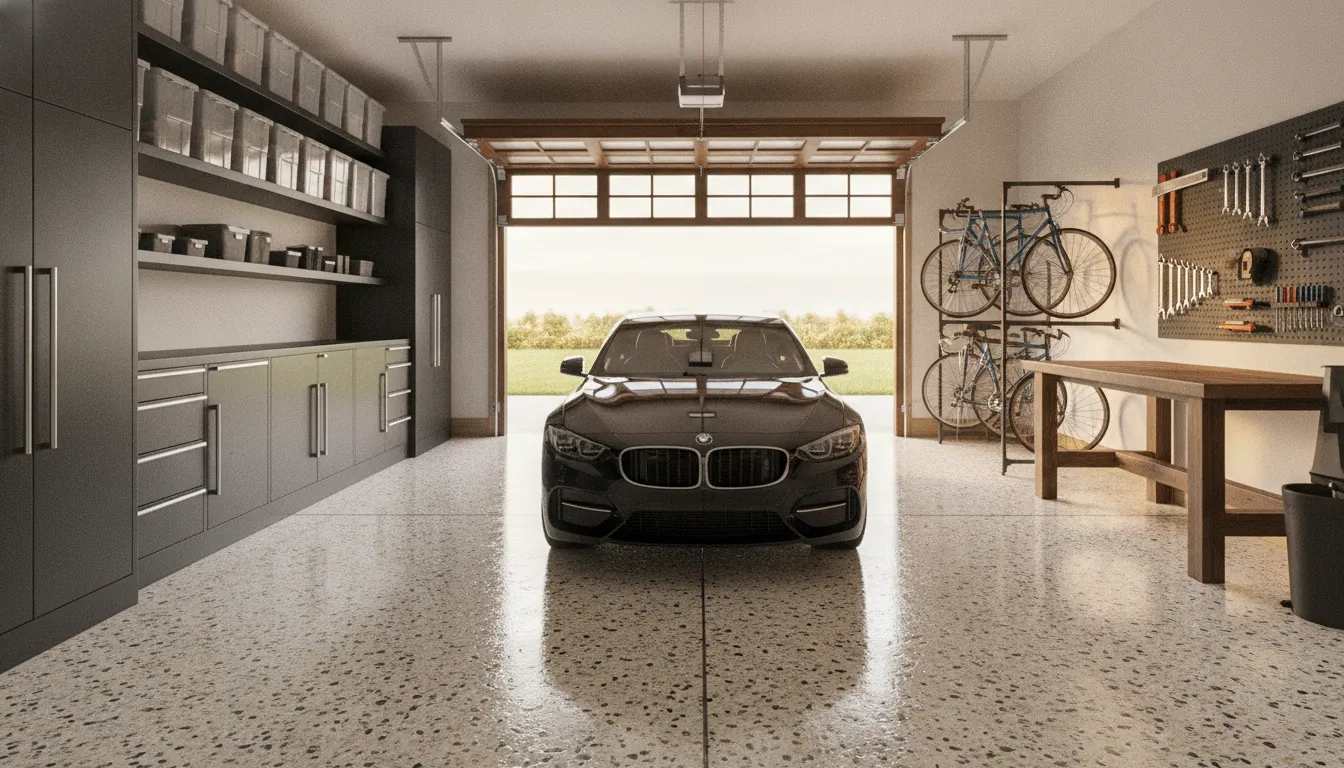
Finish is not only a color decision. Decorative flakes can give a garage floor a stone or granite-style appearance while adding surface texture. A full-flake design can also help create a consistent visual field across the slab, making the garage feel more like a finished room than a utility area. If you use the garage as a workshop, a solid-color epoxy floor may make small dropped parts easier to see. The best choice depends on whether your priority is a distinctive visual finish, a practical work surface, or a balance of both.
Ask how the flakes are broadcast, what clear coat receives them, and how the completed surface will support traction. Glossy epoxy can be slippery when wet, while flake systems and dedicated additives can add texture and grip. Those details matter near garage entries, work areas, and any location where water or snow may be tracked inside.
Match The System To Daily Traffic
A garage used mainly for parking has different demands from one that stores off-road equipment, hosts home projects, or functions as a busy workshop. Hot tires, rolling tool chests, dropped objects, and chemical exposure all make the full coating system more important than the color on a sample board. Compare the preparation, base coat, flake or decorative layer, receiver coat, and protective topcoat rather than judging an epoxy floor by its appearance alone.
For heavier use, ask whether the proposed system is designed for that environment and how the topcoat supports wear and cleanup. Garage Kings describes professional epoxy and polyaspartic systems, but the right selection still depends on the local team’s specification and your slab conditions. For supporting context, review this epoxy and polyaspartic comparison without treating one material as the universal answer.
Plan For Storage And Maintenance
Storage cabinets, shelving, bicycles, and seasonal equipment can limit access to the floor after installation. Clear the work area and discuss how the layout affects preparation and coating. Afterward, routine sweeping and prompt cleanup can help preserve the finish, but maintenance expectations should still be realistic for your use. A garage that doubles as a workshop may need more frequent cleaning and closer attention to abrasives or spills than a parking-only space.
What Should You Ask Before Choosing An Epoxy Floor?
- Start with the slab: Ask how the existing concrete will be evaluated and prepared. A dependable plan should address cracks, contamination, old coatings, surface profile, and moisture before the first coat is applied.
- Compare the complete system: Ask which layers are included, how the base coat, flakes, receiver coat, and top coat work together, and which parts are selected for your garage’s use. Coat count is one detail, not the whole decision.
- Confirm timing and local terms: Ask for the expected schedule, care instructions, warranty terms that apply to your selected system, and local service availability. These details should be confirmed for your territory.
It also helps to understand the professional garage floor installation process so you know what happens before the floor returns to service.
A free in-home consultation can help connect those questions to the actual slab, garage use, and design preferences. The goal is a clear system recommendation, not a material choice made from a label alone.
Frequently Asked Questions About An Epoxy Floor
What Is The Downside Of Epoxy Flooring?
Epoxy requires careful concrete preparation and attention to moisture before installation. The result can also depend on the selected system, site conditions, and how the garage is used. A professional evaluation helps identify whether epoxy is appropriate for the slab and what preparation it needs.
How Long Will An Epoxy Floor Last?
Longevity depends on the complete system, surface preparation, traffic, maintenance, and conditions in the space. Rather than relying on a universal lifespan promise, ask the installer how the proposed system is designed for your garage and what written warranty terms apply.
Is Epoxy Suitable For A Garage?
Epoxy can be part of a professional garage floor coating system. Homeowners should compare preparation, layers, finish, maintenance expectations, and intended use before selecting a system. Garage Kings offers professional epoxy and polyaspartic options, with availability and details confirmed by territory.
What Should Be Done Before Applying Epoxy?
The concrete should be evaluated, cleaned, repaired as needed, and prepared so the coating can bond. Moisture and existing coatings also deserve attention. The exact preparation plan depends on the slab and the selected system.
Can Epoxy Floors Be Customized?
Many systems can be customized through color and decorative flake choices. Discuss the finish, texture, and maintenance expectations together so the appearance supports how you plan to use the garage.
Talk with Garage Kings about your garage floor
Plan Your Garage Floor With Confidence
The best epoxy floor decision starts with the concrete, the intended use, and the complete coating system. Garage Kings can help you compare those factors for your space and local service area.