
A floor can look dry while moisture is still moving through the concrete below it. Before choosing a material, check where water comes from and how often the space gets wet. Look for cracks or staining, then consider how the room will be used. For a garage-specific path, explore professional garage floor coatings.
Schedule a free, no-obligation in-home consultation
Waterproof flooring is not one universal material or a guarantee that a structurally wet slab is ready for installation. The right choice depends on surface water exposure, moisture vapor, substrate condition, seams, maintenance, and the demands placed on the room. Use this checklist to compare options carefully, identify warning signs, and decide when professional preparation or a concrete-floor solution makes more sense.
Start by separating everyday spills from moisture coming through the slab.
What Does Waterproof Flooring Actually Mean?
“Waterproof flooring” is a useful shopping term, but it does not describe one universal material or guarantee that every moisture problem is solved. It is commonly used for flooring intended for areas exposed to spills, splashes, or generally wet conditions. The important question is what kind of water the floor must handle, and where that water is coming from.
Some products are designed to limit water from reaching the flooring surface or the layers beneath it. Sheet vinyl, for example, is typically installed as glued-down rolls in 6-foot or 12-foot widths. Fewer seams can matter in areas where routine spills are expected, although the installation still needs to suit the room and the substrate.
Other products use a different construction. Rigid core is a broad category that can include multiple material types. Some rigid-core products even use a real wood top layer while retaining water resistance and installation convenience. That range is why the label alone is not enough to choose a floor. Product construction, joints, installation method, and the condition underneath all affect how the finished floor performs.
Surface Water Is Not The Same As Slab Moisture
Surface water is the visible kind: a spill, splash, wet shoe, or tracked-in rain. A flooring product may be selected for its resistance to that exposure. Slab moisture is different. Concrete can contain or transmit moisture below the finished surface, and that condition may affect whether a new floor is suitable for installation.
The National Institutes of Health Office of Research Facilities advises determining a slab’s moisture content before installing new flooring. This helps evaluate the slab’s suitability. That assessment is separate from asking whether the top of a product resists a spill. A floor can be marketed for wet areas while the concrete below still requires attention before installation.
Active Intrusion Requires A Different Answer
Neither a product label nor a surface coating should be treated as a diagnosis for active water intrusion. If water is entering through a crack, wall, doorway, drain, or another structural pathway, the source needs to be identified before selecting a finished floor. Waterproof flooring may help manage ordinary surface exposure, but it should not be presented as a cure for unresolved leaks or a structurally wet slab.
A sound decision therefore separates three questions: how the finished surface handles everyday water, whether moisture is moving through the slab, and whether active intrusion is occurring. Once those questions are answered, homeowners can compare flooring materials based on the room, the substrate, and the type of exposure they actually need to manage.
How Can You Check A Floor For Moisture Problems?
Before choosing waterproof flooring, inspect the space and the concrete beneath it. A floor can look dry during a quick visit while still being affected by vapor moving through the slab, drainage problems, or recurring dampness. Surface water resistance helps with spills and cleanup, but it does not diagnose an active leak or make a structurally wet slab suitable for every flooring system.
Use this checklist to identify warning signs. It is a screening step, not a substitute for testing or a repair plan when water is entering through walls, joints, or the foundation.
- Look for visible dampness. Check the floor after rain, snowmelt, washing, or a heavy spill. Pay attention to darkened concrete, damp edges, wet spots near doors, and areas where moisture repeatedly returns after the surface has been dried. Inspect the bottom of walls, expansion joints, and the perimeter of the garage or room. A recurring pattern is more useful than a single isolated spill.
- Check for white, powdery residue. Efflorescence is a white or chalky deposit that can appear when moisture moves through masonry or concrete and carries dissolved minerals toward the surface. Brush away a small area only after documenting it, then watch whether the residue returns. Reappearance suggests that moisture movement may still be occurring and deserves closer evaluation before flooring is installed.
- Notice unusual odors. A musty smell can point to ongoing dampness, poor ventilation, or moisture in nearby materials. Do not cover an odor with a coating or flooring product and assume the underlying condition is resolved. Inspect stored items, wall bases, insulation, and adjacent rooms as well as the slab. Mold risk is tied to moisture control, and the EPA’s guidance on indoor moisture and mold explains why unresolved moisture should be addressed rather than concealed.
- Map cracks and joints. Photograph cracks and mark their locations. Note whether they are isolated hairline marks, widening, recurring, or accompanied by dampness. Also inspect control joints and transitions around steps and walls. A coating may accommodate some routine surface preparation, but it should not be presented as a cure for unresolved concrete movement or structural water intrusion.
- Trace the drainage path. During or after precipitation, observe where water flows outside the building. Check downspouts, grading, thresholds, driveway transitions, floor drains, and door seals where applicable. Water that repeatedly collects against the slab or enters at the perimeter may require drainage or building repairs before a flooring system can perform as intended.
- Arrange a slab moisture evaluation. Visual inspection cannot measure moisture inside concrete. The NIH Office of Research Facilities flooring moisture bulletin recommends determining slab moisture before installation. This helps assess substrate suitability. Calcium chloride testing measures vapor emission near the slab surface, while internal relative-humidity probes measure humidity within the slab. Those methods answer different questions, and the flooring manufacturer’s acceptable installation requirements should guide the interpretation.
Moisture testing matters because excessive moisture in an underlying slab is a major cause of flooring failure. Vapor can become trapped beneath less-permeable flooring and contribute to blistering, buckling, adhesive failure, or other problems. A test result does not automatically select the right product. It helps determine whether the slab needs more drying time, a moisture-management approach, repairs, or a different flooring strategy.
If your space regularly sees rain, snow, humidity, or wet vehicles, compare the inspection findings with this guide to garage flooring for wet climates. Keep photographs and test results with your project notes.
Which Waterproof Flooring Option Fits Your Space?
The best waterproof flooring choice depends on more than whether the surface repels a spill. Compare each option by its seams, the condition of the substrate, how the room is used. The installation method, and what happens when moisture is moving through the slab. A product can resist water at its finished surface without correcting vapor migration, an active leak, or an unstable concrete base.
| Option | Seams And Installation | Best Fit | Important Limits |
|---|---|---|---|
| Sheet Vinyl | Large glued-down rolls can reduce the number of seams. | Rooms where a continuous resilient surface and routine spill protection are priorities. | Requires a suitable, smooth substrate and careful fitting around edges and penetrations. |
| Loose-Lay Vinyl | Planks or tiles install without glue; some products use peel-and-stick adhesive. | Projects that benefit from a simpler installation approach or individual plank and tile formats. | Joints remain part of the system, and the product still depends on a sound, appropriate base. |
| Rigid Core | Often installed as interlocking pieces, depending on the product. | Living areas or utility spaces where a firm plank-style floor and water resistance are desired. | Rigid core is a broad category, so construction, joint performance, and installation requirements vary. |
| Tile | Individual pieces create grout joints and require a prepared, stable substrate. | Spaces where a hard, washable surface suits the use and the owner accepts more visible joints. | Grout and substrate movement require attention; surface water resistance does not resolve slab moisture or active intrusion. |
| Professional Concrete Coating | Installed over prepared concrete in layered systems, with seams generally not dividing the finished field like planks or tiles. | Garages and other concrete spaces exposed to stains, chemicals, moisture, vehicle traffic, and regular cleaning. | Preparation and moisture assessment are essential. A coating alone is not a fix for active structural water intrusion or unresolved concrete problems. |
How Seams And Substrate Condition Change The Decision
Sheet vinyl is commonly supplied in six-foot or twelve-foot rolls and glued down during installation. Its broad format can limit the number of field seams, but the concrete or other substrate still needs to be suitable and adequately smooth. Loose-lay vinyl comes in planks or tiles and can be installed without glue, while some products use peel-and-stick adhesive. That flexibility can simplify a project, but every joint and perimeter detail still needs to be handled correctly. Rigid core is not one uniform material. The category can include several constructions, including products with a real wood top layer, so the manufacturer’s installation instructions matter.
Tile creates a different maintenance and moisture conversation. The individual pieces can make layout changes, damaged areas, or transitions more visible, while grout joints add detail that must be cleaned and maintained. In every case, waterproof flooring should be installed only after the substrate and moisture conditions have been considered. Moisture can migrate through concrete as vapor and become trapped beneath an impervious floor. That trapped vapor can contribute to cupping, buckling, blistering, adhesive failure, and mold growth. The NIH Office of Research Facilities explains that slab moisture should be controlled below the level the flooring manufacturer accepts for installation: review the government flooring moisture bulletin.
When A Concrete Coating Deserves A Closer Look
For a garage, a professional concrete coating can be more practical than bringing a residential plank or tile system into a space designed around vehicles. Tools, chemicals, and changing weather conditions. Garage Kings documents professional-grade polyaspartic and epoxy systems for worn concrete. The system may include surface preparation and repair, a pigmented base coat, vinyl flakes, receiver coats where applicable, and an industrial-grade top coat. Coated floors are positioned to resist stains, chemicals, and moisture while supporting slip resistance and easier cleaning.
That does not make every concrete floor a coating candidate. Cracks, contamination, dampness, or active water intrusion need to be evaluated before the finish is selected. If you are comparing systems for a garage, read this guide to polyaspartic versus epoxy flooring, then match the material to the actual substrate, exposure, and intended use rather than choosing solely by appearance.
Is A Coated Concrete Floor A Better Garage Solution?
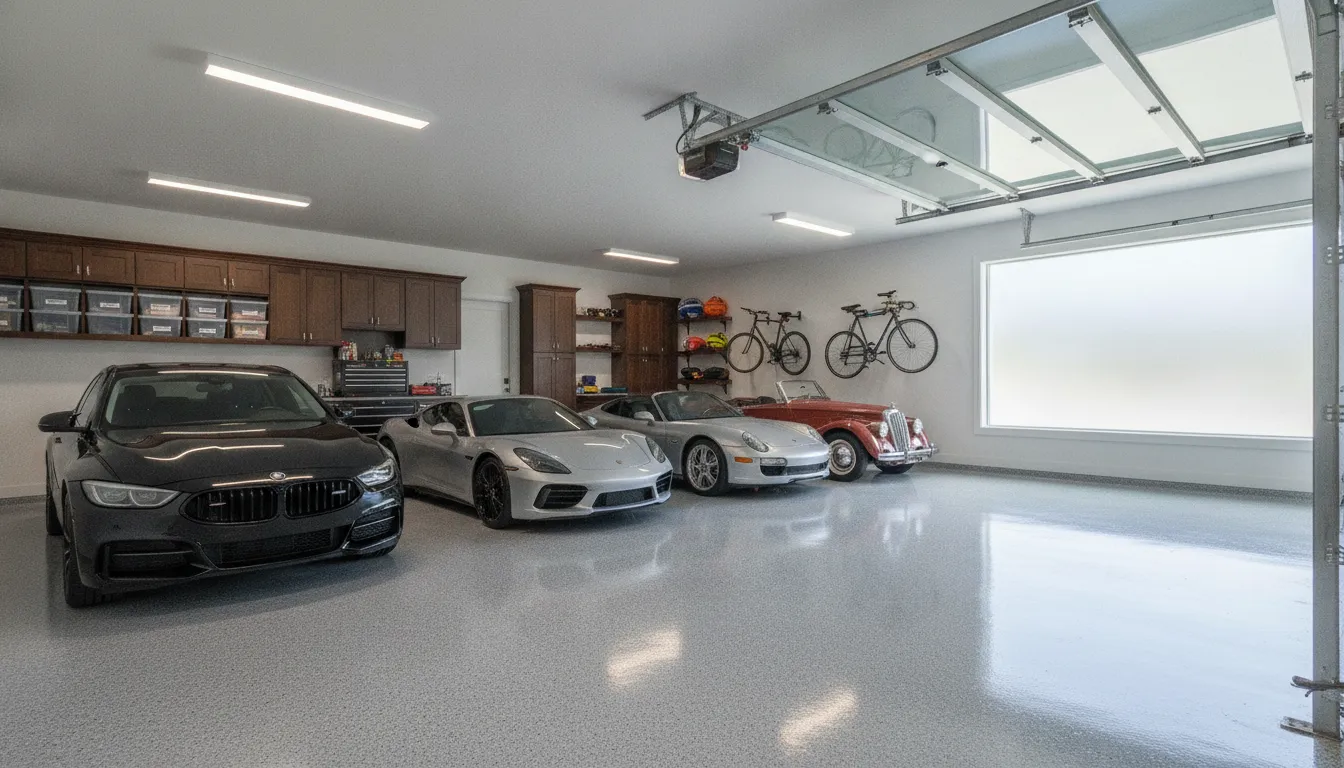
A coated concrete floor can be a strong garage solution when the space needs to handle more than occasional foot traffic. Garages often see water tracked in from vehicles, oil and automotive fluids, dropped tools, dirt, road salt, and repeated movement from tires and equipment. A professionally installed coating system creates a continuous finished surface that is designed to make everyday cleanup simpler while improving the appearance of worn concrete. It may be a better fit than a floating floor when the garage is used as a workshop, storage area, home gym, or active work zone.
Where Coated Concrete Can Offer An Advantage
Stain and chemical exposure are important considerations in a working garage. Garage Kings positions its coated floors as resistant to stains, chemicals, and moisture, with slip-resistant properties and straightforward cleaning and maintenance. That combination can be useful for homeowners who want to wipe up spills instead of dealing with dirt collecting around numerous seams or edges. It does not mean every spill should be left untreated. Prompt cleanup remains a sensible part of protecting the finish and keeping the garage safe.
Slip resistance also deserves attention. A smooth-looking garage floor is not automatically the right choice if the surface may become wet or if people routinely carry heavy items across it. The appropriate texture and system should reflect how the garage is used. A homeowner parking vehicles and storing seasonal items may have different needs from someone repairing cars, using power tools, or moving equipment across the floor each day.
Heavy Use Requires The Right System, Not Just A Surface Color
Garage Kings documents 3-coat, 4-coat, and 6-coat floor system options, allowing recommendations to account for expected performance and use. The point is not that a higher coat count is always necessary. The point is that a garage floor should be evaluated as a system rather than selected by appearance alone. Preparation, repair, base layers, decorative elements where appropriate, and protective top coats all influence the result. A coating may be a practical choice for demanding use, but the specific recommendation should follow an assessment of the concrete and the conditions in the space.
Before choosing a coating, separate surface water resistance from moisture management and active water intrusion. A coating alone should not be presented as a fix for an actively leaking foundation, drainage failure, or unresolved structural concrete problem. Persistent dampness, recurring water entry, significant cracking, or other substrate concerns should be investigated before the finished floor is installed. Moisture problems can also be affected by building ventilation, and the EPA notes that controlling indoor moisture is important for controlling indoor mold growth. A finished surface cannot replace correcting the source of a moisture problem.
Check The Concrete Before You Coat It
The condition of the existing slab is central to the decision. If the concrete is sound and the issues are within the scope of routine preparation and repair, coating may provide a clean, durable-looking garage surface with easier day-to-day maintenance. If the slab has deeper damage or needs substantial correction, resurfacing or another repair approach may be more appropriate. Read the guide to resurfacing versus floor coating before treating those options as interchangeable. The better solution is the one that addresses the concrete beneath the finish, not merely the one that looks best in a sample.
What Should Proper Waterproof Flooring Preparation Include?
A durable floor starts before the coating or flooring material is applied. Preparation should account for the concrete’s condition, the garage’s moisture exposure, and how the space will be used. The goal is not to cover up an active leak or unresolved structural problem. It is to create a clean, sound surface and select a system that fits the conditions found during the assessment.
For homeowners comparing systems, it can help to review how polyaspartic floor coating works. The product is only one part of the result. The preparation sequence, moisture evaluation, repair decisions, and installation conditions all matter.
- Assess the slab and the source of moisture. The installer should inspect stains, cracks, spalling, contamination, drainage, and signs of recurring dampness. Water resistance at the surface is different from moisture vapor moving through concrete, and neither should be confused with active structural water intrusion. If water is entering through a foundation wall, joint, or unresolved drainage issue, that condition needs attention before a coating is treated as the answer. Indoor moisture can also be affected by ventilation, since tightly sealed buildings may allow moisture to build up. The EPA notes that controlling indoor moisture helps control indoor mold growth, which makes the surrounding garage conditions part of the evaluation, too. EPA moisture guidance provides additional context.
- Repair defects and remove surface contamination. Cracks, weak concrete, damaged edges, oil, grease, paint, and other bond-inhibiting materials should be identified and addressed as appropriate for the selected system. A coating should not be presented as a substitute for repairing unresolved concrete problems. The repair approach may depend on whether a defect is cosmetic, actively moving, moisture-related, or evidence of a larger substrate issue.
- Prepare the surface mechanically. Diamond grinding is commonly used to remove weak surface material and create a suitable profile for bonding. This is more than making the floor look clean. The surface needs to be opened consistently so the base coat can adhere across the prepared area. Dust removal and final cleaning are equally important because residue can interfere with the bond.
- Evaluate moisture vapor before installation. Moisture testing should help determine whether the slab is appropriate for a new floor. A calcium chloride test measures vapor emission near the slab surface, while an internal relative-humidity probe measures humidity within the concrete. Each method has limitations, so the test selection and interpretation should follow the flooring system and manufacturer requirements. The U.S. National Institutes of Health Office of Research Facilities explains these methods in its flooring installation moisture bulletin. Results may affect system selection, timing, or whether additional moisture management is needed.
- Apply the system in compatible layers. Once the slab is ready, a base coat is applied to the prepared surface. Decorative flakes may then be broadcast for the desired appearance and texture. Where the system calls for it, a receiver coat helps encapsulate the flakes and establish a more uniform finished surface. The final industrial-grade top coat is selected and applied for the intended traffic, cleaning, chemical exposure, and slip-resistance needs. Not every garage requires the same layer configuration, and conditions may determine which materials are appropriate.
Timing should be based on the actual condition of the slab, required repairs, moisture findings, system specifications, and site conditions. Some straightforward projects may move quickly, but a responsible installation plan should not promise one-day completion for every garage. Proper waterproof flooring preparation is the step that turns a material choice into a considered flooring system, rather than a surface-level fix.
How Do You Maintain A Water-Resistant Floor?
A water-resistant floor still performs best when routine care keeps dirt, grit, spills, and moisture from sitting on the surface. In a garage, maintenance is not complicated, but it should match how the space is used. A floor that sees daily vehicle traffic, lawn equipment, workshop projects, or winter slush may need more frequent attention than a lightly used storage area.
Clean Dirt And Spills Promptly
Start with regular sweeping or dust removal so abrasive particles are not repeatedly tracked across the floor. When the surface needs more than dry cleaning, use a damp mop and a cleaning method approved for the installed flooring system. Avoid treating a coating like an indestructible surface. Harsh chemicals, abrasive tools, or an unsuitable cleaner can create problems even when the floor itself is designed to resist stains, chemicals, and moisture.
Respond to spills as soon as practical. Blot or remove the liquid, then clean the area rather than allowing automotive fluids, road salt, soil, or other residues to remain in place. A water-resistant finish helps manage surface exposure, but it does not eliminate the need to clean contaminants. For more practical guidance, see this polyaspartic floor maintenance resource.
Account For Traffic And Use
Use the garage in a way that reduces unnecessary wear. Place appropriate protective pads under equipment or work areas when recommended for the flooring system, and avoid dragging heavy items across the surface. Keep sharp edges and rough casters from scraping the floor. If the garage doubles as a workshop, clean sawdust, metal filings, and chemical residue rather than letting them accumulate in traffic paths.
Seasonal conditions deserve attention as well. Wet shoes, snow, salt, and mud can bring moisture and grit indoors. Sweeping these materials away and removing standing water helps preserve a cleaner, safer surface. If a mat is used, check beneath it periodically so trapped moisture or debris does not go unnoticed.
Inspect The Surface Over Time
During routine cleaning, look for changes that need attention: recurring damp areas, staining that does not clean up. New cracks, lifting or blistering, loose edges, or a surface that feels unexpectedly slippery. Also inspect transition areas, corners, drains, and places where water tends to collect. These observations can reveal a moisture or substrate issue that routine cleaning cannot correct.
A coating can provide water resistance and easier maintenance, but it should not be presented as a fix for active structural water intrusion or unresolved concrete problems. Document changes with photos and ask a qualified flooring professional for an assessment when the cause is unclear. Consistent cleaning and early inspection make it easier to protect the floor and address developing concerns before they become larger project issues.
When Should You Ask A Flooring Professional For Help?
A homeowner can compare waterproof flooring materials, but deciding whether a garage slab is ready for a finished surface is a different question. Ask for professional help when the floor has an active leak, recurring dampness, visible efflorescence, persistent odor, or moisture that returns after cleaning and drying. A surface coating should not be presented as a fix for structural water intrusion. The source of the water needs to be understood before any flooring system is selected.
Professional guidance is also worthwhile when the concrete condition is uncertain. Cracks, spalling, old repairs, oil stains, uneven areas, or powdery concrete can affect preparation and adhesion. Excessive moisture in an underlying slab is a major cause of flooring failure. So moisture exposure and slab condition belong in the decision process, not just color and finish. If you are unsure whether the issue is routine surface preparation or a deeper concrete problem, an assessment can help define the appropriate next step.
Use This Decision Checklist
- There is an active leak or repeated dampness. Pause the flooring project and investigate drainage, plumbing, grading, ventilation, or other possible sources. A water-resistant surface cannot replace water-intrusion diagnosis.
- The slab has cracks or uncertain stability. Ask someone experienced with concrete-floor preparation to evaluate whether repairs or additional preparation are needed before installation.
- The garage has demanding use. Frequent vehicle traffic, stored equipment, chemical exposure, dropped tools, or regular wet-weather use may call for a system selected around performance needs rather than appearance alone. Garage Kings documents multiple floor-system options so recommendations can account for intended use.
- You want a whole-garage transformation. If the project includes a worn concrete floor, organization goals, color decisions, and a finished design, professional planning can help connect the surface, function, and visual result.
Garage Kings offers a free, no-obligation in-home consultation for homeowners who are unsure about moisture exposure, concrete condition, the coating system, or the project scope. The consultation includes custom project planning and 3D design visualization, helping you review the direction before committing to a flooring plan. Availability varies by territory, so find your local Garage Kings location to confirm service in your area.
A consultation is not a promise that every slab qualifies for the same treatment. It is a practical way to identify limitations, discuss preparation, and match the proposed approach to the garage’s actual conditions. When you are ready to review your space, request a free, no-obligation in-home consultation.
Schedule your free consultation with Garage Kings
Frequently Asked Questions
What Is The Best Flooring That Is Waterproof?
There is no single best choice for every room. Compare the material’s seams, installation method, maintenance needs, and compatibility with the existing substrate. For a garage, a professionally prepared concrete coating may be a practical option because it can provide moisture, stain, chemical, and slip resistance. The right system still depends on the slab and how the space is used.
Can Mold Grow Under Vinyl Plank Flooring?
It can if moisture becomes trapped beneath the planks or the concrete below remains damp. Waterproof planks do not correct a wet substrate, active leak, or poor drainage condition. Before installation, investigate recurring dampness, musty odors, efflorescence, and visible water entry, then address the source and follow the flooring manufacturer’s moisture requirements.
How Can You Tell If Flooring Is Waterproof?
Start with the product specifications, including its water-resistance rating, seam design, installation requirements, and approved areas of use. Then evaluate the floor beneath it. A water-resistant surface is not the same as a structurally dry slab, and no finish should be treated as a solution for active water intrusion. When conditions are unclear, professional assessment can prevent a premature installation.
Is Vinyl Flooring Waterproof?
Some vinyl products are marketed as waterproof, but performance depends on the complete installation, including seams, edges, transitions, underlayment requirements, and the condition of the subfloor. Follow the product instructions rather than assuming every vinyl plank or sheet handles moisture the same way. In a garage, also consider chemical exposure, vehicle traffic, cleaning, and concrete preparation.
Plan Your Flooring Project With Garage Kings
A professional review can help you connect moisture concerns, concrete condition, and your goals before choosing a flooring solution. Garage Kings can evaluate your floor and discuss options for a more functional, finished space.