
A garage floor has to handle hot tires, road salt, sunlight, moisture, and everyday traffic without turning maintenance into another chore. The coating you choose also affects how quickly your garage returns to service and how long the finish keeps its appearance.
For most homeowners, polyaspartic vs epoxy garage floor comparisons favor polyaspartic for greater durability, UV stability, hot-tire resistance, and faster installation, while epoxy may offer a lower upfront investment.
Polyaspartic is not automatically the right answer for every slab or use case. Surface preparation, product quality, installation skill, and the coating system itself all shape the result. Garage Kings evaluates those factors during a free in-home consultation with 3D AR visualization, then helps you choose a finish that fits your garage. Schedule your free consultation to discuss your project, or review our polyaspartic garage floor coating guide for additional context. The clearest place to begin is the chemistry behind each material and what that means underfoot.
Polyaspartic Vs Epoxy Garage Floor: How Polyaspartic and Epoxy Differ in Chemistry
The difference begins at the molecular level. Epoxy is a thermosetting resin system made by combining a resin with a hardener. As those components react, they form a dense, rigid polymer layer that bonds to prepared concrete. That hardness gives epoxy useful strength and chemical resistance, but the finished coating has limited flexibility when the slab moves or experiences repeated temperature changes.
Polyaspartic is a specialized variant of polyurea chemistry. Its molecular structure creates a coating with more flexible chains than traditional epoxy. That flexibility helps the finished surface accommodate the natural expansion and contraction of concrete as garage temperatures rise and fall. The coating remains tough while reducing the risk that normal movement will lead to premature cracking, peeling, or loss of adhesion.
Why The Chemistry Matters On A Garage Floor
A garage floor is not a perfectly static surface. Concrete can warm in direct sunlight, cool overnight, and respond to seasonal moisture and temperature shifts. It also has to handle vehicle traffic, dropped tools, road salt, oil, and other everyday exposure. A rigid coating can perform well when conditions are stable, but a system with greater flexibility is better suited to a surface that continually responds to its environment.
Polyaspartic chemistry was developed in the 1990s as an improvement over epoxy for applications where faster cure times and UV stability were important, according to industry coating research. That development helped make polyaspartic a practical choice for demanding floors, including residential garages that need durable protection without a long installation interruption.
Epoxy And Polyaspartic Require Different Expertise
Epoxy generally offers a longer working window during application. Polyaspartic cures more quickly, so the installer must prepare the concrete thoroughly and apply each coat with precise timing. Fast cure is an advantage only when the system is installed correctly. Surface preparation, crack repair, coating thickness, temperature, and moisture conditions all influence the finished result.
Garage Kings uses premium polyaspartic systems as part of a complete garage transformation. The goal is not simply to cover concrete, but to match the coating chemistry to the way the space will be used. For a deeper overview of the material and installation process, read our polyaspartic garage floor coating guide.
Durability Comparison: Hot Tire, UV, and Moisture Resistance
When comparing polyaspartic vs epoxy garage floor coatings, durability depends on more than whether the surface looks glossy on installation day. A garage floor must handle hot tires, sunlight, moisture, vehicle fluids, dropped tools, and daily abrasion. Polyaspartic generally provides the stronger performance profile in these conditions, while epoxy can still suit lower-demand spaces when its limitations are understood.
| Performance factor | Polyaspartic | Epoxy |
|---|---|---|
| Hot-tire pickup | Resistant when properly installed, helping tires release without pulling coating from the concrete. | Possible, especially when heat and tire adhesion stress a poorly prepared or inadequately cured surface. |
| UV exposure and yellowing | Excellent UV resistance. It is designed to remain color-stable rather than yellowing in sunlight. | Poor to fair UV resistance, with yellowing possible during prolonged exposure. |
| Moisture resistance | A flexible coating option that can be selected for garages exposed to damp conditions, with concrete preparation still essential. | Can be more vulnerable when moisture is present beneath the slab or reaches an improperly prepared coating. |
| Flexibility | More flexible than a rigid epoxy film, which helps it accommodate normal surface movement when the system is correctly specified. | Cures to a hard, rigid film. That hardness can be useful, but it offers less flexibility when the substrate moves. |
| Chemical and abrasion resistance | Excellent resistance to chemicals and abrasion, supporting demanding garage use. | Good resistance, though it generally provides less protection than polyaspartic in high-wear conditions. |
These distinctions are supported by comparative coating data showing polyaspartic resistance to hot-tire pickup, excellent UV performance, and stronger chemical and abrasion resistance than epoxy. See the coating comparison source for the underlying performance categories.
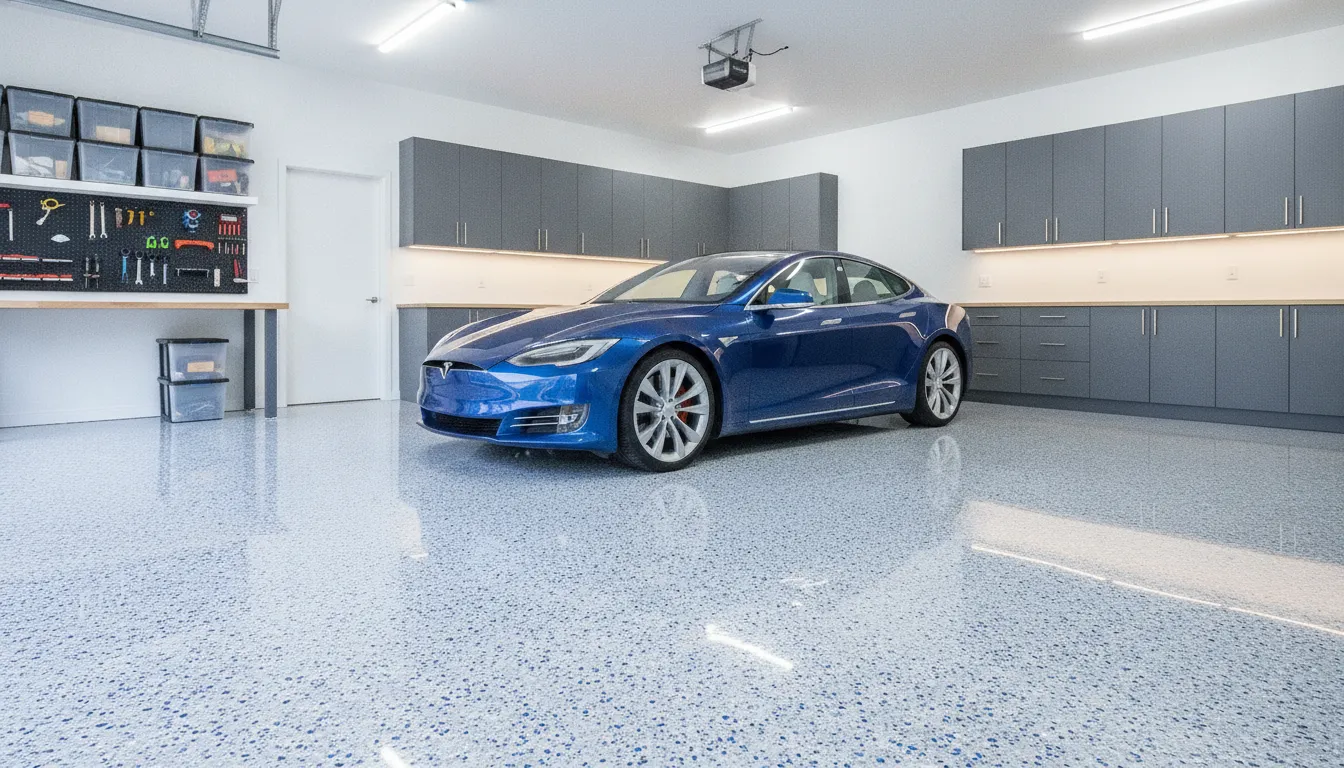
Garage Kings builds these advantages into a complete garage transformation rather than treating the floor as a single coat. Our premium six-coat system is backed by a lifetime warranty, and homeowners can choose from 14 decorative flake blends to create a finish that fits the space. The result is a surface designed for everyday performance without giving up a polished, customized appearance.
Installation Time: One Day vs Multiple Days
For homeowners comparing garage floor systems, the installation timeline affects far more than convenience. A coating is not ready simply because the surface looks finished. Each layer needs the right preparation, application window, and cure time before the garage can return to service.
-
Polyaspartic Installation: Prepare and Coat the Concrete
A professional polyaspartic installation begins by grinding and cleaning the concrete so the coating can bond to a sound surface. The crew then applies primer, a base coat, decorative flakes, and a protective topcoat. Because polyaspartic has a shorter application window than epoxy, experienced installers need to work efficiently and maintain consistent coverage across the floor.
-
Polyaspartic Cure: Return to the Garage Quickly
Polyaspartic coatings can cure in roughly one to two hours between stages, depending on the product and site conditions. The finished floor is generally ready for vehicle traffic in 24 hours or less. That fast turnaround is the foundation of Garage Kings’ one-day installation advantage: most homeowners can have the transformation completed without giving up the garage for an extended stretch.
-
Epoxy Installation: Allow More Time Between Coats
Epoxy follows a similar preparation and coating sequence, but its longer cure cycle creates more downtime. Epoxy typically takes 24 to 72 hours to cure, and many floors require three to seven days before vehicles should be parked on them. The exact schedule depends on temperature, humidity, product specifications, and the number of coats, so rushing the process can compromise the finished surface.
-
Choose Professional Timing for a Better Finish
Epoxy’s longer application window can be more forgiving for a do-it-yourself project. Polyaspartic, however, rewards precise surface preparation and controlled installation. Garage Kings technicians manage the timing from concrete preparation through topcoat application, helping the system cure as intended while minimizing disruption. For a closer look at the process, read our polyaspartic garage floor coating guide.
Cost Comparison: Compare The Full Coating System
Epoxy may have a lower initial material cost, while a professional polyaspartic system can offer faster return to service, UV stability, and resistance to hot-tire pickup. The right comparison includes surface preparation, number of coats, application quality, cure time, warranty coverage, and expected use, not a material label alone.
Garage Kings does not publish one-size-fits-all pricing because each project depends on garage size, slab condition, system selection, and local installation requirements. During a free in-home consultation, the team can evaluate the concrete and use 3D AR visualization to help you review the recommended finish.
Compare The Warranty, Not Just The Starting Cost
A lower initial price can be less economical if the coating cracks, peels, yellows, or needs frequent maintenance. Polyaspartic resists hot-tire pickup, UV-related yellowing, abrasion, and many common garage chemicals. Its flexibility and adhesion can also help reduce the risk of failures associated with changing temperatures and everyday impact.
Garage Kings offers coating systems designed around different durability needs:
- 3-coat system: backed by a 10-year warranty.
- 4-coat system: backed by a 20-year warranty.
- 6-coat premium system: backed by a lifetime warranty.
That warranty structure makes the comparison more practical. Rather than asking only what the floor costs today, consider how long it should perform. How much disruption a replacement would create, and whether the finish will continue looking sharp as the garage is used. The right professional system can reduce long-term maintenance and protect the value of the transformation. For practical upkeep tips, see our polyaspartic floor care guide.
Is Polyaspartic Worth The Money?
For many homeowners, yes. Polyaspartic is often worth the additional upfront investment when durability, UV stability, fast installation, and long-term warranty protection matter. It is especially compelling for garages that store daily-use vehicles, receive direct sunlight, or serve as an active workspace.
Epoxy may make sense when the primary goal is minimizing initial expense and the garage has lighter demands. However, application quality matters with either material. A professional evaluation can identify concrete repairs, moisture risks, and the coating system that fits your plans. Schedule your free in-home estimate with Garage Kings to compare your options with a clear, project-specific recommendation.
Which Coating Is Right for Your Garage?
The right coating depends less on a generic “best” label and more on how your garage functions. A space that houses a daily driver, tools, bicycles, and workshop equipment needs a different level of performance than a lightly used storage area. For complementary organization, explore our custom garage storage solutions.
Match The Coating To Your Garage Use
For a daily-use garage, polyaspartic is usually the stronger long-term choice. Its resistance to abrasion, chemicals, and hot-tire pickup helps it stand up to vehicle traffic, dropped tools, road salt, and common household spills. Epoxy can still make sense for a lower-use storage garage, particularly when the initial investment is the primary concern. The tradeoff is that epoxy may be more vulnerable to hot-tire pickup and generally takes longer to cure.
Consider Sunlight And Installation Conditions
If sunlight reaches your garage through windows or an open door, UV stability matters. Epoxy can yellow with UV exposure, while polyaspartic is recognized for excellent UV resistance. The polyaspartic garage floor coating guide explains more about how this chemistry performs in real garage environments.
DIY epoxy can appear more approachable because it typically has a longer application window. However, concrete preparation, moisture control, mixing, and even coverage determine whether any coating bonds properly. Polyaspartic cures quickly, so professional timing and application skill are especially important. A trained installation team can prepare the slab and apply each coat consistently, rather than leaving the result to trial and error.
Choose Value Over A Short-Term Fix
Epoxy may cost less at the outset, but a coating that needs repairs or replacement sooner can reduce that initial advantage. For homeowners who plan to use the garage every day, polyaspartic’s durability and faster return to service can make it the better value. A hybrid system can also balance performance and investment: an epoxy base coat provides a solid foundation, while a polyaspartic topcoat adds UV, abrasion, and hot-tire protection.
Garage Kings evaluates the slab, traffic pattern, sunlight, storage plans, and desired finish before recommending a system. During a free in-home consultation, our team can use AR 3D visualization to help you compare the finished look and make a confident decision. You can also preview door styles with our garage door visualizer before discussing garage door installation services. Schedule your free consultation to discuss the right complete garage transformation for your home.
Frequently Asked Questions
What is the main difference between polyaspartic and epoxy garage floor coatings?
Epoxy is a rigid resin-and-hardener system that cures into a hard surface. Polyaspartic is a polyurea-based coating designed for greater flexibility, faster curing, and stronger resistance to UV exposure. The best choice depends on your garage’s traffic, sunlight, moisture, and how quickly you need to use the space.
Which is more durable, polyaspartic or epoxy flooring?
Polyaspartic is generally the stronger option for a working garage. It resists hot-tire pickup, abrasion, and common chemicals, while epoxy can be more vulnerable to tire-related lifting and wear. Garage Kings also offers premium polyaspartic systems in multiple coat configurations, including a six-coat system backed by a lifetime warranty.
How long does it take for polyaspartic versus epoxy to cure?
Polyaspartic can cure fast enough for a professional installation to be completed in one day, with use typically following the installer’s guidance. Epoxy commonly needs at least 24 to 72 hours to cure, and some projects require several days before vehicle traffic. Source: 4 Corners Concrete Coatings.
Does polyaspartic resist UV fading better than epoxy?
Yes. Polyaspartic is UV-stable, so it is less likely than traditional epoxy to yellow or amber with sunlight exposure. That makes it a strong choice for garages with windows or open doors. The final result still depends on surface preparation, product selection, and professional installation.