
Rain, snow, and damp air do not automatically rule out a finished garage floor. They do make moisture control the deciding factor. If you are choosing between a sealer and a complete garage floor system, start with our concrete sealer guide. Concrete is porous, so water can remain inside the slab even when the surface looks dry. If that moisture moves toward the coating, it can create vapor pressure at the interface and lead to delamination, especially with standard epoxy systems.
A successful garage floor coating wet climate project starts with concrete moisture testing, thorough mechanical preparation, and a coating system suited to changing conditions. Polyaspartic is generally more moisture-tolerant during application than traditional epoxy, but it still requires a properly prepared, acceptably dry slab before the first coat is ever applied.
Before choosing a finish, it helps to understand how humidity and moisture behave both beneath and above the floor. Those conditions influence adhesion, curing, drying time, and the long-term appearance of the coating. This guide walks through the failure modes that show up in damp garages. Why polyaspartic handles them better than epoxy, and the simple moisture tests a professional installer runs before coating your concrete. Armed with that knowledge, you can buy with confidence instead of guessing.
Contact Garage Kings to book your free in-home consultation and 3D visualization today.
How Moisture and Humidity Affect Garage Floor Coatings
Moisture can affect a garage floor coating long before you see a visible problem. Concrete is porous, so it can retain water from the soil below, seasonal humidity, recent cleaning, or poor drying conditions. A floor may look dry at the surface while moisture remains inside the slab. Applying a coating before that moisture is properly evaluated creates a bond risk, especially in a garage floor coating wet climate project.
As trapped moisture moves through the concrete, it can create water vapor pressure at the coating interface. That pressure pushes against the coating from below. When it exceeds the strength of the bond, an epoxy overlay may lose adhesion and delaminate. Delamination can appear as peeling, hollow-sounding areas, bubbles, or sections that lift away from the slab. Federal transportation research identifies insufficient drying and moisture vapor pressure at the overlay interface as causes of epoxy delamination: https://rosap.ntl.bts.gov/view/dot/28924.
Humidity also changes what happens during application. High humidity can contribute to amine blush, a waxy film that forms on the surface of some epoxy coatings while they cure. That film interferes with adhesion between coats and may require additional cleaning and preparation before another layer can bond properly. Ambient humidity and the coating’s cure chemistry both influence the final surface properties of epoxy systems, including the risk of moisture-related defects: https://pmc.ncbi.nlm.nih.gov/articles/PMC9549571/.
Temperature and humidity work together. A cool, damp garage can slow epoxy curing, while changing conditions during the cure can affect the finish and the consistency of the bond. Opening the garage door may not solve the problem if outdoor air is already carrying substantial moisture. Ventilation, controlled conditions, and a coating system suited to the installation environment all matter.
That does not mean homeowners in rainy, coastal, or humid regions must avoid a coated floor. It means the installation should begin with moisture testing and appropriate surface preparation. A professional installer can identify whether the slab is ready, determine whether additional moisture control is needed, and select materials that tolerate the expected conditions. For a broader look at the decision, read are garage floor coatings worth it in wet conditions.
- Porous concrete: Water can remain inside the slab even when the surface appears dry.
- Vapor pressure: Moisture moving upward can push against the coating and contribute to epoxy delamination.
- High humidity: Damp application conditions can produce amine blush and interfere with inter-coat adhesion.
- Changing conditions: Temperature and humidity can alter epoxy cure behavior and final surface quality.
Why Polyaspartic Outperforms Epoxy in High-Humidity Garages
In a wet climate, the coating is only as reliable as its ability to handle moisture while it is being installed and cured. Polyaspartic systems generally offer higher moisture tolerance during application than traditional epoxy systems, making them a stronger fit for garages exposed to changing humidity. That advantage does not eliminate the need for testing or preparation, but it gives installers a wider performance window when weather conditions are less predictable.
Epoxy can produce an attractive, durable surface in the right environment. However, its cure chemistry is more affected by ambient conditions. High humidity can contribute to amine blush, a waxy surface defect that interferes with adhesion between coats and may require additional preparation. Longer cure times also leave the coating exposed to humidity changes for more time. The relationship between epoxy cure chemistry and final surface properties is documented in research published through the National Institutes of Health: review the epoxy coating research.
| Factor | Polyaspartic | Traditional Epoxy |
|---|---|---|
| Humidity Tolerance | Generally more tolerant of moisture sensitivity during application. | More sensitive to humidity during application and cure. |
| Cure Time | Rapid curing, which shortens the window for humidity-related defects. | Typically slower curing, leaving the surface exposed to changing conditions longer. |
| Temperature Range | Can cure and bond in lower temperatures and higher humidity where epoxy may struggle. | Usually requires a more controlled temperature and moisture environment for reliable curing. |
| Moisture Sensitivity | Better suited to variable humidity, provided the concrete is properly prepared and tested. | Needs a clean, dry substrate and careful control of moisture during installation. |
Polyaspartic’s practical advantage is especially relevant in northern and coastal regions. Research on polyaspartic polyurea coatings identifies application versatility in challenging conditions, including high humidity and low temperatures. In other words, a cool, damp garage does not automatically rule out installation when the correct system and process are used. The coating still needs a suitable substrate, but it is less dependent on a narrow stretch of warm, dry weather.
For a closer look at how the systems compare beyond humidity, read about polyaspartic vs epoxy garage floor durability. You can also explore what makes polyaspartic floor coatings so popular for more context on residential garage applications.
One important qualification remains: higher moisture tolerance is not permission to coat a wet slab. Concrete is porous and can retain water, and moisture trapped at the coating interface can create vapor pressure that contributes to delamination. A professional installation should include mechanical preparation and moisture testing before the first coat. Polyaspartic improves the system’s climate flexibility, while disciplined preparation protects the bond that makes the finished floor last.
How to Test Your Concrete for Moisture Before Coating
Moisture testing is a practical checkpoint before any garage floor coating, especially when the garage floor coating wet climate concern is real. Concrete is porous and can retain water below the surface. If that moisture is sealed in too soon, vapor pressure can weaken the bond and contribute to delamination. A professional installer should test the slab, interpret the results, and choose the coating system and preparation method accordingly.
- Start with a visual plastic-sheet check. Tape a clear sheet of plastic tightly to several representative areas of the slab, including places that appear darker, cooler, or close to an exterior wall. Leave it in place long enough to reveal a meaningful change, then inspect the underside of the plastic and the concrete. Condensation or visibly darkened concrete indicates surface moisture or vapor movement. This is a useful screening step, but it is not a substitute for standardized testing because it only shows what is happening near the surface.
- Measure vapor emission with a calcium chloride test. A calcium chloride test measures the slab’s moisture vapor emission rate under a sealed test area and follows ASTM F1869. The result helps an installer determine whether the concrete is dry enough for the specified coating system. Testing should take place after the slab has had adequate time to dry, not immediately after washing or during unusually wet conditions. Because readings can vary across a garage, multiple test locations provide a more reliable picture than one sample.
- Check internal moisture with relative humidity probes. ASTM F2170 relative humidity probes measure moisture inside the concrete rather than relying only on surface conditions. That distinction matters because a slab can look dry while still holding moisture deeper within its profile. Internal RH testing is generally more representative of the slab’s moisture state than surface-only methods. The installer should compare the readings with the coating manufacturer’s published limits before proceeding. The goal of calcium chloride and RH testing is the same: reduce the risk of bond failure by confirming that the slab is ready.
- Allow new concrete to cure and prepare the surface. New concrete commonly needs about 30 days to cure before coating, but curing time does not automatically prove that the slab is dry enough. Test results still matter. Once moisture conditions are acceptable, the surface must be mechanically prepared by methods such as diamond grinding or shot blasting to create a CSP 3 profile. This removes weak surface material, opens the concrete pores, and gives the coating a clean, properly textured surface to bond with. Cracks, damaged areas, old sealers, oil, and other contaminants also need to be addressed before application.
For a deeper explanation of the process, review this guide to concrete floor moisture testing. Testing does not eliminate moisture in the slab, but it replaces guesswork with information that supports the right preparation and coating decision.
Seasonal Challenges: Rain, Snow, Ice Melt, And Salt Damage
A wet climate tests a garage floor in different ways throughout the year. Rainwater can run off a vehicle or be tracked in by shoes, while snow melts into the slab near the garage door. In colder regions, repeated freezing and thawing can stress cracks and joints. Coastal homeowners may also deal with salt air and damp conditions that keep the floor from drying quickly.
Moisture is more than a housekeeping issue. Concrete is porous and can retain significant water, so coating over a slab that has not dried adequately is a leading cause of bond failure in humid conditions. Moisture trapped below the coating can create vapor pressure at the interface and contribute to delamination. Transportation research on concrete moisture and coating adhesion explains why testing and preparation matter before installation.
How Winter Moisture And Salt Affect The Surface
Ice-melt products commonly contain chlorides that arrive on the floor with tires, boots, and slush. As the residue dries, it can leave white staining and make the surface look dull or dirty. Salt does not replace the need for proper preparation, either. If water and contaminants reach a weak bond, seasonal wetting can expose peeling, bubbling, or edge failures that were already developing below the surface.
Freeze-thaw movement creates another challenge. Water enters small cracks or gaps, freezes as temperatures drop, and expands. A resilient coating system can accommodate normal slab movement better than a rigid finish, but it cannot correct active structural movement or an unprepared substrate. Cracks, joints, and areas of standing water should be evaluated and addressed as part of the installation plan.
Practical Ways To Reduce Seasonal Damage
- Improve drainage at the garage entrance so runoff does not collect against the slab or flow across the entire floor.
- Use absorbent entry mats and a designated area for wet boots, especially during snow and rain seasons.
- Rinse away salt and ice-melt residue with clean water, then remove standing water instead of allowing deposits to dry repeatedly.
- Keep gutters, downspouts, and nearby grading directed away from the garage threshold.
- Ask the installer to test concrete moisture and prepare the full floor, including edges and the bumper-to-bumper area, rather than coating only the visible center.
For moisture-prone garages. Polyaspartic is often a practical choice because it generally offers greater moisture tolerance during application than traditional epoxy and performs in challenging humidity and temperature conditions. Its durability and resistance to staining can make routine cleanup easier, but the material is not a shortcut around testing, mechanical preparation, or correct curing conditions. A professional comparison of polyaspartic and epoxy garage floor durability can help you evaluate the system against your climate and daily use.
Choosing the Right Garage Floor Coating for Wet or Coastal Climates
For homeowners dealing with persistent humidity, rain, snow, or damp concrete, polyaspartic is usually the right garage floor coating wet climate homeowners should consider. It offers greater moisture tolerance during application than traditional epoxy and can cure in conditions where epoxy may struggle. That advantage matters, but it does not eliminate the need for careful installation. A moisture-tolerant coating still needs a clean, properly prepared, and thoroughly tested concrete surface.
Polyaspartic is also a practical fit for households that cannot leave a garage out of service for several days. Its rapid cure allows a professional crew to complete the installation in one day, with the floor ready for normal use according to the product and installation requirements. In cooler northern or coastal regions, its ability to bond and cure at lower temperatures can provide additional flexibility when the garage is not climate controlled. For a broader explanation of the material, see what makes polyaspartic floor coatings so popular.
Professional Preparation Is The Difference
The coating itself is only one part of a moisture-resistant floor system. A professional installation begins by checking the concrete for internal moisture, rather than relying only on whether the surface looks dry. Calcium chloride testing and in-slab relative humidity probes can identify moisture conditions that would otherwise remain hidden. Industry guidance emphasizes reducing concrete moisture to an acceptable level before coating so the coating can form a dependable bond.
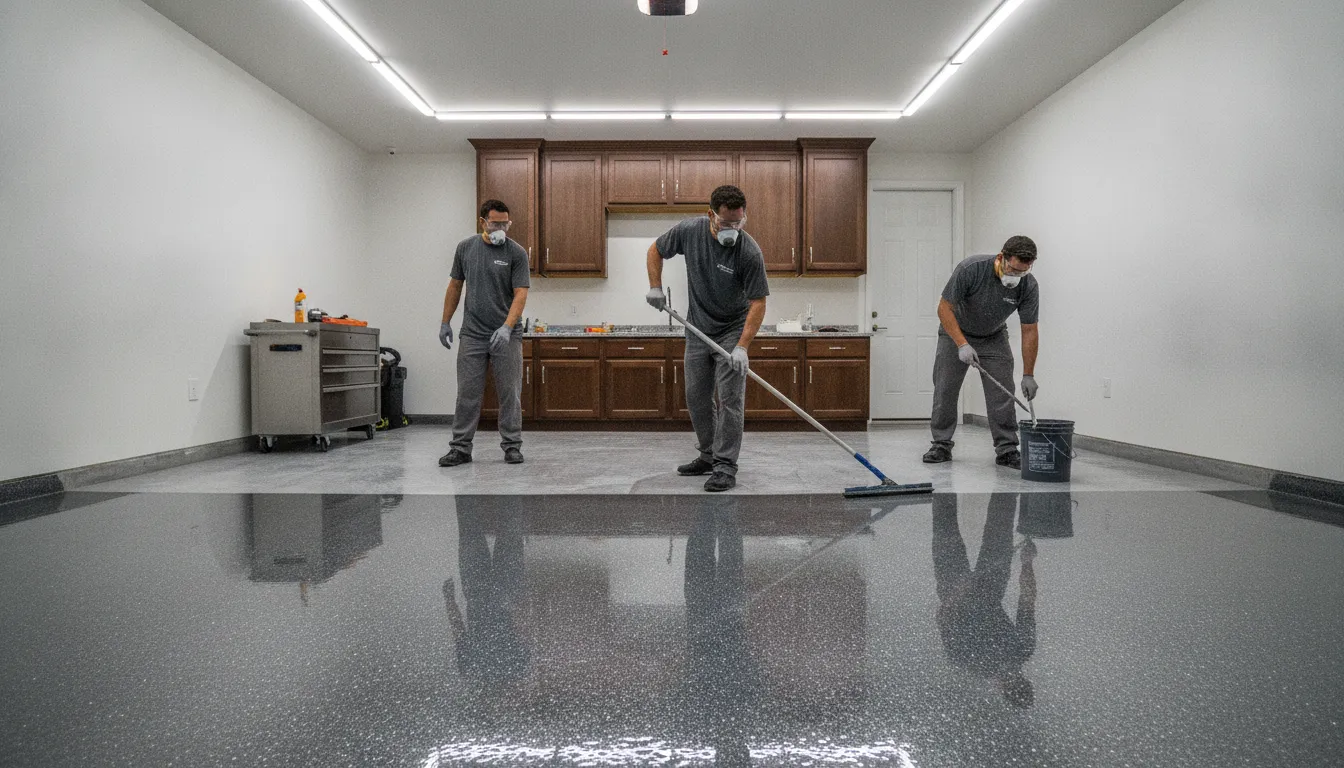
Surface preparation is equally important. Diamond grinding or similar mechanical preparation removes contaminants and opens the concrete profile so the coating can adhere properly. Cracks, weak areas, old sealers, and other bond-inhibiting conditions must be addressed before the first coat is applied. In a particularly wet slab, the installer may recommend a moisture-vapor barrier system instead of proceeding with a standard application. These decisions are why professional garage floor coating services are valuable in challenging climates.
Why DIY Kits Often Fail In Damp Garages
Most DIY kits cannot provide the same moisture assessment, mechanical preparation, or controlled application environment. A garage floor can appear dry while still releasing vapor from the slab. Applying a coating over that moisture can create pressure at the coating interface and lead to blistering or delamination. Humidity can also interfere with epoxy cure chemistry and contribute to amine blush, a waxy surface defect that weakens adhesion between coats.
A warranty-backed professional system gives you more than a particular resin. It gives you a documented process, the right preparation equipment, moisture testing, product selection for the conditions, and accountability if a problem develops. In wet or coastal climates, that complete system is more dependable than choosing a kit based on its label alone.
Schedule your free in-home consultation now and see a 3D visualization of your new garage floor.
Frequently Asked Questions
How do you stop moisture from coming through a garage concrete floor?
Start with professional moisture testing, not a coating application. Concrete can retain water below the surface, and vapor pressure may push against the coating and cause blistering or delamination. Calcium chloride testing and in-slab relative humidity probes help determine whether the concrete is ready and whether additional moisture control is needed. Learn more about concrete floor moisture testing.
When should you not epoxy a garage floor?
Do not apply epoxy when the slab is damp, visibly sweating, or exposed to uncontrolled humidity, and do not coat over concrete that has not passed moisture testing. High humidity can also create amine blush, a waxy surface defect that interferes with adhesion between coats. If the garage stays cool and wet, discuss a system designed for those conditions instead of relying on epoxy alone. Source: National Library of Medicine research.
Is polyaspartic better than epoxy in a wet climate?
Polyaspartic is often the better fit for a moisture-prone garage because it generally has greater application tolerance in high humidity and can perform in cooler conditions where epoxy may struggle. It still requires dry, properly prepared concrete and objective moisture testing. A moisture-tolerant coating cannot compensate for vapor pressure, contamination, or inadequate surface preparation. Source: polymer coating research.
How long does a garage floor coating take to dry in humid weather?
Drying and return-to-service time depend on the product, temperature, humidity, ventilation, and concrete condition. Polyaspartic systems are known for rapid curing, with some residential applications allowing use again within about 24 hours. But the installer should confirm the exact schedule for your garage. Keep vehicles, water, snow, and heavy traffic off the surface until the coating has fully cured. Source: polyaspartic coating research.
Get a Free In-Home Garage Floor Coating Consultation
A garage floor coating is a long-term investment, and the right system for a wet or high-humidity climate starts with a professional moisture assessment and surface prep. A Garage Kings technician will inspect your concrete, test for moisture. And design a polyaspartic system that is built to hold up through the rain, snow, and salt your region throws at it.
Start with a free in-home consultation that includes a 3D AR visualization of your finished garage floor. So you can see exactly how the coating will look before a single panel is opened. Contact Garage Kings to book your free in-home estimate today.