
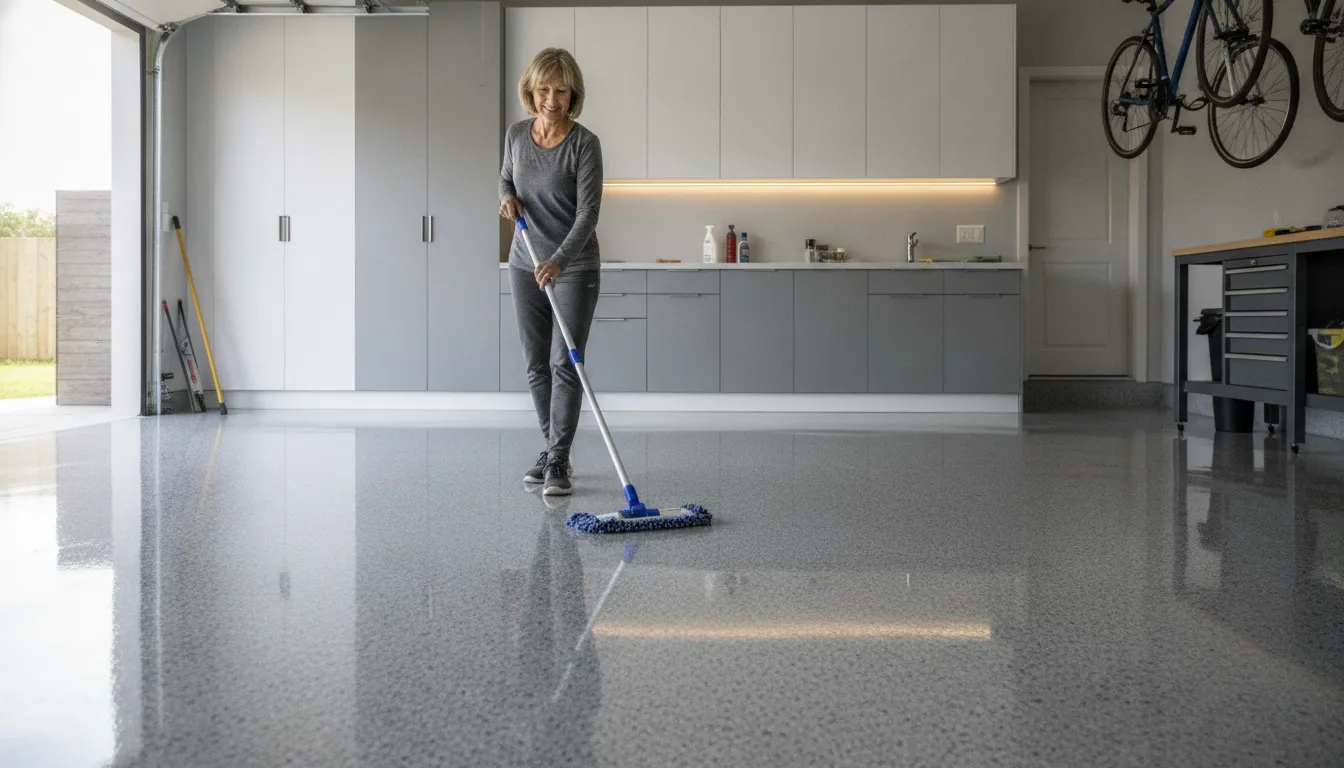
A polyaspartic garage floor is designed to handle the messes and demands of daily garage life. But even a durable coating looks its best with a consistent cleaning routine. Dirt, road salt, oil, and tire residue are easier to manage when they are removed before they build up.
The best approach for how to clean polyaspartic garage floor surfaces is simple: sweep regularly, mop occasionally with a gentle cleaner, and treat spills promptly. Polyaspartic coatings are highly resistant to chemicals, UV rays, and water. Garage Kings coatings are 4x stronger than standard epoxy, so careful maintenance helps preserve their long-lasting finish.
Schedule your free in-home consultation today to learn how a polyaspartic coating can transform your garage into a low-maintenance, durable space.
Understanding which products are gentle enough for the coating is the next step. The right cleaner removes grime without dulling the finish, while the wrong one can create avoidable wear over time. For broader guidance on the coating system itself, see our Everything You Need to Know About Installing Polyaspartic Garage Flooring, then start with the safe cleaning products below.
What Cleaning Products Are Safe on Polyaspartic Garage Floors?
Use a pH-neutral cleaner in the 7 to 10 range, a diluted clear ammonia solution, or mild dish soap used sparingly. Avoid acidic products like vinegar and citrus cleaners, bleach, harsh solvents, and abrasive scrubbers that can dull or scratch the finish over time.
Polyaspartic flooring is built for demanding garage conditions, and it is 4x stronger than standard epoxy. That durability does not make the surface maintenance-proof. The right cleaner protects the coating’s gloss, while the wrong product can gradually dull, scratch, or degrade the finish. For guidance on how the coating compares with epoxy, see our polyaspartic vs. epoxy flooring comparison.
For routine cleaning, choose a pH-neutral product in the 7 to 10 range. Mild degreasers can help with oily residue, but use them sparingly and follow the product label. A soft microfiber cloth, sponge, or non-abrasive mop is safer than a stiff brush or scouring pad. For deeper cleaning, a clear ammonia solution made with 5 ounces of clear ammonia per gallon of hot water can be effective. Rinse with clean water afterward so residue does not remain on the coating.
| Product or tool | Safe or unsafe | Why |
|---|---|---|
| pH-neutral cleaner, pH 7-10 | Safe | Provides routine cleaning without aggressive chemistry. |
| Clear ammonia solution, 5 oz per gallon of hot water | Safe when diluted | Useful for deeper cleaning when followed by a clean-water rinse. |
| Mild dish soap | Safe when used sparingly | Can lift light soil. But excess soap may leave a slippery film. |
| Citrus cleaners, vinegar, or other acidic products | Unsafe | Acids may attack or strip the glossy coating over time. |
| Bleach and harsh solvents | Unsafe | Strong chemicals can discolor or degrade the surface. |
| Abrasive powders, steel wool, or stiff scrubbers | Unsafe | They can scratch or dull the finish. |
When choosing between products, gentler is usually better. Clean spills promptly, use a soft tool, and rinse away cleaner residue. These simple habits help preserve the smooth, low-maintenance surface that makes polyaspartic a practical choice for an active garage.
What Does a Weekly Maintenance Routine for Polyaspartic Floors Look Like?
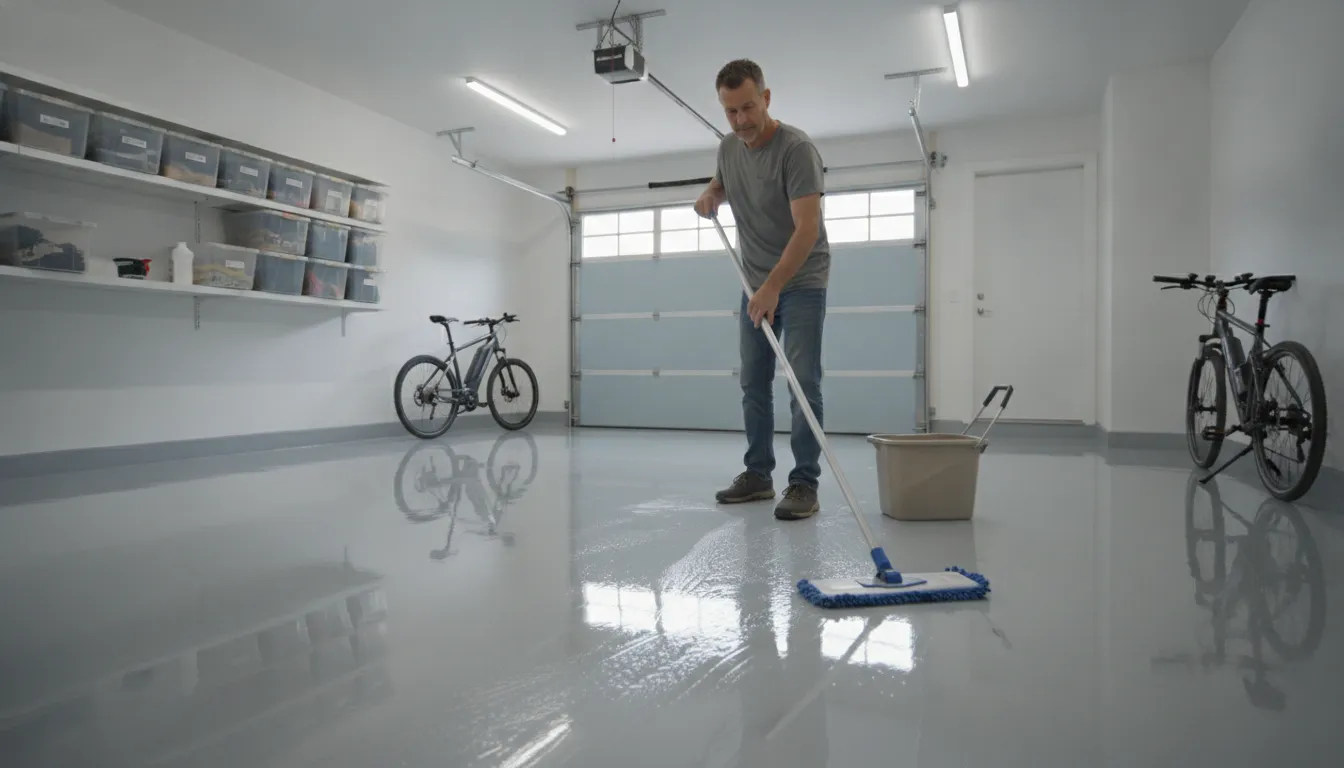
Sweep once a week with a soft broom or use a leaf blower to remove loose debris. Clean spills as soon as they happen with a damp cloth. Mop periodically with clean water and a pH-neutral cleaner or a diluted ammonia solution to keep the non-porous surface looking its best.
Once your garage floor has a polyaspartic coating, routine cleaning is straightforward. The non-porous surface does not hold dust, moisture, or everyday spills the way uncoated concrete can. Most homeowners can keep it looking clean with a few simple habits.
Start With Dry Debris Removal
Once a week, dry sweep the floor with a soft-bristle broom or use a leaf blower to clear away dirt, leaves, sand, and other loose debris. Pay particular attention to the areas near the garage door and beneath workbenches, where grit can collect. Removing this material regularly helps keep it from being tracked across the finish or ground into areas with frequent foot traffic.
Clean Spills As Soon As They Happen
For oil, automotive fluids, mud, or other small spills, use a damp cloth or soft towel as soon as you notice the mess. Blot or wipe the area rather than allowing the substance to sit on the floor. Polyaspartic coatings are designed for demanding garage environments, but prompt spot cleaning is still the best way to prevent residue and keep the surface looking consistent.
Mop Periodically With a Gentle Cleaner
When the floor needs more than sweeping, damp mop it with clean water and a pH-neutral floor cleaner. A properly diluted ammonia solution can also be used for periodic deeper cleaning when appropriate. Use a soft mop, avoid soaking the floor, and remove excess moisture as you go. Do not use abrasive pads or aggressive cleaners that can dull the finish over time.
Compared with cleaning uncoated concrete, this routine takes little time and does not require repeated scrubbing to remove grime from pores and surface texture. For more practical ways to protect your finished garage, see our easy garage floor maintenance tips.
Get a free quote today and discover how a professionally installed polyaspartic floor simplifies your garage cleaning routine.
How to Clean a Polyaspartic Garage Floor and Remove Stains
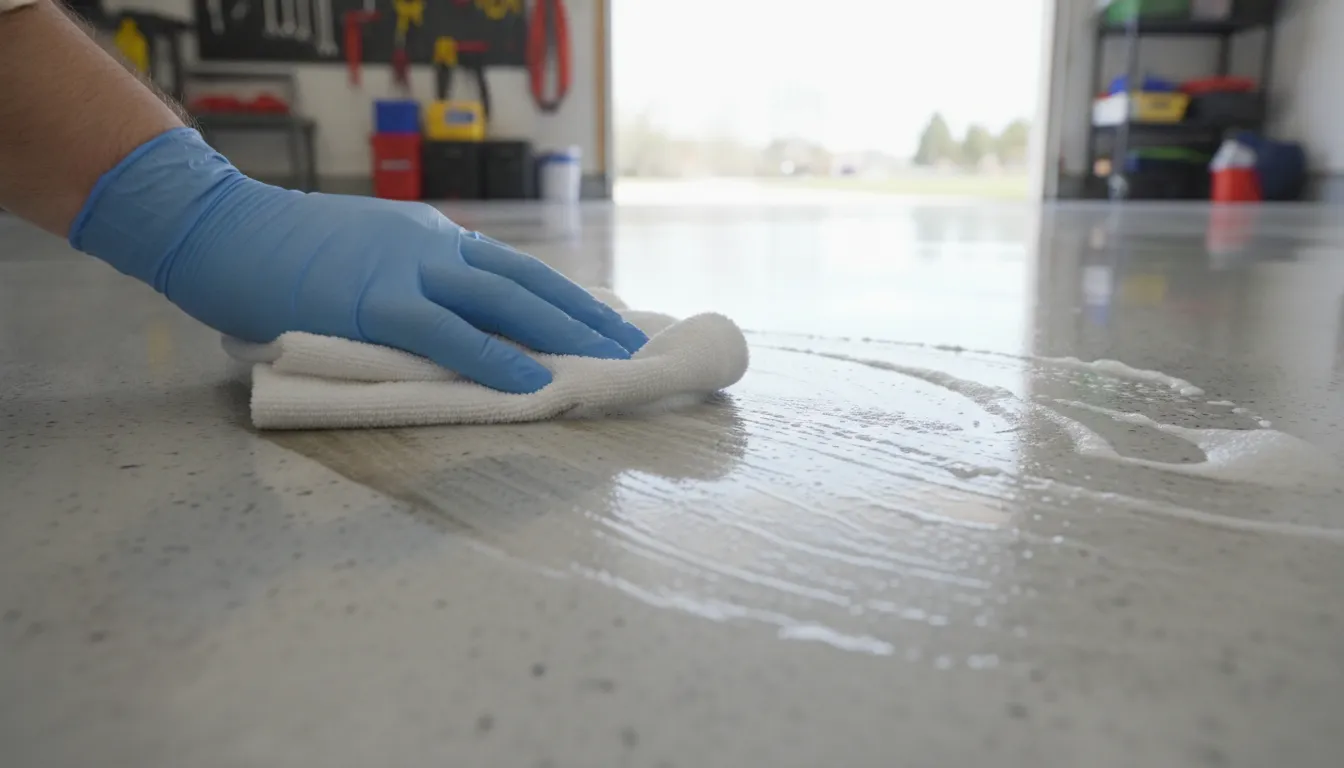
Identify the stain type, sweep away debris, apply an appropriate cleaner such as a mild degreaser or diluted ammonia. Scrub gently with a soft brush or microfiber cloth, then rinse thoroughly with clean water and dry completely. Prompt treatment prevents lasting discoloration.
Polyaspartic flooring has a non-porous surface that resists absorbing many garage spills, but it still needs prompt attention. Oil, tire residue, chemicals, and organic materials are easier to remove before they sit on the finish and become long-term stains. Use this careful process when spot cleaning your floor.
-
Identify the stain type. First determine whether you are treating oil, tire marks, a chemical spill, or an organic stain such as food, leaves, or mud. Identifying the residue helps you choose an effective cleaner without exposing the coating to unnecessarily harsh chemicals.
-
Sweep away loose debris. Remove grit, dust, and other particles with a soft broom or dry microfiber dust mop. Do not scrub a dirty surface while dry debris is still present, since it can create avoidable scratches or dull the finish.
-
Apply the appropriate cleaner. For oil and tire marks, use a mild degreaser suitable for coated floors. A pH-neutral cleaner is a good choice for general stains and routine spot cleaning. For a stubborn spot, mix 5 ounces of ammonia with 1 gallon of hot water, following safe handling practices and the cleaner manufacturer’s directions. Avoid aggressive or abrasive products that may degrade the coating or reduce its gloss.
-
Scrub gently. Work the cleaner over the stain with a soft-bristle brush or microfiber cloth. Use light pressure and short passes rather than a stiff brush or abrasive pad. Allow the cleaner to loosen the residue, then repeat gently if needed.
-
Rinse and dry thoroughly. Rinse the area with clean water so no cleaner residue remains on the floor. Remove standing water with a clean microfiber mop or towel, then let the surface dry fully before returning vehicles, tools, or storage items to the area.
Quick treatment is the best protection against lasting discoloration. If a mark remains after gentle cleaning, do not escalate to harsh solvents or abrasive equipment. Read our guide to installing polyaspartic garage flooring for more information about the coating system and its care.
How Do You Care for a Polyaspartic Floor in Winter?
Place rubber-backed mats at entry zones to catch road salt and ice melt. Rinse affected areas with clean water when you see white residue. Use a plastic shovel or rubber-edged tool instead of a metal shovel to avoid scratching the coating during the winter months.
Winter brings a different kind of cleanup to a garage floor. Road salt and ice melt tracked in by tires can leave a chalky residue that dulls the finish when it sits on the coating. Polyaspartic is UV stable and built to handle seasonal exposure, but that resilience does not eliminate the need to remove chemical residue from daily traffic.
Keep Salt and Ice Melt From Building Up
Place rubber-backed mats in the entry zones where people and vehicles bring in the most moisture, salt, and deicer. Mats help capture debris before it spreads across the garage and make winter cleanup more manageable. Shake them out regularly, and check underneath them so moisture and residue do not remain trapped against the floor.
When you see white residue or wet tracks, sweep away loose grit first. Then rinse the affected area with clean water and remove the dirty water with a soft mop or squeegee. A periodic rinse is especially helpful during long stretches of freezing weather, when repeated vehicle traffic can deposit several layers of road treatment. Prompt removal helps preserve the coating’s appearance and protective surface.
Use Winter-Safe Tools
Do not scrape ice or packed debris with a metal snow shovel. Metal edges can scratch or damage the coating, particularly when grit is caught beneath the blade. Choose a plastic shovel or a tool with a rubber edge instead. For routine cleaning, follow the same basic approach used year-round: sweep gently, spot-clean spills, and mop occasionally with a mild, suitable cleaner.
Polyaspartic coatings are 4x stronger than standard epoxy, which gives them excellent durability through changing conditions. Simple winter habits still matter. Removing salt promptly, using protective mats, and choosing non-abrasive tools help keep the floor clean and attractive throughout the season.
When Does a Polyaspartic Coating Need Professional Inspection?
Schedule a professional inspection if you notice peeling or flaking near edges, bubbling or blistering on the surface. Persistent dulling that does not respond to proper cleaning, deep scratches or gouges reaching the concrete, discoloration, or hot-tire pickup marks that do not wash off.
Most well-installed polyaspartic garage floors need little more than routine cleaning for years. Still, visible changes in the coating are worth noticing. An inspection does not mean your floor has failed. It gives you a clear answer about whether a small repair is enough or whether recoating would provide better long-term protection.
Watch for Changes at the Surface
- Peeling or flaking: Separation around edges or seams can point to an installation problem, poor adhesion, or moisture-related conditions beneath the coating.
- Bubbling or blistering: Raised bubbles may indicate moisture vapor moving through the concrete. Because the source is below the surface, scrubbing alone will not solve it.
- Persistent dulling: If the floor loses its gloss despite proper cleaning with appropriate products, the finish may be experiencing wear. Aggressive or abrasive cleaners can also contribute to dulling over time.
- Deep scratches or gouges: Damage that reaches the concrete deserves prompt attention, particularly in areas exposed to water, chemicals, or vehicle traffic.
- Discoloration or yellowing: Isolated color changes can signal exposure, coating wear, or another condition that is easier to evaluate before it spreads.
- Hot-tire pickup: If tires begin pulling up or marking the coating, have the area assessed rather than assuming the marks are ordinary dirt.
When a Repair or Recoat Makes Sense
A professional can inspect the affected area, look for moisture or adhesion concerns, and recommend spot repair when the surrounding coating remains sound. If wear is widespread, recoating may restore a consistent protective surface. Garage Kings installs premium systems designed to resist heavy traffic, chemical exposure, and demanding garage temperatures, with lifetime warranties available on qualifying systems.
For more context on the installation process and what affects long-term performance, read our guide to installing polyaspartic garage flooring. A timely inspection can protect the investment without turning normal maintenance into a cause for concern.
Frequently Asked Questions
What cleaner is best for a polyaspartic garage floor?
Use a pH-neutral floor cleaner or a mild degreaser with a soft cloth or mop. These products lift everyday dirt, dust, and light grease without putting unnecessary stress on the finish. For routine care, sweep first so loose grit does not scratch the surface, then mop with clean water and the diluted cleaner recommended on its label.
Can you use dish soap on a polyaspartic garage floor?
A small amount of mild dish soap may be suitable for occasional spot cleaning, but it should not replace a properly diluted pH-neutral floor cleaner for regular maintenance. Rinse away soap residue thoroughly, because leftover film can make the floor look dull or slippery. Test any unfamiliar product in a small, inconspicuous area first.
What should you avoid when cleaning a coated garage floor?
Avoid abrasive powders, rough scrub pads, and aggressive cleaners that can dull or scratch the finish over time. Do not use acidic products such as vinegar or citrus-based cleaners unless the coating manufacturer specifically approves them. Choose soft cleaning tools and stop if a product changes the floor’s sheen or color.
How often should a polyaspartic garage floor be cleaned?
Sweep as needed based on traffic and debris, and mop when the surface looks dusty or soiled. Promptly wipe up oil, chemicals, and other spills instead of allowing them to sit. Regular care is intentionally simple: Garage Kings recommends routine sweeping and occasional mopping, while polyaspartic’s resistance to chemicals, UV rays, and water supports its low-maintenance performance.
How durable is a polyaspartic garage floor coating?
Polyaspartic coatings are 4x stronger than standard epoxy, according to Garage Kings’ service information. They are also UV stable and resistant to hot-tire pickup. Cleaning still matters because prompt spill removal and gentle tools help preserve the coating’s appearance and protective performance. If you notice peeling, bubbling, deep scratches, or persistent discoloration, request a professional inspection rather than trying increasingly harsh cleaners.
Ready to Keep Your Garage Floor Looking Its Best?
Proper cleaning can help you maintain a polished, functional garage floor, but professional guidance is useful when you are planning a new coating or evaluating your current surface. Schedule your free in-home consultation with Garage Kings to discuss your goals and explore your options with 3D AR visualization. You can also call (501) 260-5552 to talk with our team.