
A garage floor coating is only as dependable as the concrete preparation beneath it. Before comparing colors or finish options, look for an installer who can explain how the slab will be cleaned, repaired, profiled, and checked for moisture. The installer should also identify each coating layer and its cure requirements.
Schedule a free in-home consultation with 3D AR visualization
The best garage floor epoxy installers make the process easy to evaluate. They provide a clear scope of work, explain whether epoxy or polyaspartic fits the space, address ventilation and dust control, and set realistic walk-on and vehicle re-entry expectations. Professional preparation matters because properly cleaned, repaired, and profiled concrete supports adhesion and helps prevent peeling. Compare garage floor coating systems before requesting proposals.
A thoughtful comparison also considers local experience, material specifications, written warranty terms, and how the crew will protect the rest of your home. Start by asking questions that reveal what happens before, during, and after installation, rather than relying on a product name or a quick completion promise.
How To Compare Garage Floor Epoxy Installers
Comparing garage floor epoxy installers means looking beyond finish colors and photos. The important differences are often underneath the surface, including how the concrete will be evaluated, how the epoxy system will be selected, and how the crew will protect your home while working.
Start with preparation. Ask each installer to explain how the slab will be cleaned, repaired, and profiled for adhesion. Diamond grinding is one professional method for creating the surface profile epoxy needs. If moisture vapor is present beneath the slab, it can become trapped under the coating and contribute to bubbling or peeling. So ask how moisture will be assessed and addressed. Compare garage coating systems before your consultation so you can discuss the process with more specific questions.
- Will cracks, spalls, or damaged concrete be repaired before coating?
- Will the proposal identify the preparation method and each coating layer?
- What happens if the slab has excess moisture or an unsuitable surface condition?
Next, evaluate epoxy-specific experience. Ask whether the team regularly installs residential garage floors in your climate, which products are being considered, and how resin and hardener are mixed according to manufacturer instructions. Ask to see recent local references or completed projects with similar slab conditions. Local experience does not replace a proper assessment, but it can help the installer account for common conditions in your area.
Request a written scope rather than relying on a verbal description. It should identify repairs, preparation, coating layers, decorative options, topcoat, cleanup, cure guidance, and warranty terms that apply to your territory. The scope should also explain what areas remain off-limits while the work cures.
Finally, ask about jobsite safety. Epoxy work can involve skin contact and vapor exposure, while grinding hardened material can create particles. The CDC identifies both exposure pathways as important hazards. The EPA also treats an interior garage floor as an interior space for post-renovation cleanup and advises proper containment and removal of dust and debris. A professional should be ready to explain ventilation, protective equipment, dust control, and final cleanup before you commit.
What Should A Professional Installation Include?
A professional coating installation should follow a deliberate sequence, not simply place epoxy over whatever concrete is already there. The exact system can vary by territory, slab condition, and the coating selected, so ask your local Garage Kings team to explain the proposed scope before work begins. A useful overview of the expected sequence is available in this garage floor installation process.
Assessment And Concrete Repairs
The process should begin with an assessment of the existing slab. The installer should identify cracks, pits, damaged areas, contamination, and conditions that could affect adhesion. Repairs and preparation are not optional cosmetic steps. Concrete must be cleaned, repaired, and profiled correctly to create a strong bond and reduce the risk of peeling. If the slab requires more extensive correction, ask whether coating remains appropriate or whether concrete resurfacing should be considered first.
Grinding And Moisture Control
Professional preparation commonly includes diamond grinding, which creates a suitable mechanical profile for the coating. Grinding also gives the crew a controlled way to remove surface contaminants and prepare repaired areas. Moisture deserves separate attention. Excess vapor moving through the slab can become trapped beneath a coating and contribute to bubbling or peeling. The proposal should explain how moisture conditions will be evaluated and whether a moisture-vapor barrier is needed for the project.
Coating Layers, Flakes, And Topcoat
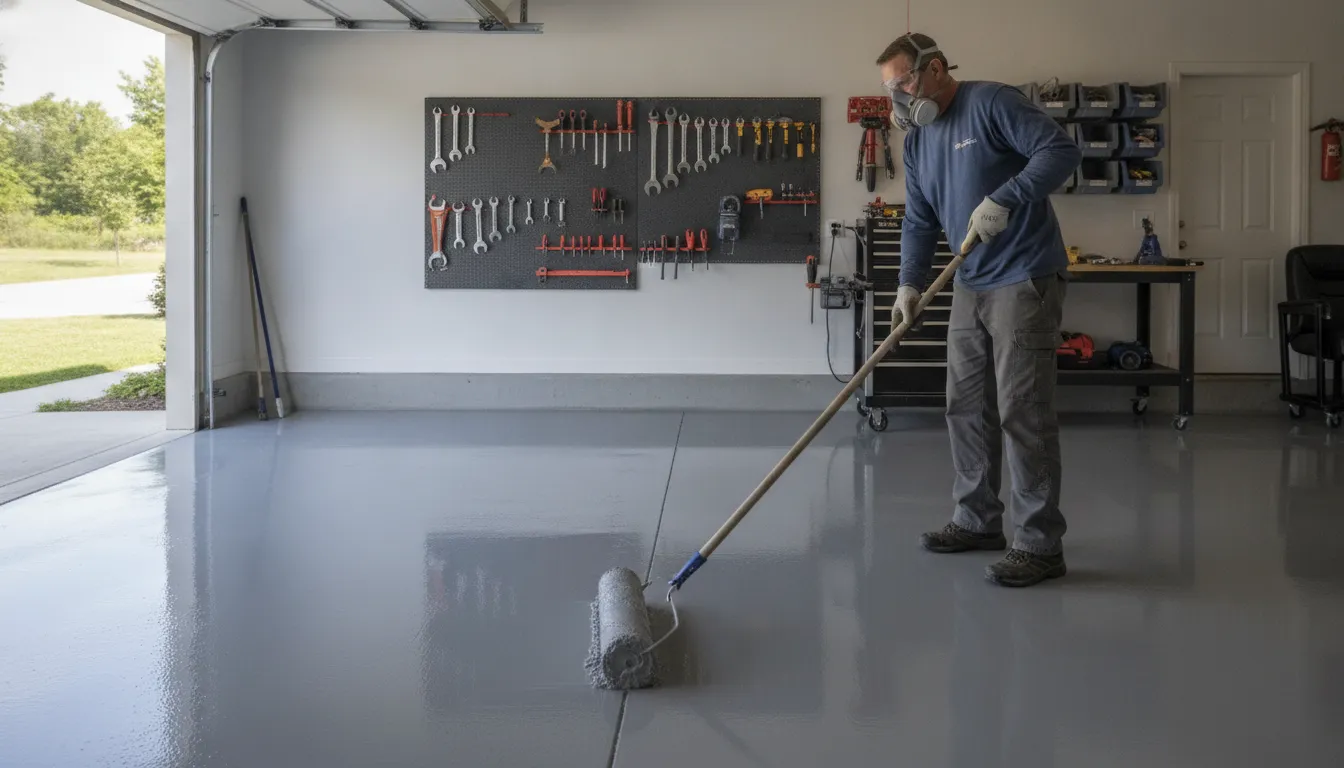
Once preparation is complete, the installer applies the specified coating system. Garage Kings documents system options with preparation and repair, a base coat, decorative vinyl flakes, and a clear topcoat. Flakes are broadcast while the base coat is wet, then the topcoat seals the finished surface. Some systems also use an aggregate in the final topcoat to provide slip resistance. That does not make a floor slip-proof, so confirm the finish and maintenance expectations.
Cleanup And Re-Entry Guidance
Before the crew leaves, the work area should be cleaned. The homeowner should receive clear guidance about cure time, ventilation, and when people, stored items, or vehicles can return. Installation and cure timing varies with conditions and the selected system. A complete handoff is part of a professional job, not an afterthought.
Why Concrete Preparation Determines The Result
A coating can only bond as well as the concrete beneath it allows. Before any resin is applied, the surface should be cleaned of dirt, oil, dust, and residue. Cracks, pits, and other defects also need to be assessed and repaired. This is not cosmetic work. Proper cleaning, repair, and profiling create the surface conditions needed for a strong bond and help prevent premature peeling.
Profiling gives the coating a texture it can grip. For professional projects, diamond grinding is a mechanical preparation method that creates a consistent profile across the slab. It can also help remove weak surface material that would otherwise interfere with adhesion. Ask the installer how the floor will be prepared, what repairs are included, and how the team will confirm that the slab is ready for the next layer.
Moisture is another important part of the assessment. Water vapor moving up through the slab can become trapped beneath a coating. If the conditions are not identified and addressed, pressure can contribute to bubbling and peeling later. Homeowners in damp regions should review moisture conditions before coating and ask how the installer evaluates moisture vapor before work begins. Where conditions require it, a moisture-vapor barrier may be part of the planned system.
Preparation also helps determine whether a coating is the right solution for the slab. A floor with significant deterioration, unevenness, or structural surface problems may need a different treatment before coating. Compare when concrete needs resurfacing with the requirements of a coating system, rather than assuming every surface should receive the same application.
When comparing garage floor epoxy installers, treat preparation as a core part of the written scope. A proposal that lists only a coating color but says little about cleaning, repairs, grinding, or moisture handling leaves important performance questions unanswered.
Epoxy Vs. Polyaspartic: What Should You Ask About?
Ask the installer to identify the coating system by layer, explain how it cures, and match its characteristics to your garage. Epoxy and polyaspartic are distinct systems, not interchangeable names for the same product. A clear explanation should cover the resin technology, expected working time, sunlight exposure, finish, and re-entry guidance.
Questions to compare epoxy and polyaspartic coating systems
| Comparison point | Epoxy | Polyaspartic | Question for your installer |
|---|---|---|---|
| Cure behavior | A two-part resin and hardener react chemically when mixed and then cure and harden. | Some polyaspartic coatings cure faster than epoxy, depending on the product and conditions. | What is the product’s working time, cure schedule, and vehicle re-entry guidance? |
| Sunlight exposure | Ask how the selected system is expected to perform in a garage with strong natural light. | Polyaspartic coatings are described as UV resistant and suited to areas with natural light. | How does the system address UV exposure and possible color change? |
| Finish options | Decorative flakes can be broadcast into a wet base coat, followed by a clear topcoat. | Confirm the available colors, flake blends, gloss level, and topcoat for the selected system. | Which finish choices are compatible with this coating build? |
| Slip resistance | An aggregate such as silica sand or aluminum oxide can be mixed into the final topcoat. | Ask whether an appropriate slip-resistant additive can be included in the final topcoat. | What additive and texture are recommended for this garage’s conditions? |
The right comparison is about the complete system, not just the label on the bucket. Ask whether the proposal includes concrete repairs, diamond grinding, the base coat, decorative layer, and topcoat. Those details affect adhesion, appearance, and maintenance. You can compare garage floor coating systems before speaking with local garage floor epoxy installers, then ask the local team to confirm which specifications apply to your slab and territory.
What Safety Questions Should You Ask Before Work Begins?
A professional conversation about safety should happen before materials arrive, not after the coating is already being mixed. Ask the installer to walk you through these points in plain language:
- How will you manage ventilation and vapor exposure? Ask what ventilation plan fits your garage, how nearby rooms will be protected, and how long people and pets should stay away. CDC material identifies skin contact and exposure to epoxy vapors as key hazards during resin work: review the CDC guidance.
- What PPE and handling controls will your crew use? The installer should explain how workers protect their skin and eyes, handle resin and hardener, and prevent uncured material from contacting surfaces or occupants. You should not need to mix or handle the products yourself.
- How will dust and debris be contained? Ask whether grinding equipment includes dust collection, how doorways and adjacent areas will be isolated, and how cleanup will be completed. The EPA treats an interior garage floor as an interior space for post-renovation cleanup and calls for work-area containment and removal of dust, debris, and residue. See the EPA cleanup guidance.
- Are there ignition sources or other work happening nearby? Confirm that smoking, flames, welding, heaters, and other spark-producing activities will not overlap with coating work. OSHA training material specifically raises questions about applying epoxy primer while welding is underway and describes an ignition incident: read the OSHA exercise.
- How will the work be sequenced? Ask when old coating removal, repairs, coating application, and curing occur, and whether other trades or household activities must wait. A clear sequence reduces the chance that fresh material or vapors are disturbed.
- What does final cleanup include? Confirm how tools, containers, dust, and waste will be removed, how the garage will be inspected, and what re-entry guidance you will receive. Ask for the cure and ventilation instructions in writing.
Clear answers are a useful sign that the installer has planned the jobsite, not just the finished appearance.
How Long Does Garage Floor Coating Installation Take?
A professional garage floor coating project usually follows a clear sequence: assess the slab, prepare the surface, apply the coating system, allow it to cure, and confirm when the space can be used again. Garage Kings describes most projects as completed in a day. The overall floor-coating installation is generally a 1-2 day process when cure time is included. That is a planning range, not a universal promise.
The first stage is the site assessment. The installation team evaluates the concrete, identifies repairs, and considers conditions such as moisture, temperature, ventilation, and the existing surface. Preparation may include cleaning, crack or joint repairs, and diamond grinding to create the profile needed for adhesion. If the slab needs more extensive work, that can affect the schedule.
After preparation, the crew applies the selected system in its planned layers. Depending on the design, that may include a base coat, decorative flakes, and a clear topcoat. Each material has its own application window and manufacturer instructions. The crew must also account for the product’s working time after components are mixed, rather than rushing the next step simply to meet a calendar target.
Cure time is where many homeowners need the most specific guidance. Walk-on access, light use, moving stored items back, and parking a vehicle are separate milestones. Weather, humidity, slab conditions, coating system, and local installation practices can change the timing. Ask the installer to provide those milestones in writing, including any restrictions on water, heavy loads, and vehicle tires.
For a closer look at the sequence, review this garage floor installation process. Before scheduling, confirm the expected assessment, preparation, application, cure, and re-entry dates with your local Garage Kings team.
What Belongs In The Written Proposal And Warranty?
A useful proposal should let you understand exactly what will happen to your garage floor, not simply describe a coating as durable. Before choosing among garage floor epoxy installers, ask for the project details in writing so the scope, responsibilities, and follow-up terms are clear.
- Scope and slab condition: Identify the areas being coated, existing coatings to be removed, cracks or damage to be repaired, and whether the concrete may need resurfacing before coating. If the slab needs more than a coating, review when concrete needs resurfacing.
- Moisture plan: The proposal should explain how moisture conditions will be evaluated and what happens if vapor presents a problem. Excess moisture can contribute to bubbling or peeling, so ask how the installer will address it and whether a moisture-vapor barrier is needed. You can also review these moisture conditions before coating.
- System layers and finish: Look for the material system, preparation method, base coat, decorative flakes or other finish, and clear topcoat. Ask whether the selected system is epoxy or polyaspartic, and request the proposed color, texture, gloss, and slip-resistant option. Slip-resistant does not mean slip-proof.
- Safety, cleanup, and cure guidance: Confirm ventilation, work-area protection, dust control, cleanup, and how the crew will handle access during installation. The proposal should state when people may walk on the floor, return belongings, and park vehicles. Timing varies by conditions and system, so avoid relying on a blanket promise.
- Warranty and local terms: Confirm the warranty length, covered defects, exclusions, maintenance responsibilities, and the process for requesting service. Warranty terms can vary by system and territory. Ask which local entity provides the warranty and what happens if the property changes ownership.
Finally, the document should name the next step, such as a site assessment, color selection, or approval of the final scope. If important details remain verbal, ask for a revised proposal before work begins. For additional questions to ask a floor installer, use a checklist you can bring to the consultation.
Talk with Garage Kings about your garage floor coating project
Frequently Asked Questions
What is the downside of an epoxy garage floor?
Epoxy depends on careful concrete preparation, correct mixing, and appropriate cure conditions. Excess moisture vapor can become trapped beneath the coating and contribute to bubbling or peeling. Ask how the installer will assess moisture, repair the slab, create a surface profile, and explain care and re-entry requirements.
How long will a garage epoxy floor last?
Service life depends on the coating system, slab condition, preparation, traffic, vehicle use, and maintenance. A responsible installer should explain the proposed layer build, expected use, care requirements, and written warranty terms for your territory rather than promise one universal lifespan.
How long does professional garage floor coating installation take?
Many projects are completed in one day, but the overall process may take one to two days when preparation and cure time are included. Confirm when the floor can be walked on, used lightly, and exposed to vehicle traffic. Local temperature, humidity, slab condition, and the selected system can change the schedule.
What is the difference between epoxy and polyaspartic flooring?
Epoxy is a two-part resin-and-hardener system that cures through a chemical reaction. Polyaspartic is a distinct coating option that can offer faster cure behavior in some applications and UV resistance. Ask your installer to compare the systems for your garage’s sunlight, use, appearance, and desired return-to-service schedule.
What safety questions should I ask garage floor epoxy installers?
Ask how the crew will control grinding dust, ventilate the work area, protect occupants, manage ignition sources, mix materials, and collect cleanup residue. Epoxy-resin work can involve skin contact and vapor exposure, so the installer should explain jobsite controls and the manufacturer’s safety requirements before work begins.
Schedule Your Garage Floor Consultation
A professional conversation can help you connect your garage’s concrete condition, finish goals, and daily use with an appropriate coating plan. Garage Kings can review the project in your home and use 3D AR visualization to help you consider how the finished space may look.
Schedule a free in-home consultation to discuss your garage floor coating project and the questions that matter most before installation.