
A garage floor coating can look great on installation day, but its long-term performance depends on what happens before the first coat is applied. The most important preparation steps address moisture, concrete damage, contamination, surface profile, and the fit between the product and the garage conditions. This guide explains what preparation helps prevent a garage floor coating from peeling, what a homeowner can check, and what to ask before work begins.
Talk with Garage Kings about your garage floor
What causes a garage floor coating to peel?
Peeling usually means the coating has lost its bond with the concrete or with a layer beneath it. That loss of bond can start at a small weak area and spread when tires, dropped tools, water, or temperature changes put stress on the finish. A coating may also lift if moisture is moving through the slab, if the surface was not cleaned thoroughly, or if the concrete was too smooth for the system to grip.
Preparation cannot correct every possible problem, and no coating is a substitute for repairing an active structural or water issue. However, careful preparation gives the system a clean, sound, properly textured surface. It also helps identify conditions that should be addressed before installation rather than hidden under a new finish.
What should you check before preparing the concrete?
Start with the garage itself, not the coating. Move vehicles, storage, and loose items out of the work area so the entire slab can be inspected. Look across the floor in good light and note the following:
- Visible moisture: Look for damp areas, dark patches, water tracks, or puddles after rain.
- Cracks and joints: Mark cracks, control joints, expansion joints, and areas where the slab has shifted or broken.
- Weak concrete: Watch for flaking, crumbling edges, pitting, or a dusty surface that sheds when brushed.
- Contamination: Identify oil, grease, tire residue, paint, adhesive, salt deposits, and household chemicals.
- Drainage and entry points: Check whether water enters beneath the garage door or collects near walls.
These observations help define the preparation plan. A floor with a few stable cracks may need localized repairs. A floor with widespread dusting, active moisture, or movement needs a more careful evaluation. The right next step is different for each condition, so avoid assuming that one cleaning method or one product will solve every problem.
How does moisture affect a garage floor coating?
Moisture is one of the most important conditions to evaluate before coating concrete. Water vapor can move through a slab from the soil below, while liquid water can enter at the garage door, wall joints, plumbing penetrations, or cracks. If moisture becomes trapped beneath a coating, pressure can weaken the bond and contribute to bubbling, blistering, or peeling.
A visual inspection is useful, but it does not prove that a slab is dry enough for a particular system. Ask the installer how moisture will be evaluated and what limits apply to the proposed product. The answer should account for the concrete, the coating system, local conditions, and the manufacturer’s installation requirements.
Also address the source when possible. Improve drainage outside the garage, correct leaks, and make sure water is not routinely pushed under the door. A threshold or updated weather seal may help limit water entry; Florida PACE’s garage-door guidance notes that updated weatherstripping may help limit moisture entry around the garage. It should not be presented as a cure for moisture vapor coming through the slab. If the garage has a history of flooding or persistent dampness, discuss that history before selecting a coating.
Preparation work can also create temporary risks. Keep flammable materials away from heat sources and follow safe electrical practices while equipment is being used. The U.S. Fire Administration’s basement and garage fire-safety guidance advises keeping items that can burn away from appliances and avoiding extension cords when charging an appliance.
Why must cracks, joints, and damaged concrete be addressed?
A coating follows the surface below it. If the concrete is cracked, loose, or moving, the finish may reflect that condition. Preparation should therefore separate stable surface imperfections from active movement and failing concrete.
Stable cracks and joints
Small, stable cracks and existing joints can often be incorporated into the preparation plan with a compatible repair material or joint treatment. The goal is not simply to fill every line and make the floor look uniform. Joints may be intentional parts of the slab, and the installer should explain whether they will remain visible, be treated, or be bridged by the selected system.
Moving or widening cracks
A crack that changes width, shows displaced edges, or appears with signs of slab movement needs more attention. A surface coating cannot stop structural movement. Ask whether the condition should be evaluated or repaired before coating begins.
Spalled or weak concrete
Flaking and crumbling areas must be removed until a sound surface is reached, then repaired with a compatible material. Coating over weak concrete can produce a failure that looks like a product problem but actually began in the slab. The prepared floor should not continue shedding dust or loose particles when installation starts.
For broader restoration needs, compare the preparation scope with the options described in Garage Kings’ concrete resurfacing service information and concrete resurfacing guide. Those pages address a different level of work than routine coating preparation, but they can help you recognize when the concrete itself needs attention.
How should the concrete be cleaned?
Cleaning is more than sweeping. A garage floor can look clean while still carrying oil, tire residue, wax, curing compounds, paint, or fine dust that interferes with adhesion. Preparation should remove contaminants rather than spread them into a thin film.
- Remove loose debris. Sweep or vacuum dust, sand, and broken concrete from the entire work area.
- Identify contaminant types. Oil, grease, paint, and adhesive may require different removal methods.
- Degrease as appropriate. Use a method suitable for the concrete and collect or remove the residue instead of allowing it to dry back onto the slab.
- Rinse or extract thoroughly. Cleaning products left behind can become another bond-breaking layer.
- Allow the surface to dry as required. Do not assume that a floor is ready because the top looks dry.
Homeowners should ask what happens to oil spots that have penetrated deeply. A dark mark may not disappear completely, but the important question is whether the contaminant has been removed or isolated sufficiently for the proposed system. A quick pressure wash without proper collection and drying may leave residue, drive contaminants into cracks, or introduce moisture into the schedule.
What does mechanical surface preparation do?
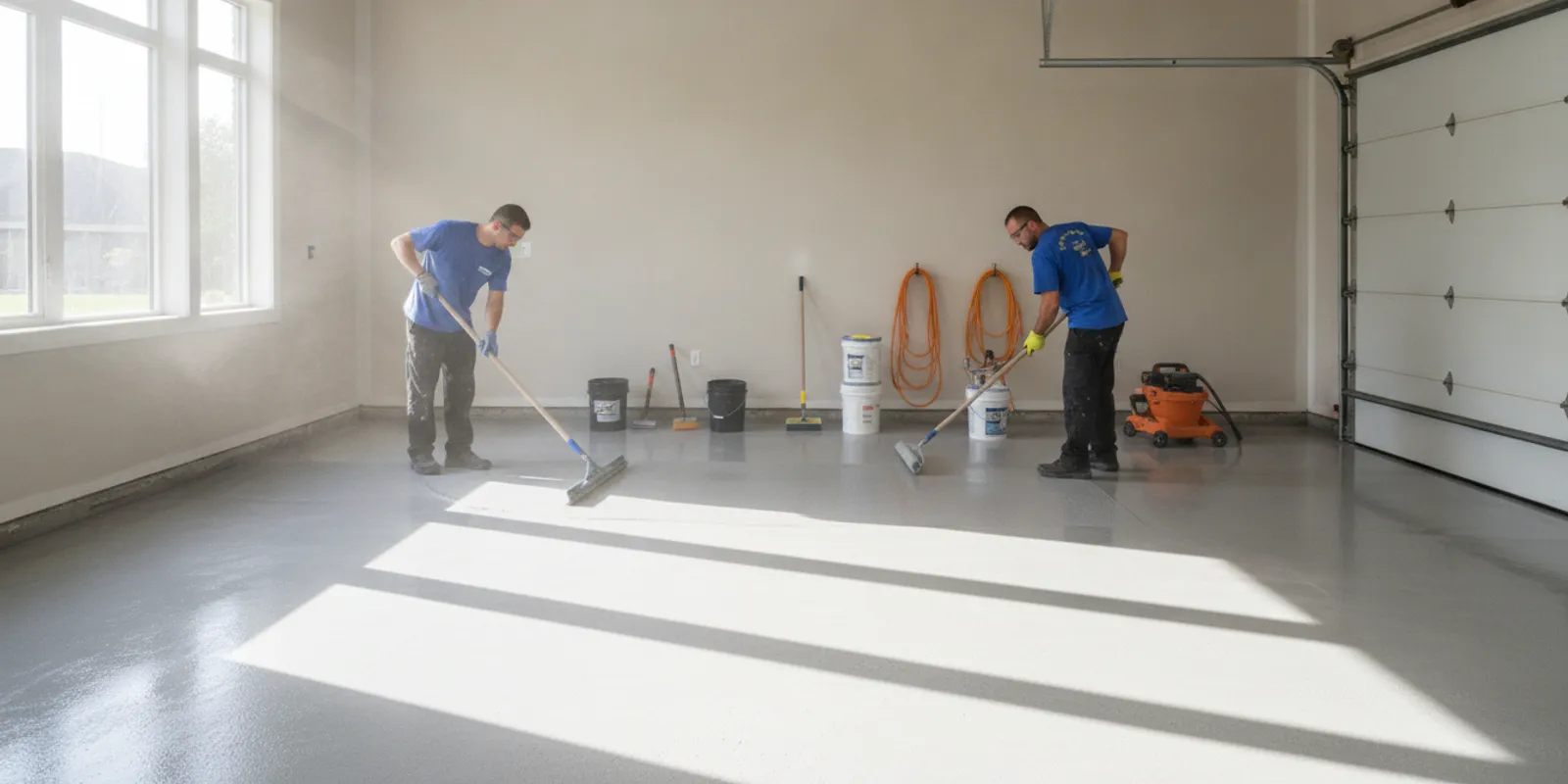
Concrete is not automatically ready to receive a coating after it has been cleaned. The surface may need mechanical preparation to remove weak material and create a profile that allows the coating to grip. Common approaches include grinding, shot blasting, or another method selected for the floor and product.
The objective is a consistent, sound profile across the installation area. A glossy or very smooth patch may not accept the coating like an adjacent roughened section. Edges, corners, repairs, and areas near walls also need attention because they are easy to miss with large equipment.
Ask these practical questions:
- Which preparation method is planned for this concrete?
- How will the crew reach edges and corners?
- How will dust be controlled and removed?
- How will repaired spots be blended into the surrounding floor?
- What will the finished concrete look and feel like immediately before coating?
Mechanical preparation should not be treated as a cosmetic step. It is part of the bond-making process. The final method should be based on the concrete condition and the coating system, rather than selected only for speed.
How do product fit and installation conditions affect preparation?
Preparation and product selection are connected. A coating system has requirements for temperature, humidity, slab condition, surface profile, mixing, working time, and cure. The garage must be suitable for those requirements when the work takes place.
Ask how the installer will account for weather, ventilation, and the temperature of both the air and the slab. A cold slab, high humidity, or unexpected moisture can change how a product flows and cures. The garage may also need to remain clear for a defined period after installation so the finish can develop its intended properties.
| Preparation area | What to check | Why it matters | Question to ask |
|---|---|---|---|
| Moisture | Damp spots, leaks, vapor, water entry | Trapped moisture can weaken adhesion | How will moisture be evaluated? |
| Concrete condition | Cracks, spalling, dusting, movement | The coating follows the slab below it | Which repairs are needed first? |
| Cleanliness | Oil, grease, paint, salts, residue | Contamination can block the bond | How will difficult spots be treated? |
| Surface profile | Smooth, weak, or uneven areas | Texture helps the system grip consistently | What mechanical preparation is planned? |
| Installation conditions | Temperature, humidity, ventilation, cure time | Products need suitable conditions to cure | When can the garage be used again? |
What should you ask a garage floor coating installer?
A consultation should cover more than color and flake selection. Bring photographs of stains, cracks, water entry, and previous repairs if the garage cannot be inspected immediately. Then ask for a clear explanation of the preparation and installation sequence.
- What condition is the concrete in, and what evidence supports that assessment?
- How will moisture be checked before work begins?
- How will oil, paint, and other contaminants be removed?
- What repairs are included, and which conditions are outside the planned scope?
- How will the surface be mechanically prepared?
- What coating system is being proposed, and why does it fit this garage?
- How will edges, corners, joints, and transitions be handled?
- What conditions must be met on installation day?
- What access and cure-time restrictions should the household plan for?
- What care instructions and coverage information will be provided after completion?
Written answers make it easier to compare proposals. Be cautious of a scope that describes only “clean and coat” without explaining how moisture, repairs, contamination, and surface profile will be addressed. The lowest initial price may not represent the same preparation work as a more detailed proposal.
How can you prepare the garage for installation day?
Homeowners can make professional preparation more efficient by clearing the garage completely or following the crew’s instructions about what must be moved. Remove wall-mounted items that interfere with edges, disconnect or relocate equipment when appropriate, and plan for the vehicle-free period. Keep pets and children out of the work area.
Do not apply a household cleaner, sealer, paint, or patching compound shortly before the scheduled work unless the installer approves it. An added product can change the surface and may need to be removed. Tell the installer about prior coatings, repairs, flooding, leaks, and areas where water regularly collects. Details that seem minor can change the preparation plan.
If you are comparing a coating with other flooring approaches, Garage Kings’ polyaspartic versus epoxy garage floor comparison, epoxy flooring guide, and cost comparison can help you organize questions about system differences. For ongoing care after installation, review the polyaspartic garage floor care guide.
Garage Kings also provides garage floor coating services and has an our work gallery where homeowners can review examples of completed transformations. Availability and the exact preparation scope can vary by territory, so use the locations page to find the relevant local team.
Request a garage floor coating consultation
Frequently Asked Questions
Can a coating be applied over an old coating?
Sometimes, but the existing finish must be evaluated for adhesion, compatibility, damage, and contamination. Loose or peeling material cannot serve as a reliable base. Ask the installer whether the old coating should be removed, mechanically prepared, or repaired before a new system is considered.
Will coating stop cracks from coming back?
A coating can improve the appearance of a prepared floor, but it cannot stop active slab movement. Stable cracks and joints may be treated as part of the installation plan. Moving, widening, or structurally significant cracks need separate evaluation and repair planning.
How long should a garage floor stay clear after installation?
The required time depends on the coating system and the conditions during installation. Ask for separate guidance on foot traffic, vehicle traffic, heavy items, and cleaning. Follow the installer’s written instructions rather than relying on how dry the surface feels.
Can I prepare the floor myself?
You can clear the garage, document problem areas, and share information about leaks or previous products. Professional preparation may still require specialized equipment, dust control, repair materials, and testing. Discuss which tasks are appropriate for you before using chemicals or mechanical tools.
What is the best way to prevent peeling?
The best preparation is a documented process: inspect the concrete, identify and address moisture, repair weak or moving areas appropriately, remove contaminants, create a consistent surface profile, and install a compatible system under suitable conditions. Before choosing a contractor, ask for those steps in writing and make sure the scope reflects the actual condition of your garage. A careful conversation before installation can help you choose a floor coating plan built for sound adhesion and dependable everyday use.