
A garage floor has to do more than look finished. It may need to handle parked vehicles, tracked-in moisture, household chemicals, storage projects, and everyday cleanup without making the room harder to use. The lasting result depends not only on the coating material, but also on concrete preparation, system design, and how the space will be used.
Schedule your free in-home consultation today.
Quick answer: Epoxy is a resin-based coating that cures into a hard surface. It can be part of a professionally installed garage floor system. Garage Kings describes benefits such as easier cleaning, slip resistance, and resistance to stains, chemicals, moisture, scratches, and wear. Results depend on the selected system and site conditions.
The right choice starts with understanding how the material works alongside the concrete below it. That means looking at the coating’s role, the layers around it, and the preparation needed for a dependable foundation.
What Is Epoxy For A Garage Floor?
Epoxy is a resin-based coating material that cures into a hard surface over prepared concrete. In homeowner terms, it is one of the materials that can form the visible, protective surface of a garage floor. It can add color and finish to plain concrete while helping create a floor that is easier to maintain during everyday garage use.
Garage Kings offers professional-grade epoxy and polyaspartic floor coating systems for garage concrete. The right choice is not simply a matter of rolling a product onto the slab. The condition of the concrete, the preparation required, the selected layers, and the way the garage is used all influence the finished result. Learn more about professional garage floor coatings and the installation approach behind them.
What Epoxy Can Do
When properly selected and installed as part of a suitable system, epoxy can give a garage floor a more finished appearance than bare concrete. Garage Kings describes coating benefits that can include resistance to stains, chemicals, and moisture, along with slip resistance, easier cleaning, and resistance to scratches and wear. These are described system benefits, not guarantees that every floor will perform identically under every condition.
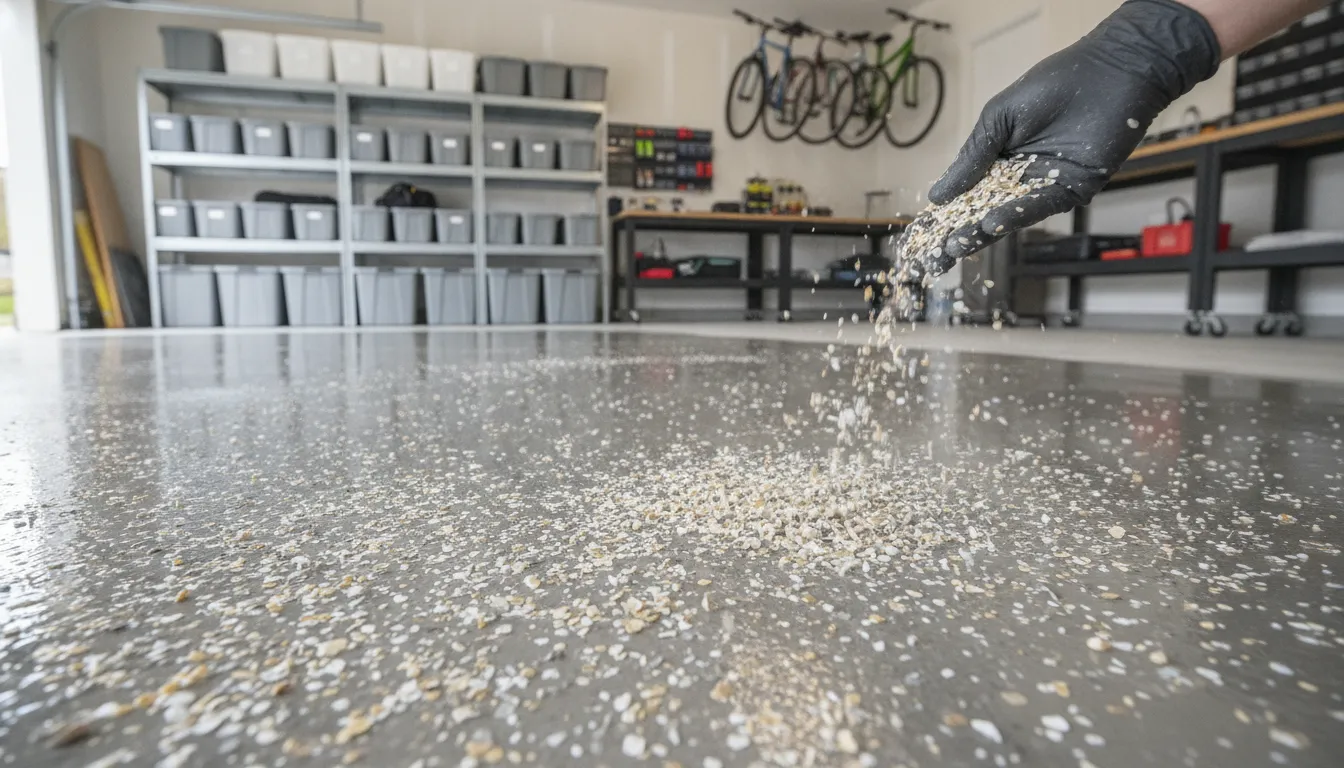
Epoxy can also support design choices. A pigmented base coat may be paired with decorative vinyl flakes and a protective top coat, depending on the system. Flakes can add visual texture and help create a floor that looks more intentional than a plain painted surface. The specific colors, texture, finish, and protective layers should be selected around the garage’s use and the homeowner’s maintenance expectations.
Epoxy Is Not The Whole Installation
The word epoxy describes a material, not necessarily the complete floor assembly. A professional installation may involve concrete repairs, surface preparation, a base coat, decorative aggregate, and one or more top coats. Components vary by system, so a product label or material name alone does not explain how the finished floor will be built.
That distinction matters because coating performance depends on more than the resin. A professional evaluation can identify existing coatings, surface issues, and moisture concerns before the system is selected. The goal is a floor plan that fits the slab and the way the garage needs to function, rather than a one-size-fits-all coating applied without context.
Is Epoxy Right For Your Garage?
Epoxy may be a sensible fit when you want a more finished, easier-to-maintain surface for everyday garage use. Start with how the space functions. A garage used for parking, projects, storage, or a combination of all three needs a coating system selected around its actual traffic and routines, not just its color.
Consider Moisture And The Existing Concrete
Moisture deserves attention before any coating decision. Concrete condition, drainage, seasonal dampness, and moisture beneath the slab can affect which preparation steps and system components are appropriate. Existing sealers, coatings, repairs, stains, and cracks also matter because the new system must bond to a properly prepared surface. A professional evaluation can identify conditions that are not obvious from a quick visual inspection.
Match The System To Daily Traffic
Think about what the floor will experience. Regular vehicle traffic, tire turning, dropped tools, muddy equipment, pets, and stored items all influence the performance priorities. Garage Kings describes coating benefits that include resistance to stains, chemicals, and moisture, along with slip resistance, easier cleaning, and resistance to scratches and wear. These are company-described benefits, not guarantees for every garage or application. The selected build, preparation, and installation conditions remain important.
Plan For Appearance And Care
Appearance and maintenance are practical decision factors, too. A finished floor can make routine sweeping and spill cleanup simpler, while the color and flake design should work with the rest of the garage. Ask how the surface is expected to be cleaned, whether added traction is appropriate for your space, and what care guidance applies after installation.
There is no single universal epoxy build. Garage Kings notes that system components vary by system, so a recommendation may account for the concrete, moisture conditions, traffic, desired appearance, and maintenance expectations together. The goal is not to choose a product in isolation, but to select a floor system that fits how you use the garage.
Why Concrete Preparation Determines Results
Preparation is the part of a floor coating project that is easiest to overlook and hardest to correct later. Epoxy needs a suitable surface to bond with. A clean-looking slab may still contain sealer, curing compounds, oil, moisture, weak concrete, or an earlier coating that changes the installation plan.
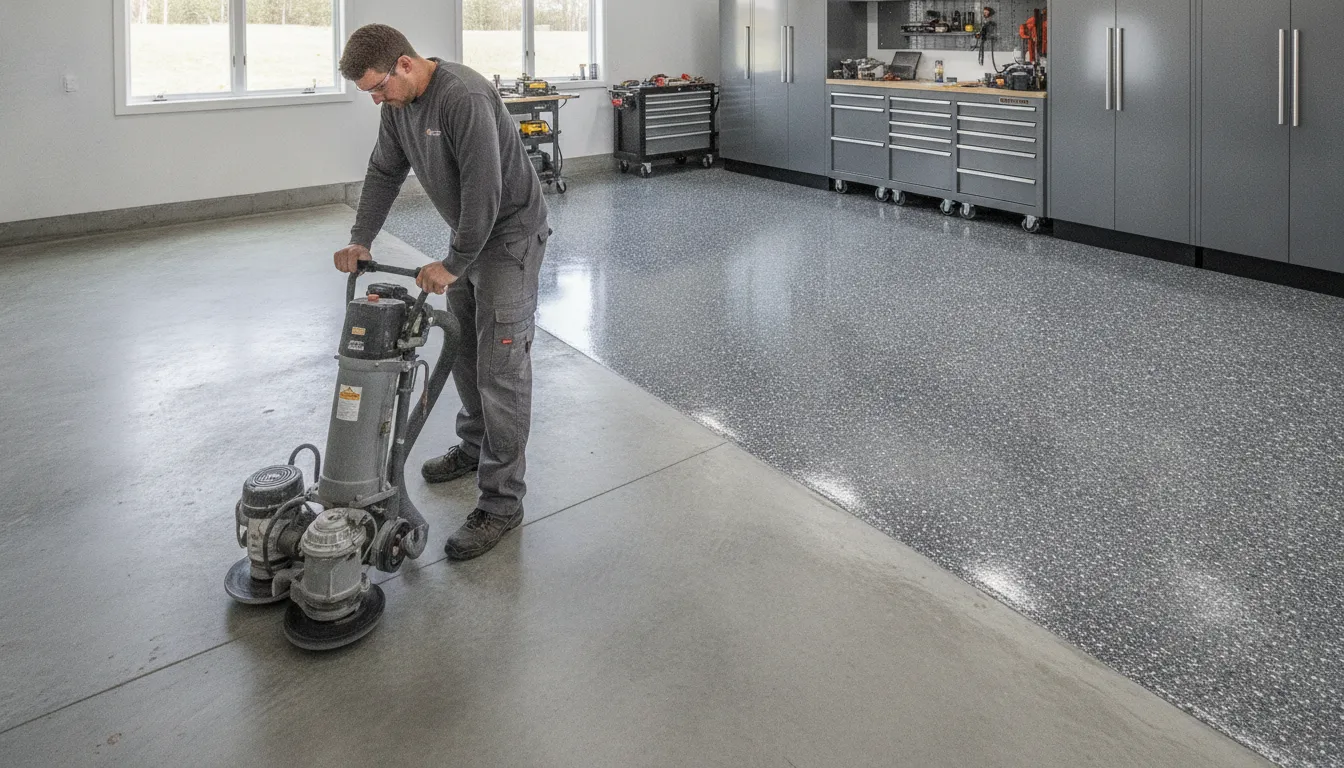
Mechanical preparation helps create the conditions needed for a garage floor coating to bond to the slab. The featured installation image shows why this step is part of the system, not an optional cosmetic extra.
- Inspect the slab. Look for cracks, spalling, stains, previous coatings, joints, drainage concerns, and areas that may need repair. The goal is to understand the surface before selecting the coating build.
- Clean and repair the concrete. Contaminants and loose material can interfere with adhesion. Repairs can improve the finished appearance and help the coating follow a sound surface rather than conceal an unresolved defect.
- Profile the surface. Garage Kings describes diamond grinding as part of its preparation process. Mechanical preparation can open the concrete surface and create the profile needed for the selected system.
- Evaluate moisture and bonding conditions. The Ohio School Design Manual says concrete substrates should be dry and free of materials that interfere with adhesive bonding. It also points to bond, moisture, and pH testing according to the flooring manufacturer’s written recommendations. These checks help identify risks before coating work begins.
- Address special conditions. Where needed, a moisture vapor barrier or other system component may be considered. If the slab needs broader restoration, review garage concrete resurfacing options before treating coating as the first step.
Preparation does not look the same in every garage. New concrete, painted concrete, older stained slabs, and floors with active moisture concerns may need different decisions. A responsible installation plan explains what will be done and why.
How Epoxy Fits Into A Professional Garage Floor System
Epoxy is best understood as one part of a floor system. The system may combine preparation, repairs, a pigmented base coat, decorative flakes, and protective top coats. Garage Kings notes that its components vary by system, so the exact build should follow the concrete condition and the way the garage will be used.
| System Component | Purpose In The Installation |
|---|---|
| Preparation and repair | Creates a cleaner, sounder surface for the coating to bond with and addresses conditions that could affect the finished result. |
| Pigmented base coat | Provides the main color layer and forms the base for decorative aggregate when the selected design includes flakes. |
| Vinyl flakes | Add visual texture and pattern. Flake coverage is also commonly used to help make everyday dirt and small surface variations less noticeable. |
| Protective top coat | Seals the system and contributes to the finished surface’s wear, cleaning, and appearance characteristics. |
In the broader resinous-flooring market, full-flake systems are often described as an epoxy base coat with flakes and a clear protective top coat. That structure is useful for understanding the roles of different layers, but it should not be treated as a universal specification for every garage. The recommended system depends on the slab, site conditions, selected finish, and expected use.
Homeowners who are researching related installation approaches can also review polyaspartic garage flooring installation. The purpose is not to choose a coating by name alone. It is to understand how preparation, material selection, layer design, and curing guidance work together.
Design, Maintenance, And Everyday Usability
A garage floor should support the way you want to use the room. Color and texture affect how the space feels, while the surface should be practical for vehicles, tools, storage, and routine cleanup. A coating system can make a garage feel more finished without turning the floor into a high-maintenance feature.
Choose A Design That Works In The Space
Decorative flake blends can add visual depth and help connect the floor to cabinets, walls, vehicles, or other garage finishes. They are also commonly selected because texture and varied color can make small marks or everyday debris less visually prominent than on a uniform surface.
Ask to see the available blends in a context that resembles your garage. Lighting, wall color, cabinet finishes, and the amount of natural light can all change how a floor color appears. The best design is one that looks good now and still supports the way you plan to use the room later.
Keep Routine Care Simple
Regular sweeping removes grit before it is tracked across the floor. Clean spills promptly and follow the installation team’s care instructions for cleaning products, tools, and equipment. Avoid dragging sharp objects across the surface, and address unusual moisture or visible damage before a small issue becomes a larger one.
Garage Kings describes professional coating benefits that can include easier cleaning, slip resistance, and resistance to stains, chemicals, scratches, and wear. Actual results depend on the selected system, installation, conditions, and use. Ask which maintenance practices support the coating chosen for your garage.
How To Plan A Professional Epoxy Garage Floor
A productive consultation should connect your garage’s condition and daily use to an appropriate coating system. Ask how the existing concrete will be evaluated, whether repairs or diamond grinding are needed, and whether moisture conditions call for a vapor barrier. Garage Kings describes systems that may include preparation and repair, a pigmented base coat, vinyl flakes, and an industrial-grade top coat, but the components can vary by system.
It is also useful to discuss how you use the space. Vehicle traffic, storage, workshop activity, seasonal moisture, and your preferred appearance can all affect the recommended system and care guidance. Ask which surfaces are included, what preparation is part of the installation, and what access or clearing is needed before work begins. These questions help you compare complete installation plans rather than judging epoxy as an isolated product.
Set A Realistic Project Schedule
Garage Kings says floor coating projects typically take one to two days, with most completed in a single day. That is a planning guideline, not a universal promise. The actual schedule can depend on the garage, concrete condition, selected system, preparation requirements, and curing instructions. Confirm when the space can accept foot traffic and vehicles, and plan storage and parking accordingly.
Review System Fit And Warranty Coverage
Ask what the recommended system is designed to address and which components are included. Warranty options listed by Garage Kings range from 10-year to lifetime coverage, depending on the selected system. Request the applicable coverage details, exclusions, and maintenance expectations in writing instead of assuming every epoxy project receives the same warranty.
Service availability and next steps are handled through local territories. Use the find a local Garage Kings team to route your inquiry, then discuss the garage conditions, timing, system fit, and warranty during a consultation. You can also review the company’s professional garage floor coating services before contacting a team.
Plan your epoxy garage floor with a Garage Kings consultation.
Frequently Asked Questions
What is epoxy mostly used for in a garage?
Epoxy is used as a resinous coating for prepared concrete, creating a hard finished surface that can support a cleaner, more functional garage. A complete floor system may also include repairs, a pigmented base coat, decorative flakes, and a protective top coat. The right components depend on the concrete, moisture conditions, traffic, and goals for the space.
What is the downside of epoxy flooring?
Epoxy performance depends heavily on preparation and system design. Moisture, weak concrete, contaminants, or an existing coating can interfere with adhesion if they are not addressed first. Epoxy is also not a universal answer for every garage, so a professional should evaluate the slab, intended use, appearance, and maintenance expectations before recommending a system.
Can epoxy stop a water leak?
No. A floor coating is not a substitute for repairing an active plumbing, foundation, or drainage problem. Moisture in or beneath the concrete can also affect coating performance, so the source should be addressed and the slab evaluated before installation. Where conditions call for it, the system may include a moisture vapor barrier.
How Should A Garage Floor Be Prepared Before Epoxy Is Applied?
The concrete should be clean, dry, and free of materials that interfere with bonding. Preparation may include repairs and diamond grinding, followed by appropriate evaluation of moisture and adhesion conditions. Existing sealers or coatings may require additional mechanical preparation. These steps help the selected system bond to the actual slab rather than covering an unresolved surface problem.
How Do You Maintain An Epoxy-Coated Garage Floor?
Sweep regularly, clean spills promptly, and follow the installer’s care guidance for cleaning products and equipment. Use the garage as intended, avoid dragging sharp or excessively heavy objects across the surface, and address damage or unusual moisture promptly. Routine care supports the easier-cleaning and wear-resistance benefits described for professional coating systems.
Ready To Plan A More Usable Garage?
A professional consultation can help you evaluate your concrete, clarify your flooring goals, and choose a system suited to how you use the space. Garage Kings can connect you with the right local team to discuss your garage floor and next steps.