

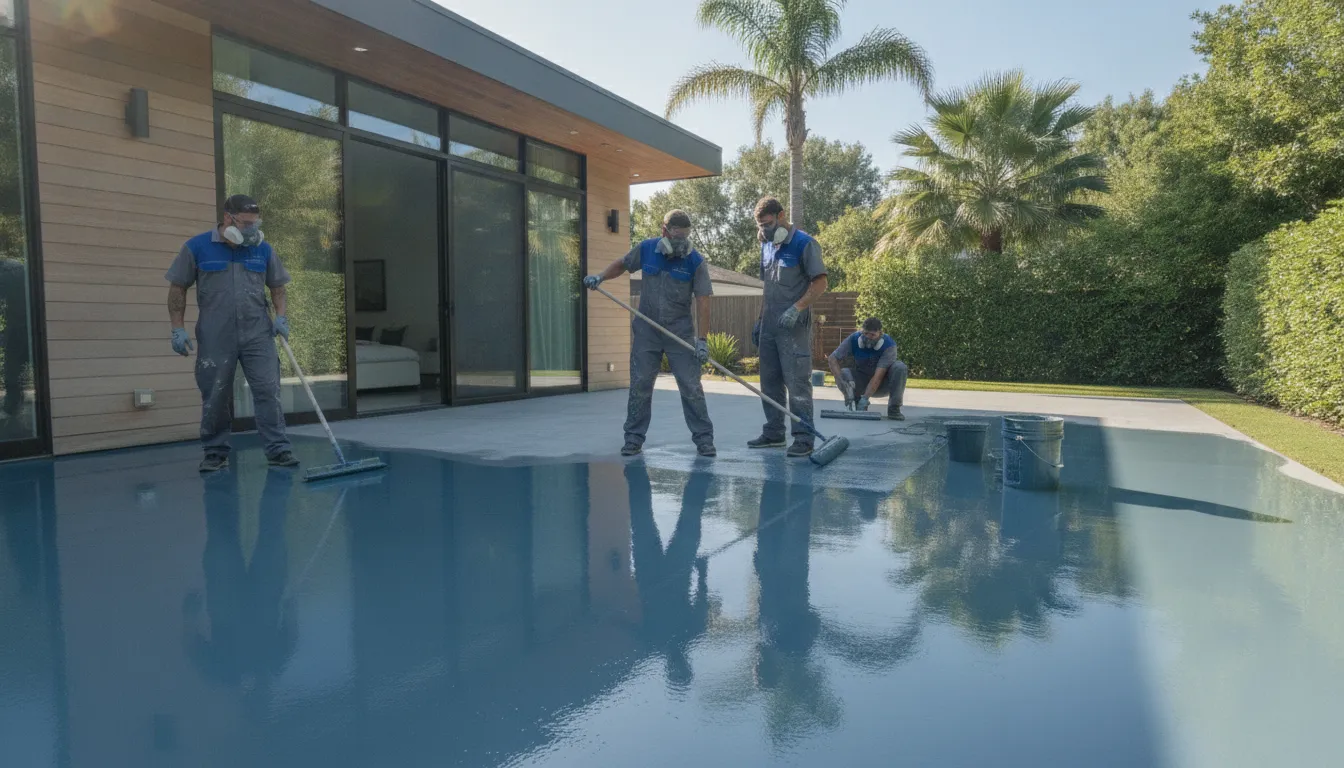
Outdoor concrete has to handle more than foot traffic. Sunlight, rain, changing temperatures, moisture, and tracked-in grit can gradually leave a patio faded, porous, or difficult to maintain. The right coating can transform that worn surface into a more comfortable, finished extension of your living space.
Book a free in-home consultation to explore patio floor coating polyaspartic options today
A patio floor coating polyaspartic system is a strong choice for outdoor concrete because it cures quickly, forms a dense protective surface, and offers UV stability that helps preserve color and gloss. Slip resistance can also be customized with aggregate or decorative flakes, so the finished patio can balance appearance and everyday traction. Professional preparation remains essential, especially when the slab has weathering, organic growth, or moisture concerns. For context on how polyaspartic compares with epoxy, see our polyaspartic vs. epoxy garage floor guide.
That combination of durability, appearance, and practical maintenance makes polyaspartic worth considering for many sound or repairable patios. The best starting point is understanding how the coating responds to the concrete and conditions around your home, so a professional can tailor the system to your exposure.
Is Polyaspartic Patio Floor Coating Right for Outdoor Concrete?
Yes. For homeowners who want to improve an aging patio without covering it with pavers or replacing the slab, a professionally installed polyaspartic system is an excellent, professional-grade choice. It creates a finished surface that is attractive, durable, and suited to the demands of outdoor living. The right result, however, depends on more than selecting a high-performance material. It depends on understanding the condition of the concrete beneath it.
Flexibility For Minor Concrete Movement
Outdoor concrete can develop small cracks as the substrate experiences normal movement and changing conditions. Polyaspartic resins have inherent flexibility that allows the coating to accommodate minor substrate movement and bridge small cracks without cracking as readily as a more rigid finish. That flexibility can help the patio maintain a more consistent appearance through everyday seasonal changes. It is not a substitute for repairing major structural cracks, settlement, or unstable concrete. Those conditions must be identified and addressed before coating begins.
Adhesion Depends On Concrete Preparation
Polyaspartic coatings adhere strongly when the concrete is properly prepared. On sound concrete, a professional crew can use the appropriate mechanical preparation and cleaning methods to create a surface the coating can bond to securely. Polyaspartic can also be applied over repaired, sound concrete when the repairs and substrate are suitable for the system. The coating itself cannot compensate for dust, contaminants, weak concrete, or unresolved moisture concerns. A careful assessment helps determine whether the slab is ready, needs repairs, or requires a different recommendation.
This is especially important on patios, where the surface may have accumulated dirt, organic residue, mold, mildew, or contaminants from nearby landscaping. Preparation should remove those barriers rather than simply covering them. The goal is a clean, stable substrate that supports strong adhesion and helps reduce the risk of peeling or premature failure.
Resistance To Everyday Patio Spills
Patios are exposed to food, beverages, grease, and household chemicals during outdoor entertaining. Once cured, polyaspartic provides a hardened surface with a high level of chemical resistance, helping protect the concrete from common spills and making cleanup more manageable. Its curing process occurs through a rapid chemical reaction rather than evaporation, forming a dense, tough film. That dense film is one reason the material performs well as a protective surface when it is selected and installed correctly.
A professional on-site assessment is the best way to determine whether polyaspartic is appropriate for your patio. The installer can evaluate the concrete’s soundness, crack conditions, surface contamination, and preparation requirements before recommending a system. With qualified application and a suitable substrate, polyaspartic offers a durable way to transform outdoor concrete while preserving the patio’s everyday function.
UV Stability: Why Polyaspartic Works Where Epoxy Fades
Outdoor concrete faces more than foot traffic. Sunlight, rain, snow, and seasonal temperature changes all work against an unprotected patio surface. Epoxy can yellow and lose its original appearance under repeated UV exposure, while polyaspartic is designed to maintain its clarity and color integrity in direct sunlight. That makes it a practical choice when you want an outdoor finish that continues to look intentional instead of gradually looking weathered.
Color retention is only part of the benefit. A quality polyaspartic system can retain its color and gloss for years, helping decorative flakes or solid colors keep their visual depth. The finish can also be tailored to the look you want, from a more reflective surface to a subtler appearance. For a broader explanation of how these materials compare, see our guide to polyaspartic versus epoxy coatings.
| Factor | Polyaspartic Patio Coating | Epoxy |
|---|---|---|
| UV resistance | Strong color and clarity retention in direct sunlight | Can yellow and fade with repeated sun exposure |
| Weather protection | Non-porous layer resists salt and water penetration | More porous and prone to weather-related wear outdoors |
| Cure time | Rapid chemical cure, quicker return to use | Slower cure; drying conditions matter more |
| Best use | Well suited to exposed patios and outdoor concrete | Better suited to sheltered, low-UV indoor floors |
Protection Through Every Season
Winter weather creates a separate risk for concrete. Rock salt and other de-icing agents can contribute to surface damage when they reach porous concrete. Polyaspartic forms a non-porous protective layer that helps shield the slab from those materials. It also helps prevent water from penetrating the concrete, reducing exposure to the freeze-thaw cycles that can contribute to cracking and other deterioration.
This does not eliminate the need for sound concrete and proper preparation. Existing cracks, drainage concerns, and surface contamination still need to be addressed before coating. When the substrate is prepared correctly, a professionally installed polyaspartic patio coating provides an all-weather finish built to withstand changing outdoor conditions. From intense summer sun to freezing winter precipitation. The result is a durable concrete patio coating that protects the surface while preserving the appearance you selected.
Patio Coating Colors and Slip Resistance Options
A patio should look inviting, but appearance is only part of the decision. Because outdoor concrete becomes slick when rain, splashed water, or seasonal moisture is present, the finish should be selected with everyday safety in mind. A patio floor coating polyaspartic system can be customized to balance visual style, underfoot traction, and the level of texture that suits how you use the space.
Build In Traction For Wet Conditions
Slip resistance can be adjusted by incorporating aggregate or other anti-slip media into the topcoat. This gives your installer a way to create more grip in areas near a pool. Outdoor kitchen, steps, or frequently used seating, where wet feet and spills are more likely. The goal is a surface that feels secure without creating an unnecessarily rough texture that makes chairs difficult to move or complicates cleaning. The right aggregate choice depends on drainage, exposure, traffic, and the patio’s existing condition. Garage Kings identifies decorative flakes and anti-slip media as options for customizing patio safety.
Choose Color, Texture, And Sheen
Decorative flakes can create a natural-stone or granite-inspired appearance, while decorative chips add visual depth, texture, and character. Blending colors can help conceal everyday dirt and coordinate the patio with siding, stonework, landscaping, or outdoor furniture. These details make the finished surface feel designed rather than merely covered.
Sheen is customizable as well. A high-gloss finish creates a brighter, more reflective look, while satin and matte options provide a softer appearance with less visual reflection. Discuss how sunlight reaches the patio and how the surface looks when wet before choosing a finish. Color and gloss retention are important outdoor considerations, and polyaspartic coatings are designed to maintain their appearance over time.
Popular ways to customize a patio finish include:
- Decorative flakes for a natural-stone or granite-inspired look.
- Anti-slip media in the topcoat for extra traction in wet weather.
- Custom color blends that hide everyday dirt and complement your home.
- High-gloss, satin, or matte sheens to match your preferred reflection.
A Seamless Alternative To Jointed Pavers
Unlike interlocking pavers, which have joints where weeds can grow, a polyaspartic coating creates a solid, monolithic surface across the prepared concrete. Fewer joints means fewer places for debris and unwanted growth to collect, and the continuous surface is easier to sweep and clean. With the right color blend, slip-resistant media, texture, and sheen, the patio can deliver a cohesive look without sacrificing practical wet-weather performance.
How Patio Installation Differs from Garage Installation
A patio faces a different set of conditions than an enclosed garage, so the preparation and application plan must account for weather, moisture, and outdoor contaminants. A garage floor may mainly need grinding or cleaning to remove coatings, oil, and dirt. Outdoor concrete often requires deeper cleaning to remove mold, mildew, soil, pollen, and other landscape contaminants before a coating can bond properly.
That preparation is not a cosmetic step. Any organic residue left on the concrete can interfere with adhesion and affect the finished surface. The concrete also needs to be sound, clean, and ready for the coating system selected for the space. Repairs may be addressed first, since polyaspartic coatings can be applied over existing sound concrete or properly repaired concrete. Edges, transitions, and areas near landscaping also deserve careful attention because they collect debris that an indoor floor typically avoids.
Moisture Testing Comes Before Application
Patios are exposed to rain, irrigation, humidity, and moisture moving through the slab. Before application, professional installers test the concrete to confirm that it is dry and ready for coating. Skipping this step can create adhesion problems and contribute to bubbling after the coating is installed. Moisture testing gives the crew information needed to determine whether the surface is ready or needs more time to dry.
Weather conditions matter during installation, too. Polyaspartic systems have a wider application temperature range than traditional epoxy, which can make it possible to schedule projects earlier in spring and later in fall. The actual installation window still depends on the concrete, forecast, and site conditions, but the broader range can provide more flexibility for outdoor projects.
A Dense Film And A Manageable Timeline
Polyaspartic coatings cure through a chemical reaction rather than by evaporating water or solvent. That reaction forms a dense, durable film that helps the finished patio stand up to regular outdoor use. It is one reason the application process differs from a simple paint-on approach, where drying conditions can have a greater effect on the result.
A typical patio coating project takes about two days, depending on the scope of preparation and the condition of the concrete. The first day generally focuses on cleaning, repairs, surface preparation, and coating work. The second day allows the system to be completed and the space to move toward normal use according to the installer’s guidance. For more on protecting and upgrading concrete surfaces, explore this durable concrete patio coating guide.
Get a free estimate and 3D visualization for your patio transformation
Frequently Asked Questions
Can Polyaspartic Be Applied to Existing Patio Concrete?
Yes. Polyaspartic can be applied over existing concrete when the slab is sound or properly repaired first. The surface must be cleaned, prepared, and checked for moisture so the coating can bond effectively and avoid bubbling. Minor cracks and normal substrate movement may be accommodated by the resin’s flexibility, but significant structural damage should be addressed before coating.
Does Polyaspartic Patio Floor Coating Yellow in Sunlight?
Polyaspartic is designed for strong UV stability, so it maintains color and clarity better outdoors than traditional epoxy, which can yellow with direct sun exposure. A properly installed system also helps protect the concrete from water penetration and weather-related wear. See the polyaspartic versus epoxy comparison for a closer look at the differences.
Is A Polyaspartic Patio Coating Slip Resistant?
The base coating can be smooth, but slip resistance can be customized for the patio. Installers can add decorative flakes, chips, or anti-slip media to create more texture and traction. The right finish depends on how the patio is used, local weather, and the level of wet-weather grip your household needs.
How Long Does A Polyaspartic Patio Coating Take To Install?
A typical patio coating project takes about two days, depending on the condition of the concrete and the amount of preparation required. Outdoor preparation may include removing mold, mildew, and landscape contaminants, followed by moisture testing. Polyaspartic cures through a rapid chemical reaction rather than evaporation, helping create a dense film and a faster return to use. The exact schedule should be confirmed after a professional assessment.
Schedule Your Patio Transformation
A professional consultation can help you determine whether polyaspartic is the right finish for your outdoor concrete, including the preparation and design details your patio requires. Because every patio has its own exposure, moisture history, and condition, an in-home assessment gives the team a clearer basis for tailoring the system to your space.
Book a free in-home consultation and free 3D visualization with the Garage Kings team to explore color, texture, and slip-resistance options before committing. From UV-stable finishes to low-maintenance, weather-ready surfaces, the goal is a patio that looks intentional and stands up to everyday use. Contact us to take the next step and see what a professionally installed polyaspartic patio floor coating could do for your home.