
A basement slab may look like a garage floor, but the moisture conditions beneath it can be very different. That is why using the same coating system requires more than matching the product. It requires testing the concrete, identifying vapor or hydrostatic pressure, and choosing preparation that supports long-term adhesion.
Yes, basement floor coating polyaspartic systems can be a suitable option when the slab passes a professional moisture assessment and receives the right primer and surface preparation. Polyaspartic cures faster than traditional epoxy, which can shorten return-to-service time, but its rapid cure also demands careful application for a smooth finish. Research on polyaspartic coating performance supports both points.
Before planning the finish, schedule a free in-home consultation to review the space and visualize your options with 3D AR technology. The first decision is whether the coating is compatible with the basement’s moisture profile and how that profile affects safety, adhesion, and durability.
Is Polyaspartic Safe for Basement Floors?
Yes, polyaspartic can be a safe, durable choice for a basement floor when the concrete is evaluated and prepared for basement conditions first. The concern is understandable. Some homeowners hear that polyaspartic does not handle moisture well, especially when a garage-floor system is transferred directly into a below-grade space. The issue is not that polyaspartic is inherently unsafe. The issue is whether moisture vapor, hydrostatic pressure, and the condition of the slab have been addressed before the coating is installed.
Basement concrete is porous. Water vapor can move through pores and micro-cracks. And basement slabs may contain more moisture than garage floors because of their proximity to the water table or the absence of an effective vapor barrier beneath the slab. If that moisture is ignored, pressure can contribute to adhesion failure and peeling. A professional installation therefore begins with a moisture assessment, not with the coating itself.
Why Moisture Testing Matters
Garage Kings performs a professional moisture assessment before recommending a basement coating system. That assessment helps identify whether the slab is suitable for coating, whether moisture mitigation is needed, and which primer and preparation steps are appropriate. When a garage-style polyaspartic system is used in a basement, a moisture-mitigation primer is frequently needed to help prevent future peeling. The goal is to create a compatible system that manages the slab’s conditions rather than covering up a moisture problem.
Preparation also matters because polyaspartic cures quickly. Research describes its rapid cure as a reason for the material’s faster return to service compared with traditional epoxy systems. But that speed leaves less room for application errors. The surface must be properly cleaned, mechanically prepared, and coated at the correct stage so the material can level and bond as intended. This is one reason professional installation is more than simply rolling a product onto concrete.
Performance Beyond Moisture Control
Once the slab and system are properly prepared, polyaspartic offers practical advantages for finished basements. Its rapid cure can reduce disruption during the project. While its color stability and resistance to UV-related yellowing can help the floor maintain a consistent appearance better than many traditional epoxy formulations. It also creates a seamless, easy-to-clean surface that works well in recreation rooms, workshops, utility areas, and storage spaces.
For a closer look at material performance and selection, review this guide to polyaspartic garage floor coating chemistry. The right conclusion is straightforward: polyaspartic is safe for basement floors when the slab’s moisture conditions are professionally assessed and the coating system is selected and installed accordingly.
How a Polyaspartic Basement Floor Coating Works
A basement floor coating polyaspartic system is built around a fast-curing resin that bonds to prepared concrete and forms a dense, protective film across the slab. The coating creates a continuous surface that helps block moisture at the finished floor, while its pliability allows it to accommodate normal movement better than a brittle surface. Once fully installed, the floor is resistant to common stains, household chemicals, and the daily wear that can make unfinished basement concrete difficult to maintain.
Rapid Curing Creates a Tight Installation Window
Polyaspartic coatings are known for curing much faster than traditional epoxy systems, which can shorten the time before a floor returns to service. A typical coat may cure in about two hours under suitable conditions. That speed is useful in a basement, especially when homeowners want to finish the space without a long interruption. Research on polyaspartic polyurea coatings links their rapid cure properties with a faster return to service than traditional epoxy systems.
Fast curing also makes the application less forgiving. The material must be mixed, spread, leveled, and broadcast at the right pace. If an installer moves too slowly or applies the coating unevenly, the finish can show roller marks, ridges, or inconsistent texture. Specialized application techniques are important because the short working time affects leveling and final appearance. Professional installation is not an optional upgrade for this type of system. It is what helps produce a smooth, uniform floor.
Moisture Protection Starts With the Concrete
Concrete is porous. Water vapor can move through pores, micro-cracks, and capillary tracts, creating conditions that damage the slab or interfere with coating adhesion. A moisture assessment should therefore happen before any basement coating is selected or applied. The coating can protect the exposed surface, but it cannot correct active water intrusion, hydrostatic pressure, or an unresolved drainage problem below the slab.
Waterproofing technologies illustrate how important those pathways are. Crystalline waterproofing materials react with moisture and cement compounds to form insoluble crystals that seal capillary tracts within concrete. That process is different from the surface film created by a polyaspartic coating. But it reinforces the same principle: moisture must be addressed at the pathways through which it moves. Where basement conditions require it, a moisture-mitigation primer may be used before the polyaspartic layers to help reduce the risk of peeling.
Durability Without Sacrificing Appearance
After the base layer and protective topcoat cure, the finished film provides a dense, cleanable surface that resists stains and chemicals. Polyaspartic systems also offer strong color stability and better resistance to UV-related yellowing than many epoxy formulations, according to Oklahoma State University research. For a basement with windows, walkout doors, or plans for future living space, that resistance helps the floor maintain a consistent appearance over time.
For more detail on why polyaspartic floor coatings are popular, the key is the combination of rapid curing, moisture-aware preparation, professional application, and a durable finished surface.
Key Differences Between Basement and Garage Floor Prep
A coating system that performs well in a garage may need a different preparation plan in a basement. The main reason is moisture. Concrete is porous, so water can move through pores and micro-cracks, especially when pressure builds beneath the slab. Basement floors also tend to have higher moisture exposure than garage floors because of the surrounding water table or a missing vapor barrier beneath the concrete. For that reason, a professional should assess the basement slab before selecting primers, preparation methods, or the coating sequence.
| Preparation factor | Basement floor | Garage floor |
|---|---|---|
| Moisture and hydrostatic pressure | Moisture may migrate through the slab from the water table, soil, or micro-cracks. Hydrostatic pressure can push against the coating and contribute to delamination if it is not identified and addressed. | Moisture still matters, but the primary exposure often comes from vehicles, wet tires, snow, rain, and seasonal humidity entering from above. The slab should still be evaluated before coating. |
| Vapor barrier and moisture primer | The installer may need to investigate whether a vapor barrier is present and use a compatible moisture-mitigation primer. A garage-style system applied without this step can peel when moisture pressure remains beneath the film. | A moisture primer may be appropriate when testing shows elevated slab moisture. But preparation is more often focused on cleaning, profile, repairs, and adhesion for the expected traffic and exposure. |
| Cleaning and surface preparation | Cleaning removes contaminants, but it is only one part of the plan. The surface may require repairs, moisture treatment, and mechanical profiling selected for the slab’s condition. | Degreasing and deep cleaning are especially important because automotive fluids, tire residue, dirt, and salt can interfere with adhesion. Diamond grinding or another mechanical method creates the required surface profile. |
| Subsurface condition | Older slabs, cracks, prior repairs, damp areas, or concealed moisture can change the coating specification. These conditions should be documented before installation begins. | Cracks, spalling, uneven areas, and contamination still require attention, but the inspection generally centers on the visible slab and its ability to accept the coating after mechanical preparation. |
The difference is not that a basement automatically needs a completely different finish. It is that the same polyaspartic system needs preparation matched to the environment below and around the slab. Cleaning and diamond grinding can improve adhesion, but they cannot resolve moisture moving upward through concrete. A moisture assessment helps determine whether the basement needs additional mitigation before the coating is installed.
For homeowners comparing systems, understanding the polyaspartic garage floor coating chemistry is useful, but the product comparison is only part of the decision. Slab conditions and preparation ultimately determine whether the finished floor bonds properly and performs as intended.
How Moisture Testing Works Before a Basement Coating
A basement slab needs a more deliberate preparation process than a typical garage floor. Concrete is porous, so water vapor can move through pores and micro-cracks. Basement floors may also contain more moisture because of their proximity to the water table or because a suitable vapor barrier was not installed beneath the slab. If that moisture is not addressed, hydrostatic pressure can contribute to coating delamination. Moisture vapor transmission testing is therefore a critical part of selecting and preparing a basement floor coating system. polyaspartic installation process starts with the condition of the concrete, not simply the product applied on top.
- Test moisture vapor transmission and check for hydrostatic pressure. The installation team evaluates how much moisture is moving through the slab and looks for signs of active water pressure, dampness, or other conditions that could affect adhesion. This step helps determine whether the existing concrete is ready for a coating and whether additional moisture mitigation is required. The Texas Transportation Institute identifies moisture protection as essential for concrete, making this assessment especially important in below-grade spaces: moisture protection research.
- Verify the vapor barrier beneath the slab. The installer investigates whether the basement floor has an effective vapor barrier and whether the surrounding conditions could be contributing to elevated moisture. A missing or compromised barrier cannot always be corrected from above, so the findings need to guide the coating specification. This is one reason a basement should not automatically receive the same preparation plan as a garage.
- Apply a moisture-mitigation primer where needed. If testing shows that the slab requires additional protection, a compatible moisture-mitigation primer may be used before the polyaspartic layers. This primer helps manage vapor movement and supports adhesion, reducing the risk of future peeling. The goal is not to hide a moisture problem, but to use a system designed for the slab’s measured conditions.
- Diamond grind and clean the concrete. Mechanical diamond grinding removes weak surface material, opens the concrete profile, and creates a stronger bonding surface. Dust, debris, contaminants, and loose coating material must then be removed thoroughly. Clean, properly profiled concrete gives the primer and subsequent layers the consistent surface they need.
- Apply the professional multi-coat system. Once the slab is prepared, the crew applies the specified primer, base coat, decorative flake layer where selected, and protective topcoat. Polyaspartic materials cure quickly, so timing, coverage, leveling, and finish require trained application techniques rather than a rushed DIY approach. Each layer must be compatible with the moisture strategy established during testing.
- Allow the coating to cure. The floor remains undisturbed for the required cure period so the layers can bond and develop their intended performance. The installer provides return-to-use guidance based on the products, site conditions, and final inspection. A successful basement coating is the result of moisture control and disciplined preparation as much as the visible finish.
What Warranty Coverage Looks Like for Basement Projects
A coating warranty is only as meaningful as the preparation and installation behind it. For a finished basement floor, ask whether the warranty is backed by the installer, the material manufacturer, or both. An installer-backed workmanship warranty generally addresses application quality. While material and labor coverage may address problems associated with the specified coating system and the work required to correct an eligible issue. The exact terms should be provided in writing before the project begins.
Moisture assessment is especially important in a basement. Concrete is porous, and water can move through pores, micro-cracks, and capillary paths. Moisture vapor transmission and hydrostatic pressure can contribute to coating delamination when the floor is not properly evaluated and prepared. Moisture protection is essential for concrete, and a professional assessment helps determine whether additional mitigation or a compatible primer is necessary before applying the coating.
Questions to Ask Before Signing
- What materials are being used? Confirm the coating type, primer, broadcast media, and topcoat, along with the intended use of each layer.
- What preparation is included? The scope should explain how the concrete will be cleaned, mechanically prepared, inspected, and treated for moisture conditions.
- What does the coverage include? Ask whether the terms address workmanship, materials, peeling, adhesion, and the labor involved in an approved repair.
- What could void the coverage? Clarify exclusions related to unresolved water intrusion, structural movement, flooding, misuse, or alterations made after installation.
Because polyaspartic systems cure quickly, they require careful application to achieve a consistent, smooth finish. Polyaspartic floor coating benefits are best realized when the system is selected and installed for the actual basement conditions. Factory-trained installers who follow professional standards can document the preparation process, explain the coverage clearly. And help ensure the finished floor is supported by a complete installation plan rather than a vague promise.
Before and After: What a Finished Basement Floor Looks Like
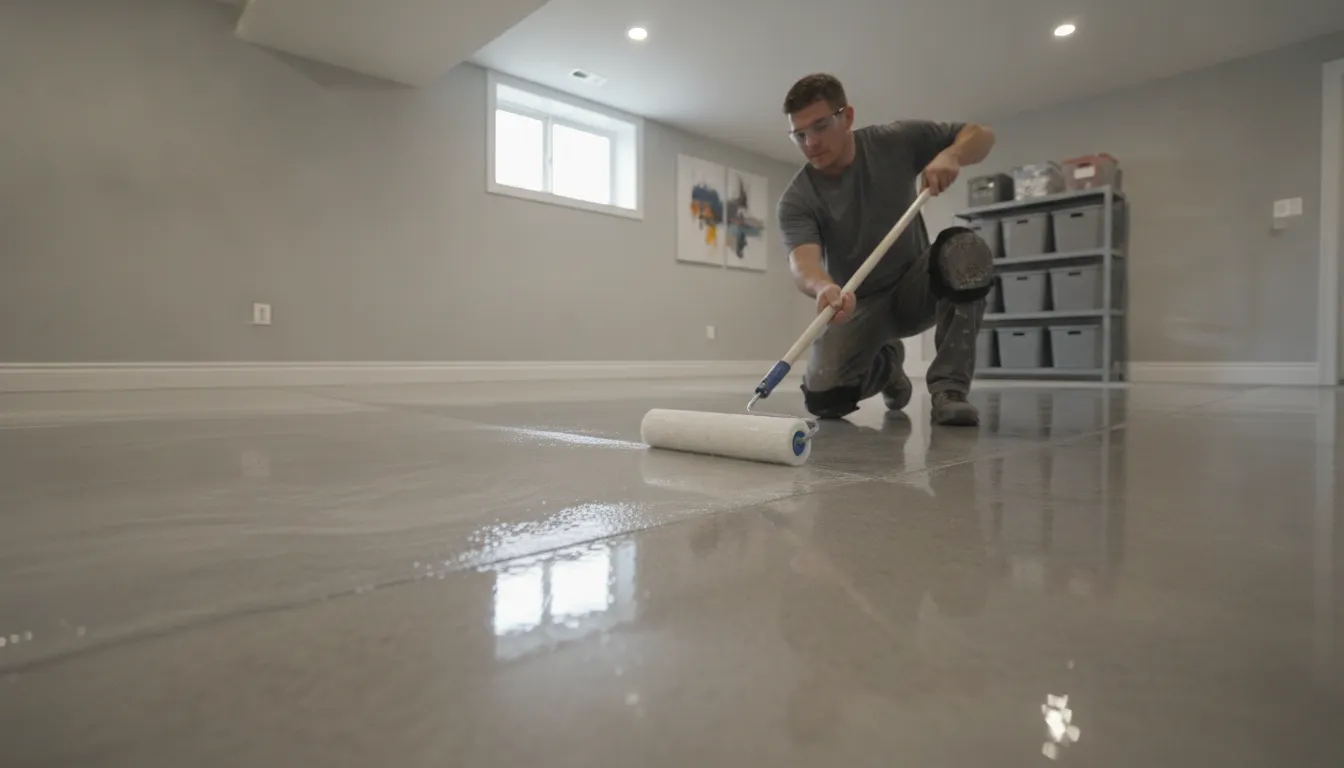
A raw basement slab can make an otherwise usable room feel unfinished. The surface may be dusty, uneven in appearance, and difficult to maintain, especially when moisture moves through the concrete. After professional preparation and coating, the same floor can become a clean, polished foundation for a home gym, recreation room, office, workshop, or finished living area.
A polyaspartic finish creates a glossy, seamless surface with a refined look that complements finished walls and furnishings. Decorative flake options can add visual texture and help disguise minor day-to-day debris, while the sealed surface is designed to resist stains, chemicals, and moisture. Because the coating is pliable and waterproof, it provides a more practical finish for a basement than leaving porous concrete exposed. You can learn more about the material’s broader performance characteristics in this guide to polyaspartic floor coating benefits.
From Raw Concrete To A Usable Room
The transformation is functional as well as visual. A coated floor is easier to sweep, mop, and maintain than unfinished concrete. Spills have less opportunity to soak into the slab, and the smooth finish gives the room a more intentional, finished appearance. It also creates a continuous surface without the grout lines found in many tile installations.
The finished result depends heavily on what happens before the coating is applied. Concrete is porous, and water can travel through pores and micro-cracks, making basement moisture assessment an essential first step. A professional installer evaluates the slab and determines whether moisture mitigation or a specialized primer is needed before applying the coating. This preparation helps protect the finish from peeling or delamination later.
A Professional Finish In One To Two Days
Polyaspartic coatings cure rapidly, supporting a faster return to service than traditional epoxy systems. Although their short working time demands careful application for proper leveling and a smooth finish. Research on polyaspartic coatings documents both the rapid cure and the need for controlled installation techniques.
Garage Kings projects are typically completed in one to two days, depending on the condition of the slab and the preparation required. The result is a professionally installed basement surface that looks polished, cleans easily, and is ready to support how your household uses the space. Explore the basement floor coating service to see how the process can be planned for your home.
Schedule a free in-home consultation to have your basement slab assessed and confirm the right floor coating polyaspartic system before you commit.
Frequently Asked Questions
What are the downsides of polyaspartic floor coating?
Its rapid cure time leaves less room for application errors. Polyaspartic must be applied with careful timing and technique to achieve proper leveling and a smooth finish, so basement installation is best handled by trained professionals. Research on polyaspartic coatings supports the need for careful application.
What is the best coating for a basement concrete floor?
The best system depends on the slab’s moisture conditions, intended use, and preparation requirements. A professional polyaspartic system can provide a durable, easy-to-clean finish, but the right primer and moisture mitigation plan must be selected after assessing the basement.
Can I use polyaspartic on a basement floor?
Yes, polyaspartic can be used on a basement floor when the concrete is properly evaluated and prepared. Basement slabs may have more moisture than garage floors, and a moisture mitigation primer is often needed to reduce the risk of peeling. Concrete’s pores and micro-cracks can allow water to move through the slab, as documented by Purdue research.
Is polyaspartic better than epoxy for basement floors?
Neither material is automatically better for every basement. Polyaspartic cures faster than traditional epoxy and generally offers stronger resistance to UV-related yellowing, while the final result still depends on moisture control, surface preparation, and professional application. A site assessment can determine which system fits the floor.
Does basement concrete need a vapor barrier for coating?
Not every basement has the same vapor barrier condition, so it should be checked rather than assumed. Moisture vapor transmission and hydrostatic pressure can contribute to coating delamination, making moisture testing and any required mitigation essential before installation. Transportation research guidance identifies moisture protection as a critical concrete concern.
Ready to Plan Your Basement Floor Coating?
A professional consultation helps determine whether your basement slab needs moisture assessment and preparation before a garage-style coating system is applied. You can also review finish options and see how the completed floor may look in your space with 3D AR visualization. Book your free in-home consultation with Garage Kings to discuss the right next step for your basement floor.