

Garage overhead storage for seasonal items can give back the floor space that holiday decorations, camping gear, luggage, and winter sports equipment take over each year. The right overhead rack keeps low-use belongings above the vehicle and work areas, but a useful system is more than a platform bolted to the ceiling. It has to match the ceiling structure, preserve clearance, distribute weight, and make the next seasonal change easy.
Book a free in-home consultation with Garage Kings to discuss measurements, storage zones, and a layout designed around the way your garage is actually used.
Short answer: Overhead racks work best for stable, infrequently used items packed in manageable containers. Keep frequently accessed belongings at eye level, follow the rack’s exact load rating, and plan each bin’s location before installing the system.
Why Seasonal Items Take Over Garages And How To Stop It
Seasonal belongings create a predictable storage problem. They may be useful for only a few weeks or months, yet they occupy the same floor, shelves, and cabinets all year. Holiday decor gets mixed with summer equipment. Winter gear ends up in front of the lawn tools. A few large bins become a wall that makes parking or walking through the garage difficult.
The problem is not simply a lack of storage. It is a mismatch between the frequency of use and the location of the items. Daily-use tools and safety equipment need convenient access. Seasonal items can move higher because they spend most of the year out of the way. That makes the ceiling a practical storage zone instead of wasted space.
A good seasonal-storage plan starts with three questions:
- Which items are used together during the same season?
- How often will each item need to come down?
- What must remain clear below the rack, including the vehicle, garage door, opener, lights, and walking paths?
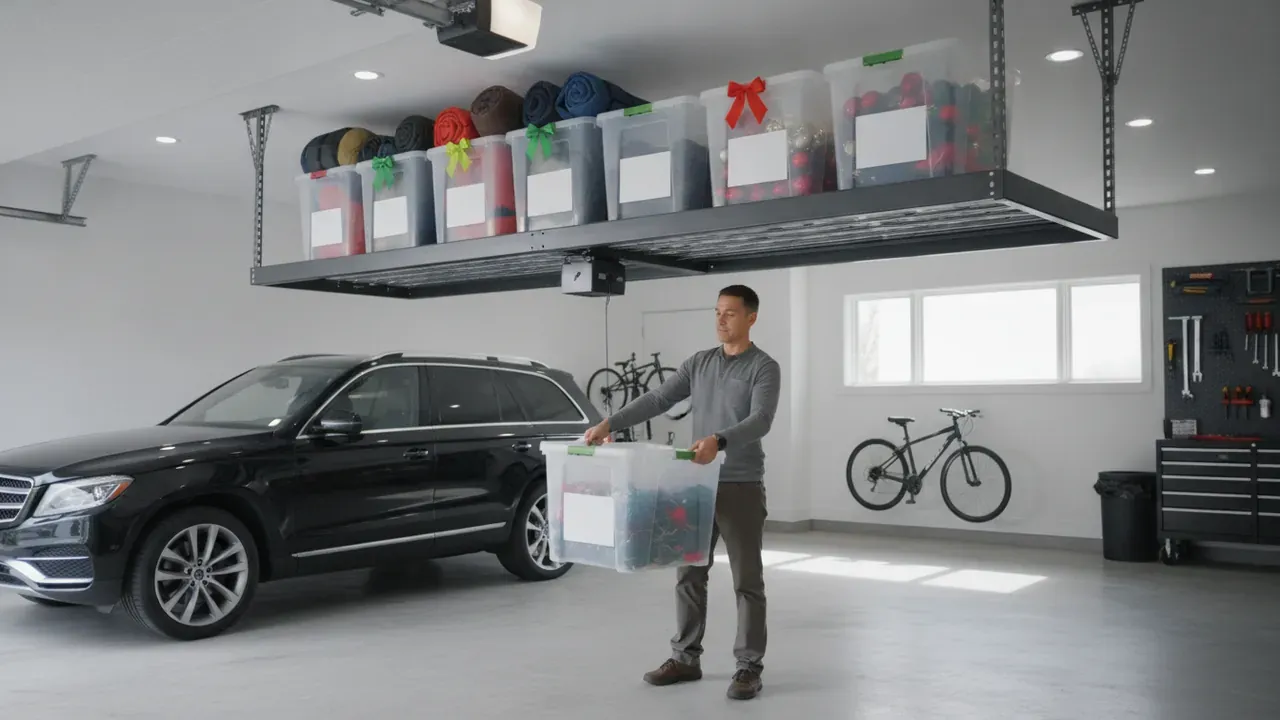
Once those answers are clear, group items into zones instead of stacking random containers wherever space is available. A holiday zone might hold artificial trees, lights, ornaments, and outdoor decorations. A winter zone might hold skis, snow gear, and cold-weather accessories. A camping zone might hold tents, sleeping bags, coolers, and folding chairs. The goal is to bring down one complete group when the season changes, rather than searching through every bin.
How Much Weight Can Overhead Racks Hold For Bulky Storage?
There is no universal weight limit for every overhead rack. Capacity depends on the rack dimensions, the hardware, the ceiling structure, the spacing of attachment points, and whether the load is distributed evenly. Garage Kings describes its overhead storage racks as rated for 400 to 600 or more pounds depending on the system and setup, but that range is not a reason to treat every ceiling or every rack as interchangeable.
The safe planning number is the specific rating for the selected system after the installation conditions have been reviewed. A rack rated for a certain maximum still needs to be loaded in a way that keeps the weight within that limit. A single dense object can create more stress at one point than several lighter containers spread across the platform.
Use The Rating As A Loading Plan
Before placing bulky storage overhead, weigh or estimate each container and add the total load for the rack. Leave room below the maximum rating rather than planning to use every available pound. Put heavier items low inside sturdy containers, keep the load balanced from side to side, and avoid stacking containers so high that they become difficult to remove safely.
Do not rely on a rack’s rating to solve a ceiling problem. The installer needs to confirm where the rack can attach and how the ceiling structure will support the system. Drywall alone is not a suitable substitute for structural attachment. Pipes, ductwork, lighting, garage door tracks, and an opener can also limit the rack’s position.
Choose Containers That Make Weight And Access Predictable
Matching containers can make seasonal storage safer and easier to manage. Use solid bins with secure lids for decorations, textiles, and small loose items. Choose containers that one person can control while standing on a safe step ladder or at floor level during loading. Oversized bins that are awkward to grip may be a poor choice even when their total weight appears acceptable.
Label the top and at least one side of every bin. A simple label such as “Holiday lights” or “Winter ski gear” is more useful than a number that requires a separate inventory. If a bin holds fragile or delicate items, note that on the label and keep it where it can be lowered without striking other containers.
For a deeper look at load planning and attachment concerns, see Garage Kings’ guide to overhead garage storage safety. This article focuses on the seasonal organization layer, while that guide covers the broader safety questions.
Which Seasonal Items Belong Overhead?
Overhead storage is most useful when the items are bulky, stable, and used occasionally. It is not a place for everything that does not have a home. Use the following sorting test before moving an item above your vehicle.
| Good Overhead Candidates | Use Caution Or Keep Lower |
|---|---|
| Holiday decorations in lidded bins | Items used every week |
| Empty luggage and travel accessories | Heavy single pieces that are hard to control |
| Camping gear grouped in light containers | Leaking liquids, chemicals, or heat-sensitive materials |
| Winter or summer sports equipment used seasonally | Fragile items that need frequent inspection |
| Folding chairs, tables, and other stable bulky items | Anything that could shift, roll, or fall from the rack |
Keep paint, fuel, chemicals, food, and other temperature-sensitive or leak-prone items in storage locations recommended by their labels and local safety guidance. The garage environment can experience heat, cold, moisture, and temperature swings. Overhead placement should never override the product’s storage instructions.
Also consider the cost of access in practical terms. If an item is needed for a quick repair, a weekly hobby, or a daily routine, placing it overhead may create frustration. Cabinets, wall storage, or a workbench may be better for those items. The best garage storage plan uses the ceiling for low-frequency items and reserves the lower zones for active parts of your routine.
Explore a storage layout that keeps seasonal items out of the way and within reach
How To Organize Seasonal Items For Easy Access
Organization is what turns an overhead rack into a system. Without a simple retrieval plan, homeowners often add more bins and lose the benefit of the space they recovered. Use a repeatable process so the garage is easier to reset after every season.
1. Sort By Season And Activity
Start by putting every seasonal item into a broad group. Do not create so many categories that each bin contains only one object. Think in terms of the activity that brings the items out: decorating for the holidays, camping, winter sports, boating, gardening, or travel.
2. Create A Rotation Order
Place the next season’s items closest to the access side of the rack. Store items that will not be used for many months farther back or higher in the system, as long as the rack is designed for that arrangement. The transition should require moving as few other containers as possible.
3. Use A Simple Inventory
A phone note or printed list can record the rack zone and the contents of each bin. Keep the inventory short. It only needs to answer two questions: which bin should come down, and where should it go back? Update the list whenever a bin changes purpose.
4. Keep A Clear Retrieval Path
Do not block the route to a step ladder, side door, electrical panel, or other required access point. Keep the area below the rack clear enough to position equipment safely. If a vehicle will park beneath the system, check the full door and hatch clearance before loading the rack.
5. Inspect During Each Rotation
When a seasonal group comes down, look for cracked bins, loose lids, moisture, shifting items, and signs of wear on the rack or hardware. Replace damaged containers before returning them overhead. If the system moves, sags, or shows a damaged component, stop loading it and arrange an inspection.
If your garage needs a broader layout than a ceiling rack alone, review Garage Kings’ garage storage solutions for ways to combine overhead racks with steel cabinets and wall systems. The ceiling can handle low-use bulk while cabinets keep tools, supplies, and frequently used equipment accessible.
Ask Garage Kings to plan your seasonal storage zones and measure the available ceiling space
Getting The Most From Ceiling Space In A Low-Ceiling Garage
Low ceilings do not automatically rule out overhead storage, but they reduce the margin for error. The system has to fit between the ceiling and the vehicle without interfering with the garage door, opener, lights, or walking space. A rack that looks workable on a blank plan may be impractical once the door opens and the car is parked.
Measure the lowest fixed obstacles, not just the overall ceiling height. Include the open garage door, tracks, springs, opener rail, light fixtures, ductwork, and the tallest vehicle or equipment that will remain below the rack. Leave enough clearance to move items in and out without scraping the vehicle or forcing containers into an unsafe position.
In a tight garage, a smaller rack with carefully chosen containers can be more useful than a larger rack that creates clearance problems. You may also need to place the system over a less frequently used parking bay or along a section of ceiling that does not conflict with the door. A professional measurement helps identify those tradeoffs before hardware is installed.
For installation-specific planning, read what overhead garage storage installation involves. The page covers rack capacity, ceiling clearance, and professional mounting, while this guide helps you decide what the rack should hold once it is in place.
Book A Free Measurement And Consultation
A seasonal storage plan should fit the structure of the garage and the habits of the household. Garage Kings can evaluate the available ceiling space, identify conflicts with doors and fixtures, and discuss how overhead storage can work with cabinets, wall systems, or other garage improvements. The in-home consultation also gives you a chance to describe the items you need to store rather than choosing a rack by dimensions alone.
Bring a short list of seasonal categories to the consultation, including the largest container, the heaviest group, and the items you need to access first. That information helps the layout account for both load distribution and rotation order. Garage Kings can also use 3D AR visualization to help you picture how the storage plan will work in the finished garage.
Book your free in-home consultation for a measured seasonal storage plan
Frequently Asked Questions
What Should I Store On An Overhead Garage Rack?
Store stable, low-frequency items such as holiday decorations, empty luggage, camping equipment, and seasonal sports gear in secure, labeled containers. Keep frequently used, fragile, leaking, or temperature-sensitive items in a more accessible location that follows the product’s storage instructions.
How Much Weight Can A Garage Overhead Storage Rack Hold?
Capacity depends on the rack, its dimensions, the mounting hardware, and the ceiling structure. Garage Kings describes some overhead racks as rated for 400 to 600 or more pounds depending on the system and setup. Use the exact rating for the selected system, keep the load distributed, and do not exceed the installation plan.
How Do I Organize Seasonal Bins Overhead?
Group items by season or activity, label the top and side of each bin, and place the next season’s items where they can be reached first. Keep an inventory that identifies each rack zone, and inspect bins and hardware every time items rotate.
Can Overhead Storage Work In A Low-ceiling Garage?
It can, if the rack height, vehicle clearance, garage door movement, opener, lights, and walking paths are measured together. A smaller rack or a different location may be the better solution when clearance is limited. Professional measurements can identify conflicts before installation.
Should I Install An Overhead Garage Storage Rack Myself?
That depends on the rack instructions, the ceiling structure, the available tools, and your ability to verify structural attachment and safe loading. When the ceiling is finished, obstacles are present, or the stored items are heavy, professional planning and installation can reduce the risk of an improperly supported system.