

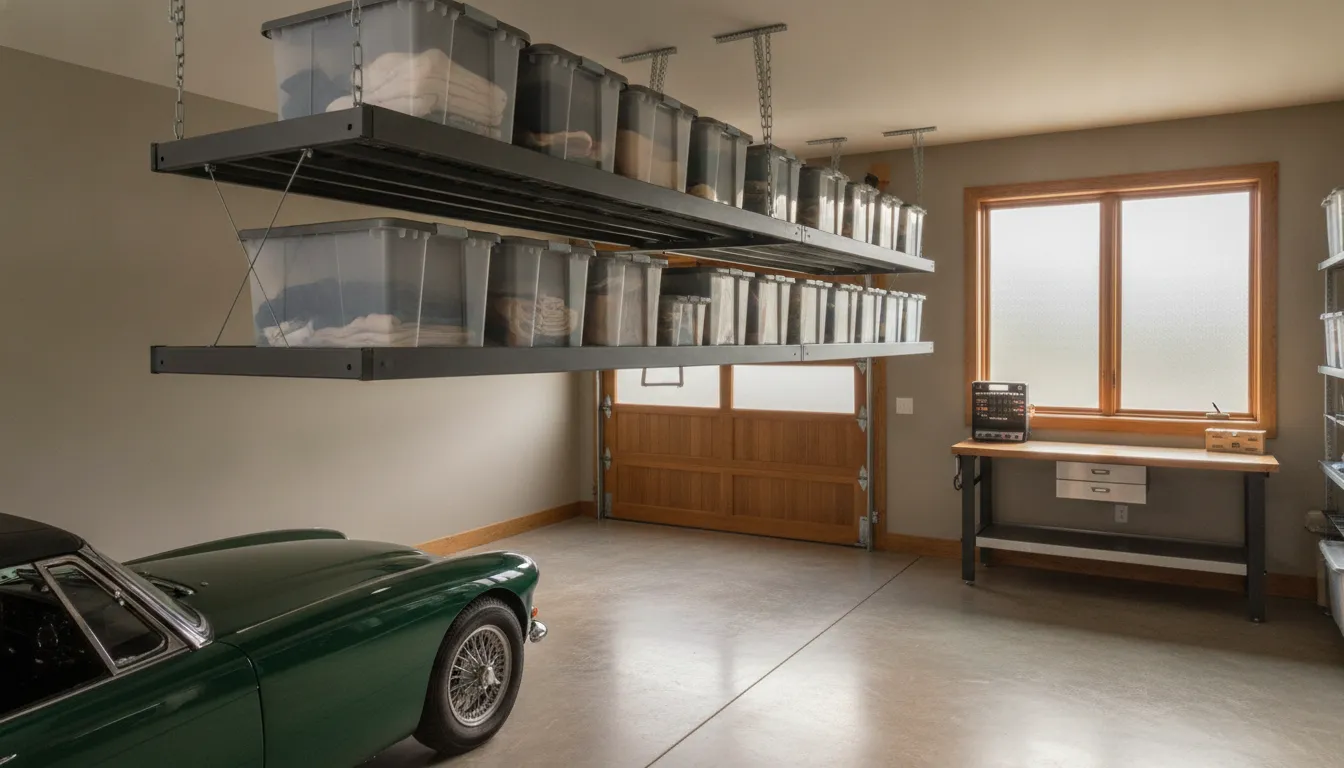
Overhead garage storage installation starts with a clear plan.
Overhead garage storage installation is the process of evaluating a garage, planning a ceiling-mounted rack layout, and securing the system to appropriate structural supports. A professional assessment helps protect clearance, distribute loads responsibly, and create storage that works with parking, projects, and daily access.
Contact Garage Kings for a free in-home consultation
Garage ceilings often hold valuable space while seasonal bins, sports gear, and household overflow crowd the floor. A useful plan considers ceiling height, joist structure, garage door clearance, lighting, vehicle position, and the way your household uses the space. This guide answers the core installation questions and explains where overhead racks fit within a complete garage storage plan.
What Is An Overhead Garage Storage Installation Rack System?
An overhead storage rack is a ceiling-mounted steel framework that creates a dedicated storage zone above the garage floor. It is designed for bulky or infrequently used items, such as holiday decorations, camping equipment, sports gear, luggage, and securely closed storage totes. Moving those items overhead can open floor space for parking, projects, exercise, or easier movement.
For homeowners considering overhead garage storage installation, the goal is more than hanging a shelf. The rack, hardware, ceiling structure, stored items, and surrounding clearance must work as one system. Garage Kings can plan overhead storage alongside garage storage solutions, including cabinets and other organization features.
- Store seasonal and long-term items that do not need daily access.
- Use sturdy containers with secure lids and group similar items together.
- Keep chemicals, daily-use tools, and fragile items in accessible storage instead.
- Leave room around the rack for safe loading and inspection.

An overhead rack is not a replacement for every other storage type. Cabinets protect and organize frequently used tools. Slatwall keeps smaller equipment visible and reachable. Overhead space is best reserved for items that can be safely lifted and retrieved occasionally.
How Much Weight Can Ceiling-Mounted Racks Hold?
There is no universal weight rating for a ceiling-mounted garage rack. Capacity depends on the specific model, rack dimensions, mounting hardware, and ceiling structure. Garage Kings service information describes overhead storage solutions in a broad range of approximately 400 to 600 or more pounds. The exact range depends on rack size and ceiling structure. This service context is not a rating for every rack or garage.
The manufacturer’s stated limit controls the installation. A heavy-duty rack can still be unsafe if the ceiling connection is unsuitable. Drywall alone is not an appropriate anchor for an overhead load. The installer must identify suitable joists or another appropriate structural surface, select compatible fasteners, and distribute the load across the platform.
What Determines The Real Capacity?
- Rack model and size: Confirm the exact manufacturer’s specifications instead of transferring a rating from a similar-looking product.
- Ceiling structure: Joist locations and ceiling construction determine where and how the rack can be secured.
- Hardware: Fasteners and anchors must match the ceiling material and intended load.
- Load distribution: Items should be spread across the rack rather than concentrated at one corner.
- Stored contents: Stable, contained items are better candidates than leaking, shifting, or unusually heavy objects.
Product verification and inspection also matter. The U.S. Consumer Product Safety Commission has documented recalls involving specific overhead racks where a cable buckle or defective bolt created a collapse hazard. Those notices do not mean every rack is unsafe, but they show why product identity, correct hardware, and periodic inspection matter. Review the CPSC cable-buckle recall notice and the CPSC bolt recall notice for the narrowly defined products involved.
Periodically inspect accessible brackets, bolts, and suspension components for visible damage or loosening. Follow the manufacturer’s maintenance instructions, and never add weight simply because there appears to be unused room.
What Ceiling Height Do You Need For Overhead Storage?
There is no single minimum ceiling height that makes an overhead rack suitable for every garage. The right placement depends on the rack’s drop, the height of stored containers, the vehicle parked below, and the paths people use through the room. A professional garage storage plan starts with the entire layout rather than one rack dimension.
Measure the distance from the ceiling to the bottom of the proposed rack. Then measure the tallest vehicle, including a roof rack or open hatch, and the height of the bins you plan to store. A lower rack may be easier to load, but it can interfere with a vehicle. A higher rack preserves clearance while still needing enough room for containers and safe retrieval.
Which Obstructions Should You Check?
- Garage door tracks, springs, and the automatic opener.
- Light fixtures, wiring, ductwork, and other ceiling equipment.
- Vehicle roofs, open hatches, and normal walking routes.
- Stairs, entry doors, workbenches, and loading areas.
- Joist locations, ceiling material, and possible mounting points.
A rack over a low-traffic corner may work differently from one above a parking bay or main entry route. Store frequently used items where they can be reached without awkward lifting. Reserve less accessible overhead space for long-term storage. These checks produce a more useful layout than choosing equipment based on ceiling height alone.
How Does Overhead Garage Storage Installation Work?
A well-planned overhead garage storage installation begins with the way the homeowner uses the space. Garage Kings typically completes overhead storage work in one day. The actual schedule depends on the number of racks, garage layout, and site conditions. The main steps include:
- Review storage goals. Identify what needs to be stored, how often each item is used, and what should remain at floor or wall level.
- Measure the garage. Record ceiling height, available bays, parked vehicle positions, access paths, and the locations of doors and stairs.
- Evaluate the structure. Locate suitable joists or another appropriate structural surface before selecting mounting hardware. Do not treat drywall as a load-bearing anchor.
- Plan clearance. Account for garage door movement, openers, lighting, vehicles, walking routes, and the height of stored containers.
- Select and confirm the layout. Match rack size, quantity, drop height, and placement to the garage and storage goals. Garage Kings can use 3D AR visualization to help homeowners preview a proposed arrangement.
- Mount and level the rack. Use compatible hardware and secure the rack to the planned structural supports. Check the platform and suspension points before loading.
- Review loading and care. Explain the manufacturer’s capacity, even weight distribution, suitable contents, and visible hardware checks.
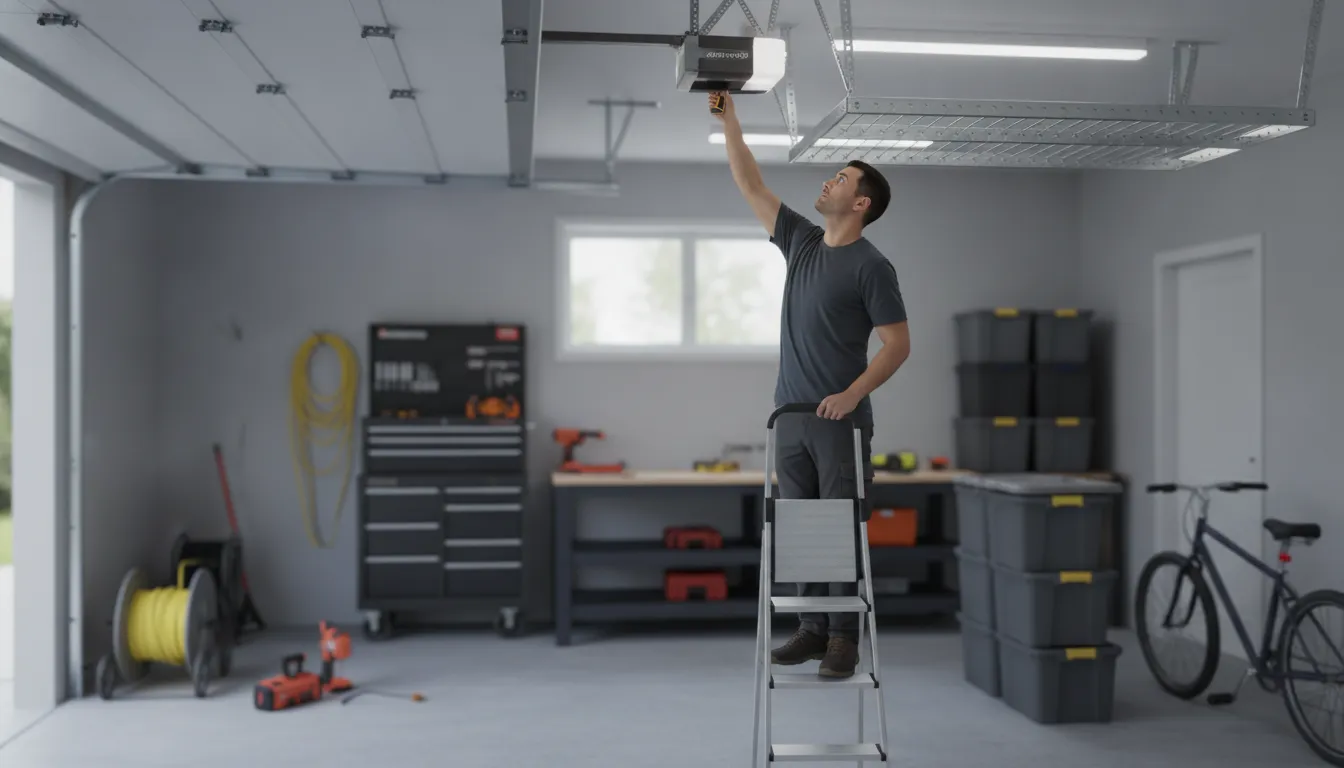
DIY installation may be possible for someone with structural-mounting experience, but the difficult part is not only assembling the rack. It is evaluating support, choosing compatible hardware, accounting for the actual load, and maintaining safe clearance. If those decisions are uncertain, a professional assessment is the safer starting point.
How Can Storage Racks Work With Cabinets And Floor Upgrades?
A complete garage plan gives each surface a clear job. Overhead racks hold seasonal belongings above the work zone. Steel cabinets organize tools and chemicals at a reachable height. Slatwall keeps grab-and-go equipment visible. A floor coating creates a clean, durable base for parking and projects.
| System | Best For | Access Pattern | Planning Note |
|---|---|---|---|
| Overhead racks | Seasonal and long-term storage | Occasional access | Confirm joists, mounting, height, and clearance. |
| Steel cabinets | Tools and daily-use equipment | Frequent access | Place where doors can open without narrowing paths. |
| Slatwall | Bikes and grab-and-go items | Visible access | Use wall sections that remain clear of vehicles. |
| Floor coating | Parking and projects | Constant use | Plan storage footprints before finalizing circulation. |
Start with vehicles, doors, stairs, and loading areas. Then decide which belongings need daily access and which can move overhead. This approach keeps lower storage practical while preventing the ceiling rack from becoming a catch-all. For additional planning ideas, see how to choose the best garage storage system.
Talk with Garage Kings about your overhead storage plan
How Should You Prepare For An Overhead Storage Consultation?
A little preparation makes the consultation more useful. Start by walking through the garage and noting what is taking up floor space, what is used every week, and what could stay stored for months. This separates active storage from seasonal storage before a rack layout is designed.
- Make a simple inventory of bins, sports equipment, luggage, and seasonal items.
- Measure unusually tall or deep containers that must fit on the rack.
- Note where vehicles sit, including roof racks, liftgates, or open hatch positions.
- Identify lights, door tracks, openers, ductwork, and other ceiling obstructions.
- Bring questions about access, load limits, maintenance, and future storage needs.
Do not move heavy items overhead before the structure and equipment are reviewed. The consultation should determine which items belong on the rack, how they should be distributed, and where cabinets or wall storage will work better. That conversation also helps prevent a common planning mistake: designing for empty floor space while forgetting how the garage functions when vehicles are parked and the door is open.
When storage is planned as a complete system, the result is easier to maintain. Overhead racks can handle occasional-use items. Cabinets can keep daily-use supplies protected. Open wall storage can keep frequently handled equipment visible. Each choice supports a different access pattern, so the layout should follow your routines instead of filling every available surface.
What Questions Should Homeowners Ask?
Ask how the installer will identify structural supports, what capacity applies to the exact rack, and how clearance will be checked with vehicles and the garage door operating. You can also ask how the system will be inspected later, which containers are recommended, and how the plan can expand if your storage needs change.
Clear answers matter because overhead storage is part of the home’s working environment. A rack should not block a light, narrow a walking route, or make it difficult to reach a shutoff, opener, or door. The best plan improves organization without creating a new obstacle.
Garage Kings combines storage planning with professional installation and can discuss overhead racks, cabinets, and other garage transformation options during a free in-home consultation. Use the Garage Kings contact page to start the conversation.
How Can You Keep The Rack Useful Over Time?
Organization does not end when the rack is mounted. Label containers by season or category, keep a simple list of what is stored overhead, and leave enough room to remove one bin without unloading the entire platform. Put the items you use most often near the easiest access point. Reserve the highest or least accessible area for belongings that may stay stored for a full season.
Review the arrangement when your household changes. A new vehicle, roof rack, workbench, or lighting fixture can change the clearance plan. Check that stored containers remain closed and stable. Follow the rack manufacturer’s directions for inspections, fastener checks, and maximum capacity. If the system shows visible damage, stop using the affected area until it has been evaluated.
This simple maintenance routine protects the usefulness of the installation. It also keeps the garage from returning to the same floor-clutter problem that led you to consider overhead storage in the first place.
Frequently Asked Questions About Overhead Garage Storage Installation
Is professional overhead garage storage installation necessary?
Professional installation is recommended when you need help evaluating joists, ceiling material, load capacity, clearance, or hardware compatibility. A qualified installer can plan the system around vehicles, garage doors, lights, and walking paths before drilling begins.
What should I store on an overhead garage rack?
Seasonal decorations, camping equipment, sports gear, luggage, and securely closed storage totes are common choices. Keep daily-use tools, chemicals, fragile items, and anything that could leak or shift in more accessible storage.
How do I know if my garage ceiling can support a rack?
The answer depends on the rack, mounting hardware, ceiling construction, and structural supports. Do not assume drywall can carry the load. An installer should identify suitable mounting points and compare the planned contents with the manufacturer’s capacity.
Can overhead racks be combined with garage cabinets?
Yes. Overhead racks are useful for long-term items, while cabinets can hold tools and other belongings used more often. Planning both systems together helps preserve clear circulation and makes each storage surface easier to use.
How long does overhead storage installation take?
Garage Kings typically completes overhead storage work in one day, but timing varies with the number of racks, garage layout, ceiling conditions, and site requirements. A consultation provides a more accurate plan for the specific space.
FAQ.
Done.