


.
Overhead garage storage turns the unused space above your vehicle, workbench, or walking path into an organized storage zone. A ceiling-mounted rack can move seasonal bins, sports equipment, luggage, and household overflow off the floor. It also preserves the clearances you need to park, work, and move safely. Garage Kings designs overhead storage as part of a complete garage storage solution. The rack should fit the room, not simply fill an empty area.
Book a free Garage Kings storage consultation
What Is Overhead Garage Storage?
Overhead garage storage is a ceiling-mounted steel rack system that creates a platform above the garage floor. It is best suited for bulky, seasonal, or occasional-use items. Secure containers keep those belongings overhead. Homeowners can then reclaim floor space without giving up what they need throughout the year.
An overhead rack is more than a platform and a few fasteners. Rack dimensions, mounting hardware, ceiling structure, stored load, garage door hardware, lighting, vehicle height, and access paths must work together. A responsible plan starts with the room and the items being stored. It then selects a layout that fits those conditions.
- Seasonal items: Holiday decorations, winter gear, camping equipment, and patio accessories.
- Bulky household items: Luggage, storage totes, folding tables, and infrequently used furnishings.
- Recreation equipment: Sports equipment and other gear that does not need to remain on the floor.
- Garage overflow: Extra supplies that belong in the garage but should not crowd vehicles or work areas.
Overhead space is not the right home for every item. Daily-use tools, chemicals, fragile objects, and anything too heavy or awkward to lift should stay in accessible storage. Cabinets and slatwall systems keep frequently used items at a convenient height. An overhead rack is a better match for long-term or occasional storage.
Why Use The Ceiling To Reclaim Garage Floor Space?
The ceiling is often the least-used storage surface in a garage. Meanwhile, bins and equipment crowd the floor. A planned overhead rack moves selected items upward. The area below can then support parking, a workbench, exercise equipment, or a safer walking route. The result is not simply more capacity. It is a garage that is easier to use.
Consider a common before-and-after scenario. Before installation, plastic totes and sports gear occupy the back corner. They narrow the path around a parked vehicle and make the wall difficult to reach. Afterward, closed containers sit on a properly mounted rack. The floor can support a clear vehicle bay and a defined work area. Results depend on garage dimensions and inventory. The planning principle stays consistent: use the ceiling for suitable items and reserve the floor for activities.
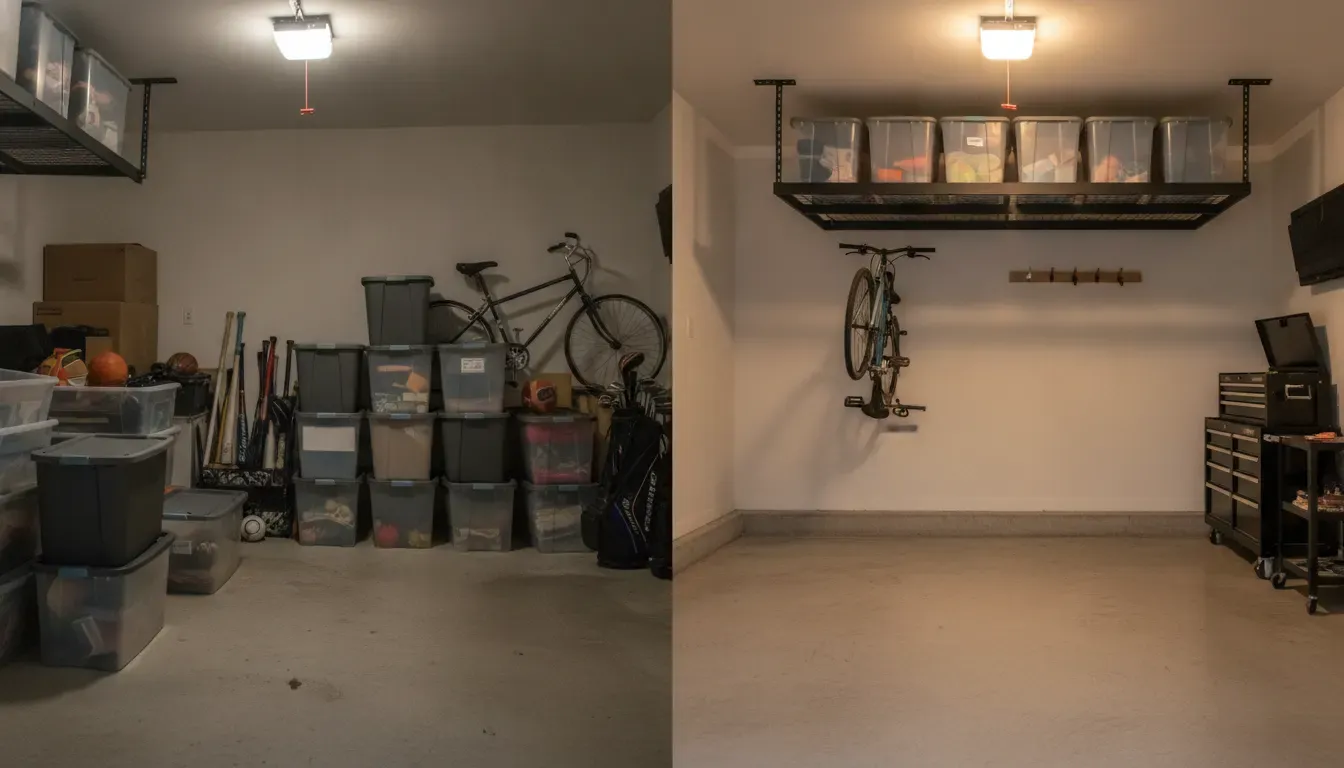
Overhead storage can also improve organization by giving each category a designated location. Label containers by season or use to make retrieval more predictable. Keeping bins on a level platform discourages loose boxes in front of the vehicle or near a door. Combine overhead racks with wall cabinets, slatwall, and a durable floor. The garage can then support storage, projects, and daily routines at the same time.
For a broader plan, review how to choose the best garage storage system before deciding which items belong overhead and which should remain within easy reach.
What Types Of Ceiling-Mounted Racks Are Available?
Ceiling-mounted racks vary by platform size, drop height, layout, and access method. The best type depends on ceiling height, joist direction, garage door movement, container size, and use frequency. No single rack size fits every garage.
| Rack approach | Best fit | Main planning question |
|---|---|---|
| Single-tier platform | Seasonal bins and general household overflow | Will the footprint and drop leave enough clearance below? |
| Compact platform | Narrow bays, tight walkways, or limited ceiling zones | Can the smaller footprint hold the intended items without crowding the room? |
| Multiple platforms | Large garages with separate storage zones | Can each platform avoid tracks, openers, lights, and vehicle paths? |
| Adjustable-height system | Garages where the load or clearance needs may change | What drop range works with the tallest vehicle and stored containers? |
A single-tier platform is often a practical starting point. It provides a defined place for closed totes without adding complexity. A compact rack may work better when a full-size platform would interfere with a vehicle door or walking path. Multiple racks can expand capacity. They also increase the need for accurate measurements and structural review.
Garage Kings service information describes professional overhead storage solutions in a broad range of approximately 400 to 600 or more pounds. The range depends on rack size and ceiling structure. It is service context, not a universal rating. The manufacturer rating and actual garage structure control each installation.
How Much Weight Can Overhead Garage Storage Hold?
Overhead garage storage does not have one universal weight limit. Capacity depends on the rack, platform dimensions, mounting points, fasteners, ceiling construction, and load distribution. A rack rated for a certain capacity is safe only when installed to its specifications and attached to suitable structural supports.
The rack manufacturer determines the listed capacity. The garage structure determines whether the planned installation can support that load. These are related but different questions. A strong steel platform cannot compensate for an unsuitable anchor, a missed joist, damaged framing, or a concentrated point load in one corner.
- Confirm the rack model and its manufacturer-listed capacity.
- Identify the actual joists or other approved structural supports.
- Use compatible fasteners rather than relying on drywall alone.
- Distribute stored items across the platform instead of creating a heavy corner.
- Keep the total load, including containers, below the applicable rating.
- Recheck the system if the stored inventory changes significantly.
Use sturdy containers with secure lids and group similar items together. Do not place leaking chemicals, loose sharp objects, or unstable items above a vehicle or active work area. If the ceiling construction is unusual, joists are inaccessible, or the planned load is uncertain, stop. Have the structure evaluated before installation.
How Do You Plan Garage Door And Vehicle Clearance?
Clearance planning determines whether overhead garage storage works in daily life. Measure from the floor to the ceiling or underside of the framing. Then account for the rack drop, rack frame, stored containers, open garage door, opener arm, tracks, lighting, and tallest vehicle. A rack that fits on paper can still interfere with a door, roof rack, or walking route. Map those moving parts first.
Start by measuring the tallest vehicle that will use the bay. Include any roof rack or other permanent equipment. Add room for opening doors and walking around the vehicle. Mark the garage door tracks and opener path through their full range of movement. The overhead rack should not obstruct the door, opener, lights, attic access, or service equipment.
- Measure ceiling height at the intended rack location.
- Measure the tallest vehicle and note roof-mounted equipment.
- Record the rack platform depth and the intended drop from the ceiling.
- Map the garage door tracks, opener arm, springs, lights, ducts, and access panels.
- Mark door-swing and walking clearances with vehicles parked in their normal positions.
- Compare the available space with the rack manufacturer’s installation requirements.
A rack over the rear of a bay may avoid the opener arm but conflict with a workbench or back-door path. A platform near the front may reclaim useful space but need a narrower footprint. Choose the location that supports the intended load without making the garage harder to use.
Do not treat the ceiling as an empty rectangle. Joists, trusses, ducts, lights, and door hardware divide it into usable and unusable zones. A professional measurement can reveal those constraints before a rack is purchased or installed.
What Should You Store On An Overhead Rack?
Good overhead organization starts with a clear rule. Store items that are safe to lift, stable in containers, and used occasionally. Keep everyday tools and delicate belongings where they can be reached without a ladder or awkward lifting. The goal is to reclaim floor space without creating a new access problem.
| Good overhead candidates | Better stored within reach |
|---|---|
| Seasonal decorations in closed totes. | Daily-use hand tools. |
| Camping equipment and luggage. | Paint, fuel, and other chemicals. |
| Off-season sports equipment. | Fragile or temperature-sensitive items. |
| Folding tables and occasional-use gear. | Heavy items that are difficult to lift safely. |
| Household overflow in labeled bins. | Items needed several times each week. |
Use containers that match the platform size. Keep labels facing the access side. Make a simple inventory for holiday, travel, recreation, and household items. Leave space to inspect the rack and retrieve a bin without shifting the entire load.
Homeowners who store seasonal items overhead should also review this guide to organizing seasonal items in the garage. It covers the practical connection between item frequency, container choice, and overhead access.
How Does Professional Installation Improve The Plan?
Professional installation adds a measurement and planning step before the rack is mounted. The installer reviews the ceiling structure, rack location, load requirements, garage door hardware, vehicle clearance, and the relationship between overhead storage and other organization systems. This helps prevent a platform from being placed where it blocks an opener, crowds a vehicle, or depends on an unsuitable anchor.
Garage Kings offers SafeRacks-certified overhead storage solutions as part of its storage portfolio. The value of that certification is not a promise that every rack fits every garage. It is a reason to match the system, hardware, and installation approach to the manufacturer’s requirements and the actual site conditions.
A professional plan can also connect the ceiling rack to a larger garage transformation. Cabinets can organize tools and supplies at working height. Slatwall can keep frequently used equipment visible. Overhead racks can hold seasonal and bulky items. A coated floor can make the newly opened area easier to clean and maintain. The right combination depends on how the household uses the garage.
Talk with Garage Kings about a custom overhead storage plan
How Do You Maintain Overhead Garage Storage?
Maintenance is simple when the system is inspected periodically and the load stays within its intended use. Look for changes before they become problems, especially after moving items, changing the garage layout, or noticing vibration, noise, or visible movement.
- Check that the platform remains level and that visible fasteners are secure.
- Look for bent steel, damaged wire decking, corrosion, or separated connections.
- Confirm that containers remain stable and are not concentrated in one area.
- Make sure the garage door and opener still move freely through their full path.
- Remove items that leak, shift, or exceed the planned weight.
- Ask a qualified professional to inspect unexplained movement or damage.
Do not climb onto an overhead rack unless the system is specifically designed for that use. Retrieve items with appropriate equipment and assistance. If access requires an unstable ladder position, reorganize the storage plan rather than taking a risk.
Book your free overhead storage consultation with Garage Kings
Frequently Asked Questions About Overhead Garage Storage
Is overhead garage storage safe for heavy items?
It can be safe when the rack is rated for the load, anchored to suitable structural supports, installed according to the manufacturer’s instructions, and loaded evenly. The exact capacity depends on the rack and the garage structure.
How much weight can a garage ceiling rack hold?
Garage Kings describes professional overhead storage solutions in a broad range of approximately 400 to 600 or more pounds, depending on the system and ceiling structure. The applicable manufacturer’s rating and site conditions determine the safe limit for a specific installation.
Will an overhead rack interfere with my garage door?
It can if the platform overlaps the door tracks, opener arm, springs, or the door’s movement path. Measure all hardware and the open-door position before choosing the rack location and drop height.
What belongs on an overhead garage rack?
Seasonal decorations, luggage, camping equipment, off-season sports gear, and other stable items used occasionally are common choices. Keep daily-use tools, chemicals, fragile items, and difficult-to-lift objects in accessible storage.
Can overhead storage work in a small garage?
Yes, but the platform footprint and drop must preserve vehicle, door-swing, and walking clearance. A compact rack or a different storage combination may work better than a full-size platform.
Can overhead racks be combined with cabinets and slatwall?
Yes. Overhead racks are useful for bulky, occasional-use items, while cabinets and slatwall keep tools and frequently used equipment within reach. A coordinated layout can use the ceiling, walls, and floor for different storage jobs.
Make More Of Your Garage’s Vertical Space
Overhead garage storage is most effective when it is planned around the structure and the way the garage is used. Measure first, choose items that belong overhead, respect the manufacturer’s capacity, protect garage door and vehicle clearance, and connect the rack to the rest of the organization plan. With those steps in place, unused ceiling space can help create a cleaner, safer, and more functional garage.