
A garage floor can look worn for very different reasons. Some surfaces need a durable finish over sound concrete, while others need damaged or uneven concrete restored before any coating is applied. Knowing the difference helps you avoid covering up problems that could shorten the life of your new floor.
Schedule a free in-home consultation with 3D AR visualization
Concrete resurfacing vs floor coating comes down to the condition of the slab. Resurfacing adds a new top layer to address worn, pitted, or uneven concrete, while a polyaspartic floor coating protects and transforms a clean, structurally sound surface. If the concrete is stable and properly prepared, coating may be enough. If damage affects the surface, resurfacing may be the necessary first step.
The right recommendation starts with the concrete beneath the finish, not just the appearance you want to achieve. Here is what resurfacing does, when it is needed, and how it can prepare a garage floor for a professional coating system.
What Is Concrete Resurfacing and When Is It Needed?
Concrete resurfacing and floor coating both improve an aging garage floor, but they solve different problems. Resurfacing adds a new, durable top layer over existing concrete to level or smooth the surface, while a coating creates a protective finish over a suitable slab. That distinction is central to understanding concrete resurfacing vs floor coating: resurfacing addresses an imperfect surface, and coating protects and finishes a sound one.
How Concrete Resurfacing Works
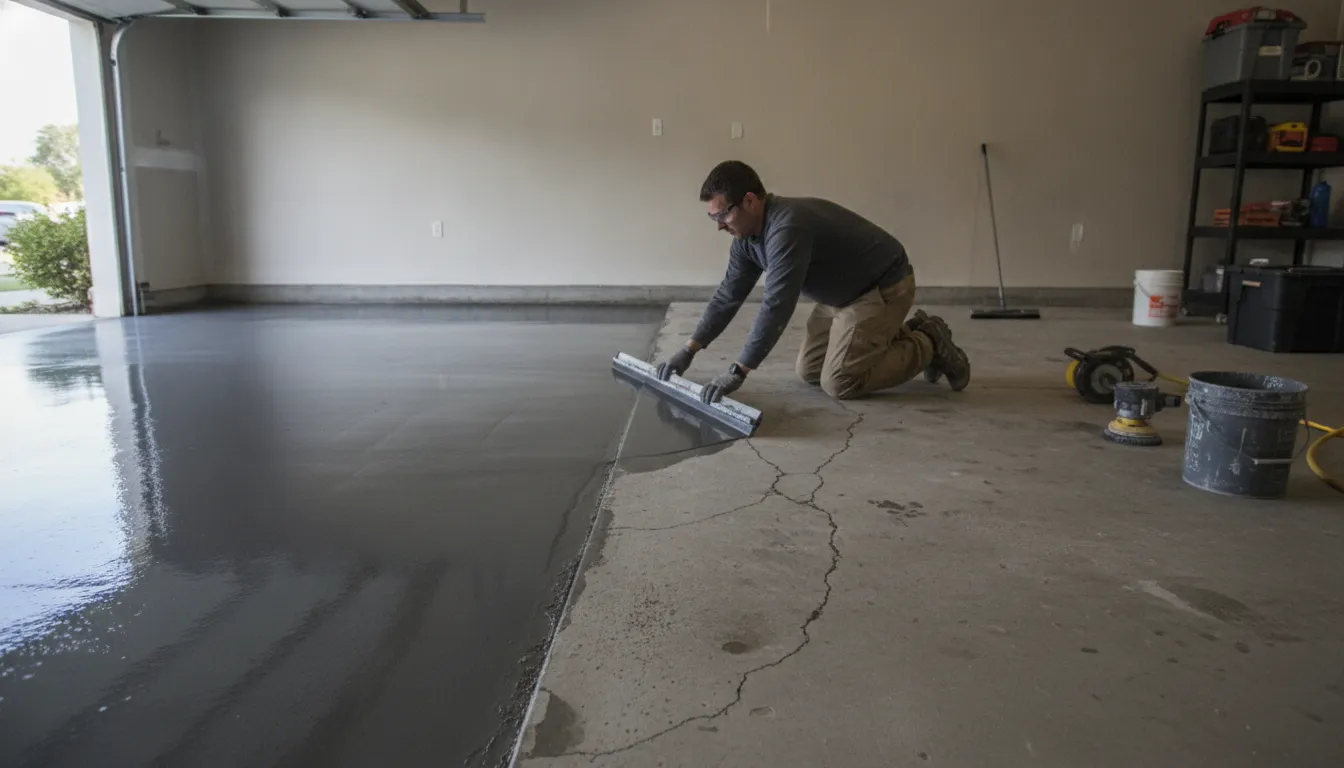
During resurfacing, an overlay material is applied across the existing concrete. These overlays are typically about 1/8 to 1/4 inch thick, giving the installer enough material to improve minor surface irregularities without removing the entire slab. Depending on the design, the finished surface may be smooth, colored, stamped, or textured. Decorative overlay options can change the appearance while creating a more uniform base.
Resurfacing is most useful when the concrete is worn, rough, lightly damaged, or visually inconsistent, but the slab remains fundamentally stable. It may also be appropriate when previous patches or years of use have left the surface difficult to coat evenly. The work itself can sometimes be completed quickly, from roughly 30 minutes to a few days. Although the actual timeline depends on the floor’s condition, preparation, material, and curing requirements.
When a Coating Is the Better Choice
A floor coating is generally the right starting point when the existing slab is sound, clean, and capable of supporting strong adhesion. The coating adds protection against routine wear, spills, and garage conditions without adding the same depth as an overlay. Professional preparation, including cleaning, repairs, and methods such as diamond grinding or shot blasting, remains essential for lasting performance.
Resurfacing should not be treated as a solution for every crack or defect. Severe structural cracking, settlement, or movement can indicate an underlying stability problem that a surface treatment cannot correct. In those cases, replacement or a more extensive repair may be necessary. Because slab condition determines whether either application can succeed, a professional assessment should come before choosing between the two approaches.
Can You Apply Polyaspartic Over a Resurfaced Floor?
Yes, polyaspartic can be applied over a properly resurfaced floor, but resurfacing is not a shortcut around preparation. The resurfaced surface must be fully cured, clean, dry, and structurally stable before the coating system is installed. In other words, the new surface becomes the substrate, and its condition matters just as much as the condition of the original slab.
This is the practical distinction behind concrete resurfacing vs floor coating. Resurfacing is a remediation step that restores an uneven, worn, or damaged floor with a new top layer. Polyaspartic is a finishing system that protects a suitable surface. A coating can improve the appearance and performance of sound concrete, but it cannot stabilize movement or correct unresolved structural damage underneath it.
When Resurfacing Creates a Suitable Base
If the original concrete has been repaired and the resurfacing material has bonded correctly, resurfacing can provide a smoother, more uniform base for a polyaspartic system. The overlay itself must be selected and installed for the intended garage use, then allowed to reach the required cure before coating. Proper repair before resurfacing is essential because cracks, spalling, settlement, or other active problems can transfer through the finished system.
Once the substrate is ready, professional installers typically use mechanical preparation. Such as diamond grinding or shot blasting, to remove contaminants and create the surface profile needed for adhesion. They also evaluate porosity and moisture conditions. Moisture vapor transmission through the slab can contribute to coating failure, so a moisture-remediating primer or another appropriate system may be necessary before the polyaspartic layers are applied.
Why Polyaspartic Works Well In Garages
Applied to a clean, well-prepped, structurally sound surface, polyaspartic offers a durable finish for demanding garage conditions. It is valued for resistance to hot-tire pickup and chemical damage, while careful installation supports long-term performance. You can learn more in Garage Kings’ polyaspartic garage floor coating guide.
The right sequence is therefore repair, resurfacing when needed, preparation, moisture evaluation, and coating. A professional assessment can determine whether the existing floor needs remediation first or is already ready for a durable floor coating solution.
Signs Your Concrete Floor Needs Resurfacing Before Coating
Before choosing between concrete resurfacing vs floor coating, assess the slab itself. A clean, stable floor may be ready for professional preparation and a coating. A damaged floor may need repair or resurfacing first so the finished system has a sound, consistent base.
Look for these warning signs:
- Cracks: Hairline cracks may be manageable after evaluation, but widening, branching, or recurring cracks can indicate movement that needs more than a surface finish.
- Spalling and chipping: Flaking concrete, loose fragments, and areas where the surface has broken away signal that the top layer is no longer sound.
- Pitting: Small holes and widespread pockmarks create an uneven profile that can telegraph through a coating and make cleaning more difficult.
- Stains and contamination: Deep oil, chemical, or other stains may point to absorption into the porous slab. Contaminants must be removed or addressed before a coating can bond reliably.
- Uneven or worn areas: Depressions, rough patches, previous repairs, and visible surface deterioration can prevent a uniform finished floor.
The severity and type of cracking matter. Concrete repair should be completed before resurfacing or coating, rather than covered in the hope that the damage will disappear. Repair and resurfacing guidance supports evaluating the existing condition before selecting an overlay or coating system.
Resurfacing is often appropriate when the slab is fundamentally stable but has widespread surface damage, porosity, or irregularities. It adds a new layer that can level and smooth the existing concrete. A clean, structurally sound slab without significant damage may go directly to coating after cleaning, repairs, and mechanical preparation.
Replacement is a different decision. Severe structural cracking, settlement, or instability can mean that a surface treatment will not address the underlying problem. In those cases, replacement may be necessary. The slab condition is the primary determinant of whether resurfacing or coating can succeed, so an on-site assessment should come before committing to either approach.
For a closer look at the concrete resurfacing process, focus first on what the slab needs repaired, not simply on the finish you want to see.
Cost Comparison: Resurfacing + Coating vs Replacement
When the slab is structurally sound, resurfacing is generally far less expensive than removing the existing concrete and installing a completely new floor. It addresses the worn or uneven surface without taking on the labor, material, and disruption involved in full replacement. Adding a professional coating after resurfacing can extend the value of that work by protecting the restored surface from everyday garage wear.
The right choice still depends on the condition beneath the visible damage. Severe structural cracking, settlement, or a slab that has already been repeatedly patched may require replacement rather than another surface treatment. Concrete surfaces that are at least 20 years old and have undergone previous patching or resurfacing are commonly evaluated more closely for this reason. Learn more about the concrete resurfacing process before deciding which route fits your garage.
| Route | Durability | Downtime | When It Fits |
|---|---|---|---|
| Resurfacing | Creates a new surface layer and can last many years when properly sealed and maintained. | Usually less disruptive than removing and replacing the slab; project timing varies with repairs and site conditions. | Best for worn, uneven, or lightly damaged concrete that remains structurally sound. |
| Resurfacing + Polyaspartic Coating | Combines a restored base with a protective finish designed to resist garage wear, chemicals, and hot-tire pickup. | Requires preparation, resurfacing, curing, and coating, but avoids the major demolition associated with replacement. | Best when the slab needs a smoother foundation and the homeowner wants added protection and long-term value. |
| Full Replacement | Provides a new slab when surface treatments cannot resolve underlying stability problems. | Typically the most disruptive route because it involves removal, new installation, and concrete curing. | Best for severe structural cracking, settlement, or an extensively deteriorated slab. |
Coatings commonly serve a shorter maintenance cycle than a properly sealed overlay, while an overlay can last upwards of 15 years under suitable conditions. That does not make replacement unnecessary, but it shows why restoring the existing slab and protecting it with a coating can be a strong middle path. Garage Kings can assess the concrete and explain the options during a free in-home estimate, without asking you to choose a treatment before the slab has been evaluated.
How the Assessment Process Works at Garage Kings
The right answer is not chosen by appearance alone. Before recommending resurfacing or a floor coating, Garage Kings evaluates whether the existing slab can support a durable finish. A coating needs a sound, clean substrate, while resurfacing creates a new top layer over existing concrete. That distinction is central to making a responsible recommendation.
- Start with a free in-home consultation. A Garage Kings specialist reviews how you use the garage, examines the current floor, and discusses the finish you want. The consultation includes free 3D AR visualization, so you can preview how a transformed garage may look before selecting a design direction. The goal is to understand both the condition of the slab and the result you want from it.
- Evaluate porosity, moisture, and visible damage. Concrete is porous, and moisture vapor moving through the slab can contribute to coating failure if it is not identified and addressed. The assessment looks for porosity, moisture concerns, cracks, spalling, and other signs that the surface or underlying concrete needs attention. Professional evaluation matters here because a clean-looking floor can still have conditions that affect adhesion. See the distinction between resurfacing and coating before assuming one treatment fits every slab.
- Prepare and repair the surface. Proper preparation is critical to the long-term performance of either approach. Depending on the slab, the team may use diamond grinding or shot blasting to remove contaminants and create the correct profile. Cracks or other repairs are addressed before the next layer is applied. You can learn more about the concrete resurfacing process and why preparation comes first.
- Resurface when the slab needs a new base, then apply the coating. If the concrete requires leveling, smoothing, or broader surface restoration, resurfacing may be recommended first. Once the base is ready, Garage Kings can apply a polyaspartic or epoxy coating suited to the garage and its use. If the slab is already sound, resurfacing may not be necessary, and the project can proceed with coating preparation instead.
This evaluation-based approach keeps the decision focused on long-term performance rather than a one-size-fits-all answer. To discuss your garage and schedule the next step, contact Garage Kings for a free consultation.
Schedule a free in-home consultation with 3D AR visualization
Frequently Asked Questions
What Is The Difference Between Concrete Resurfacing And Floor Coating?
Resurfacing adds a new material layer that smooths, levels, or renews the existing concrete. A floor coating is a protective finish applied over a properly prepared surface. Resurfacing addresses an unsuitable or damaged base, while coating protects and improves a sound one.
Should I Resurface My Concrete Before Applying A Polyaspartic Coating?
Not always. If the slab is sound, clean, and free from problems that could undermine adhesion, preparation such as diamond grinding or shot blasting may be enough. Cracks, spalling, or significant surface deterioration should be repaired or resurfaced before the polyaspartic system is installed.
How Long Will A Concrete Resurfacing Project Last?
The project itself can range from about 30 minutes to a few days, depending on the floor condition and the scope of work. The finished overlay can last upwards of 15 years when it is properly sealed and maintained. Project duration and overlay longevity reference.
What Are The Downsides Of Using A Concrete Overlay?
An overlay is not a solution for severe structural cracking, settlement, or an unstable slab. It also adds a preparation and curing step before a coating can be applied, and its performance depends on the existing concrete, correct installation, and ongoing maintenance. A professional assessment helps determine whether resurfacing is appropriate or replacement is safer.
Is Concrete Resurfacing Worth It For A Garage Floor?
It can be worthwhile when the slab is structurally stable but too rough, uneven, or damaged for a durable coating. Resurfacing restores the surface instead of covering defects, creating a more uniform base for the protective finish. If the concrete has serious structural problems, replacement may be the better path.
Ready to Choose the Right Floor Solution?
A professional assessment can clarify whether your garage floor needs resurfacing, a new coating, or both before work begins. Garage Kings can help you compare the condition of your concrete with the finish you want, using a free in-home consultation with 3D AR visualization. To discuss your floor and next steps, book your free consultation.