
Choosing a garage floor color is about more than picking a chip sample. The right blend should complement your garage door, walls, cabinets, and the way you use the space. While the coating itself stands up to daily wear, hot tires, and sunlight, a professional color consultation makes that decision much easier because you can evaluate the whole garage instead of guessing from a small swatch. Schedule your free in-home consultation
Garage Kings offers 14 decorative flake blends, giving homeowners practical options for coordinating polyaspartic floor coating colors with their home’s style. Polyaspartic coatings are UV stable and resistant to hot-tire pickup, and professional installation is typically completed in one day.
From timeless neutrals to more distinctive combinations, color, flake size, and blend density all influence the finished look. Understanding how decorative flakes are applied is the best place to begin. Then take a closer look at the available Garage Kings options and how they perform in a working garage. For broader guidance, explore our polyaspartic floor coating benefits.
What Are Decorative Flake Blends and How Are They Applied?
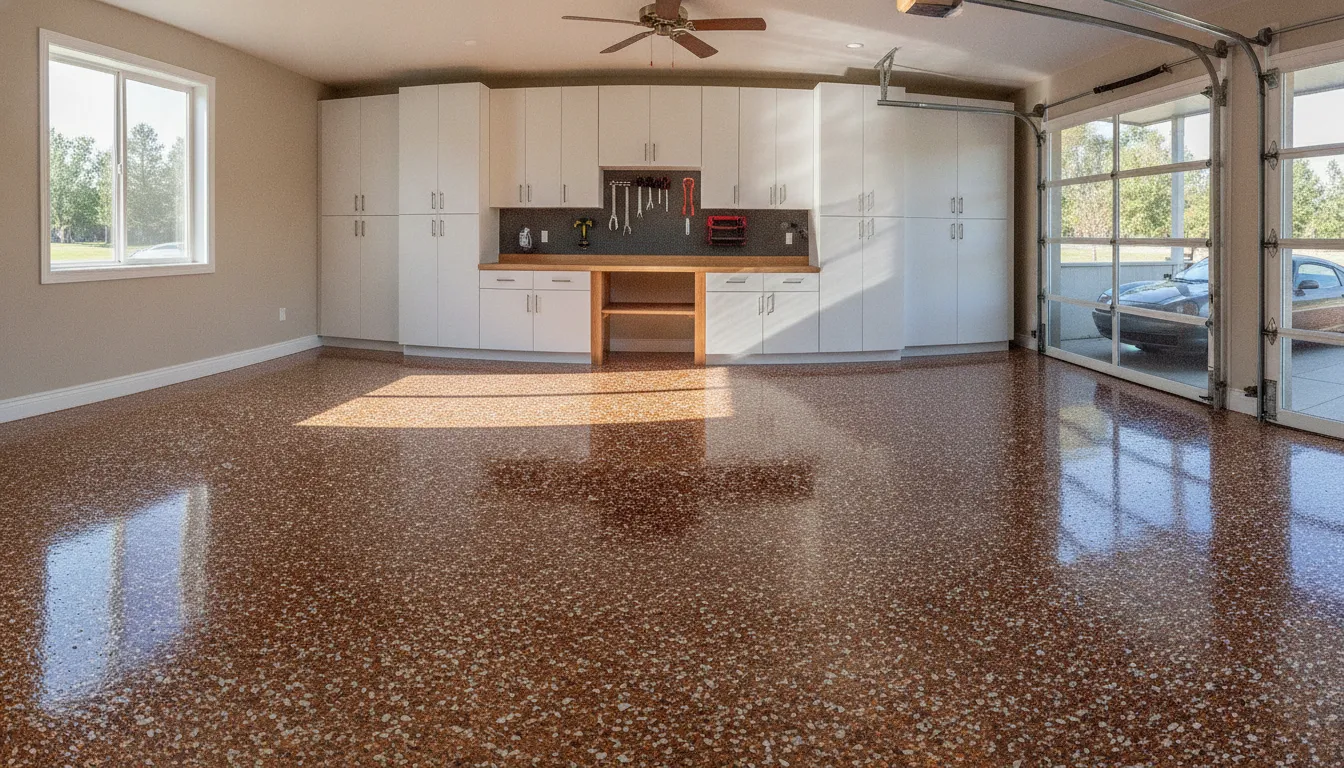
Decorative flake blends are colored vinyl chips broadcast into a wet polyaspartic coating. They add visual depth and texture while helping create the finished garage transformation homeowners want. Rather than applying one flat color, professionals combine a base coat with carefully distributed flakes, then seal the surface beneath a clear protective layer.
How Flake Size Changes the Look
Garage floor flakes are commonly available in full, medium, and fine sizes. Full flakes create a bolder, more noticeable pattern with stronger visual movement. Medium flakes offer a balanced appearance that works well in many residential garages. Fine flakes create a subtler, more blended finish. The right choice depends on the scale of the space, the surrounding colors, and how much contrast you want across the floor.
How Professionals Apply Decorative Flakes
After the concrete is prepared and the base polyaspartic coat is applied, installers broadcast the colored chips across the wet surface. The flakes are distributed to produce an even blend, with additional attention around edges, corners, and transitions. Once the coating cures, the team removes loose material, smooths the surface, and applies the protective topcoat. This professional process gives the floor a consistent appearance without the patchiness that can result from uneven application.
Garage Kings offers 14 decorative flake blends, and many polyaspartic systems can also accommodate custom combinations to complement a home’s existing design. Flakes can be integrated into the 3-coat, 4-coat, or 6-coat system tiers, allowing the selected aesthetic to pair with the level of protection suited to the project. Most professional installations are completed in one day, minimizing disruption to your household.
For more context on performance, durability, and design choices, explore our guide to polyaspartic floor coating benefits.
How Polyaspartic Floor Coating Colors Work With the 14 Standard Garage Kings Flake Blends
Garage Kings offers 14 decorative flake blends, giving homeowners a practical range of polyaspartic floor coating colors rather than a one-size-fits-all finish. The palette can move from understated earth tones that complement traditional homes to bolder combinations that make the garage feel like a dedicated showroom or workshop. A professional installer can also help assess how the blend will work with your walls, cabinets, lighting, and garage door.
Color Palette Range
Decorative flakes combine multiple tones across the floor, creating visual depth and helping the surface feel intentional instead of flat. Neutral blends are a dependable choice when you want a clean, timeless backdrop for vehicles and storage. More contrasting or saturated options can create a stronger design statement. The industry uses color charts with names such as Saddle Tan, Granite, Tuxedo, and Merlot to show how a single base family can support very different looks. See the Flexmar color charts and samples for useful industry context, while remembering that the available Garage Kings collection is its own 14-blend selection.
Color stability matters as much as the initial choice. Research describes polyaspartic sealants as offering UV resistance and high weathering resistance, while epoxy resins can be susceptible to UV degradation. That UV-stability research supports a clearer, more consistent appearance over time. Garage Kings polyaspartic coatings are also resistant to hot-tire pickup, so normal garage use does not have to undermine the finished look.
Flake Size and Texture
The same color family can look noticeably different depending on flake size. Small 1/16-inch flakes create a finer, more closely blended texture. Medium 1/8-inch flakes provide a balanced appearance with visible variation. Large 1/4-inch flakes produce stronger visual movement and a more pronounced chip pattern. Flake size affects the final aesthetic texture and appearance, so it is worth viewing samples in the context of your actual space rather than choosing from a tiny color chip alone.
For the richest, most dimensional result, Garage Kings can pair full-flake coverage with its premium 6-coat system. Your in-home consultation can clarify which blend, size, and coverage level best fit the way you use the garage.
How to Match Your Coating Color to Your Garage Door and Walls
Start with the colors already defining your garage, then choose a flake blend that supports them rather than competing with them. Neutral, slate, and gray tones create a versatile foundation that works with white, black, wood-tone, or painted garage doors. Earth-tone blends, including warm beige, brown, and tan notes, bring a more welcoming feel and pair naturally with stone, brick, and natural wood. If your walls and door are understated, brighter flakes can add contrast and make the floor a deliberate design feature.
When comparing polyaspartic floor coating colors, look at the whole space in combination. A floor with several related tones can connect the garage door, wall paint, workbench, and trim without requiring every surface to match exactly. Keep durability in the decision as well as appearance. Garage Kings considers factors such as UV stability and hot-tire resistance alongside your preferred color and finish.
Color samples can look different under showroom lighting than they do beside your walls or beneath an open garage door. During a free in-home estimate, Garage Kings uses 3D AR visualization to show the selected blend in your actual garage lighting. This gives you a more practical view of how the floor will work with your architecture and interior finishes before you commit.
Coordinating With Garage Cabinets and Storage
Use your storage system as part of the color plan. A neutral or lightly variegated floor can let Garage Kings steel cabinets stand out, while a coordinated gray or charcoal blend creates a streamlined built-in appearance. If you plan to add overhead storage, repeat one subtle floor tone in the cabinet doors, shelving accents, or wall details. The result feels intentional without becoming overly uniform. A Garage Kings professional can help balance the floor, steel cabinets, and overhead storage into one cohesive garage transformation.
Light vs Dark Flake: Practical Considerations
Color affects more than the first impression of a finished garage. The right flake blend should also work with the way your household uses the space, how often you clean it, and how much sunlight reaches the floor. Light blends, such as tan, beige, and light gray, create an open, airy appearance and tend to disguise dust, fine dirt, and small debris. Dark blends, including charcoal, black, and dark brown, create a deeper, more dramatic look and are often more forgiving of tire marks.
Maintenance and Appearance
| Consideration | Light Flake Blends | Dark Flake Blends |
|---|---|---|
| Dust and debris visibility | Less noticeable between cleanings | More visible on the surface |
| Tire mark visibility | More noticeable against lighter background | Less prominent |
| Heat absorption | Stays cooler in direct sunlight | Absorbs more heat, feels warmer |
| Overall aesthetic | Open, airy, bright appearance | Deeper, more dramatic look |
| UV stability (polyaspartic) | Excellent, color remains consistent | Excellent, color remains consistent |
| Hot-tire pickup resistance | Full protection regardless of color | Full protection regardless of color |
Light and dark floors each have a practical tradeoff. A light floor can make dust less noticeable between cleanings, but tire marks may stand out more clearly against the brighter background. A dark floor can minimize the appearance of those rubber marks, while pale dust, salt residue, and other light debris may be easier to see.
Flake size and blend density influence this effect as well as the overall texture and visual balance of the floor. A varied blend can break up small marks and create a more consistent appearance than a single solid color. During a professional color consultation, consider your vehicle traffic, storage habits, and the amount of dirt tracked into the garage instead of choosing only from a small sample chip.
Durability also protects the appearance you selected. Garage Kings polyaspartic coatings are resistant to hot-tire pickup, so dark floors are not expected to develop rubber burn-in simply because they use a deeper color. Polyaspartic coatings also provide UV stability and high weathering resistance, helping the color remain consistent over time. By contrast, epoxy coatings can be vulnerable to UV degradation because of their aromatic backbone. Research on epoxy UV degradation explains why exposure can affect long-term appearance.
Temperature and Comfort
Sunlight is another factor to consider, especially in garages with windows or doors that remain open during the day. Dark surfaces absorb more heat and may feel warmer under direct sunlight. Light-colored surfaces generally stay cooler, which can be more comfortable if you use the garage as a workshop, gym, or frequently occupied workspace.
Neither choice is automatically better. Light blends suit homeowners who want a brighter, cooler-feeling space and less visible dust. Dark blends work well for a bold, refined appearance and can make tire marks less prominent. The most practical option is the blend that balances your preferred look with your garage’s sunlight, traffic, and maintenance routine.
How to Use the Garage Kings AR Visualizer to Preview Colors
Choosing among polyaspartic floor coating colors is easier when you can see the options in your own garage, not only on a small sample card. During a free in-home consultation, Garage Kings uses 3D AR visualization to help you preview different decorative flake blends in the actual space. The experience turns an abstract color decision into a practical design conversation.
See the Blend in Your Actual Garage
Your garage door, walls, cabinets, shelving, and natural light all influence how a floor looks. The AR visualizer places potential flake blends into your garage environment so you can compare the overall effect alongside the features that will remain in place. A neutral blend may create a clean, coordinated foundation, while a higher-contrast pattern can give the space a more distinctive finished appearance.
Lighting matters, too. A blend that looks balanced in a showroom can appear warmer, cooler, lighter, or darker depending on daylight entering through the garage door and the existing fixtures overhead. Reviewing the design in the space itself helps reveal those differences before installation. It also makes it easier to consider how the floor will look when the garage is open, closed, brightly lit, or used as an everyday workspace.
Refine the Recommendation With an Installer
The visualizer is not a substitute for professional guidance. Your Garage Kings installer can discuss the practical and aesthetic priorities for the space, then make real-time adjustments to the blend recommendation as you compare options. Together, you can evaluate color, contrast, and pattern density while keeping the surrounding architecture and intended use in mind. This consultative process reduces guesswork and gives you a clearer basis for the final selection.
Once you approve the design, the installation process can move forward with a defined plan. Professional coating projects are typically completed in one day, helping you go from confident color selection to a finished garage transformation without an extended disruption. Schedule your free in-home consultation to preview your options with Garage Kings.
Frequently Asked Questions
What are the most popular polyaspartic floor coating colors?
Neutral blends in gray, charcoal, taupe, and beige remain popular because they coordinate with many garage doors, walls, cabinets, and vehicles. The best choice depends on the look you want and how much dust or tire residue you want the floor to visually soften. Garage Kings offers 14 decorative flake blends, giving homeowners room to choose a balanced, understated finish or a more distinctive garage transformation.
How do I choose the right polyaspartic color blend for my garage?
Start with the fixed elements you plan to keep, such as the garage door, wall color, cabinetry, and trim. Then consider the garage’s natural light, how you use the space, and whether you prefer a brighter or more dramatic appearance. Flake size and density also influence the finished texture and the floor’s perceived color. A free in-home consultation with 3D AR visualization can help you preview the blend alongside your actual architecture.
Are polyaspartic floor coating colors UV stable?
Yes. Polyaspartic coatings are designed for UV stability and weathering resistance, which is important when sunlight enters through an open garage door or windows. Research on polymer-based concrete sealants identifies polyaspartic systems among materials with UV resistance and weathering resistance: PubMed research. This helps the selected color maintain a consistent appearance over time.
Can I customize the decorative flake blend for my polyaspartic floor?
Many professional systems allow homeowners to select combinations that complement their home’s style. Garage Kings provides 14 standard decorative flake blends, with differences in color balance and flake size to create distinct visual effects. Your installer can explain which available blend best fits your design goals and the practical demands of your garage.
What is the difference between polyaspartic and epoxy garage floor colors?
Both systems can be offered in decorative colors, but polyaspartic is valued for UV stability and resistance to hot-tire pickup. Epoxy resins can be susceptible to UV degradation because of their aromatic backbone, according to published materials research. For a garage exposed to sunlight, polyaspartic can provide a more color-stable finish when professionally installed.
Ready to Choose Your Garage Floor Colors?
A free in-home consultation can help you compare decorative flake blends with your garage’s existing walls, doors, and storage before making a final selection. Garage Kings can use AR color visualization to make the transformation easier to picture in your own space. Schedule your free in-home consultation and take the next step toward a garage floor that feels cohesive and finished.