

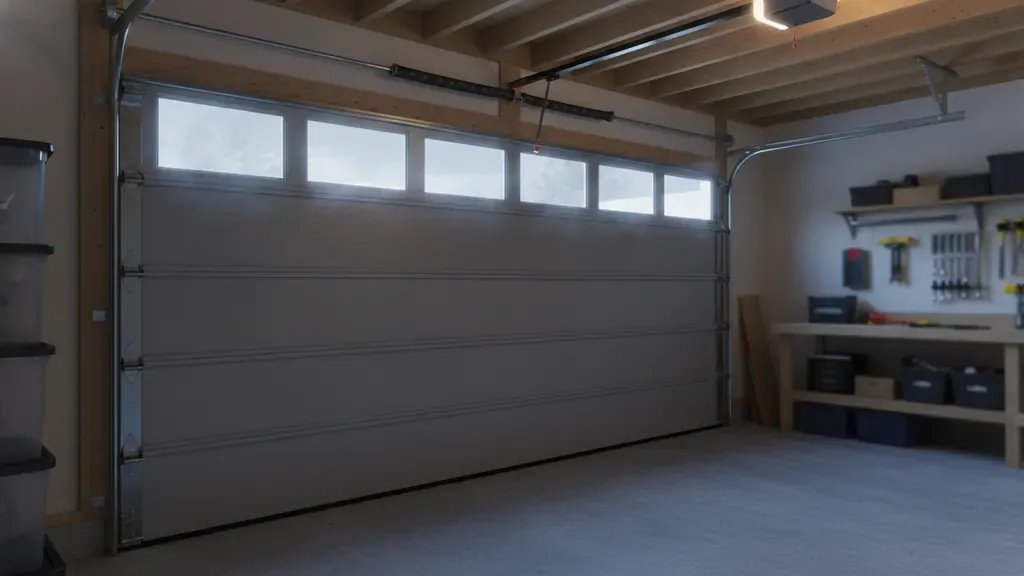
Garage door insulation slows heat transfer through the door, and its R-value indicates how strongly the door section resists that flow. For most attached garages, the right choice depends on climate, whether the space is heated, and how closely it shares a wall or ceiling with living space. This focused guide explains the numbers before you choose a door. For the broader replacement, safety, and installation journey, see Garage Kings’ complete garage door installation and replacement guide.
Schedule a free in-home consultation with Garage Kings
What Is R-Value And Why Does It Matter For Garage Doors?
R-value is a measure of resistance to conductive heat flow. A higher R-value generally means more resistance, but a garage door is not just a flat piece of insulation. It is a moving assembly made of sections, joints, hardware, windows, thermal breaks, and seals. Those details determine how the installed door performs in everyday weather.
The Door and Access Systems Manufacturers Association guidance on R-value and U-factor makes an important distinction: R-value is typically calculated for a door section, while U-factor measures heat transfer through a complete tested door assembly. R-value and U-factor are not reciprocals for residential garage doors.
- R-value: Higher is better for the resistance of the rated section to heat flow.
- U-factor: Lower is better for heat transfer through the complete tested assembly.
- Weather seals: Perimeter seals, a bottom seal, and tight panel joints help limit drafts around the insulation.
- Thermal breaks: These can reduce heat paths through metal components that bypass the insulated core.
- Door use: An attached, heated, or frequently occupied garage benefits more from insulation than a detached space used only for parking.
Q: Is a higher R-value always better for a garage door?
A: A higher R-value can improve resistance to heat flow, but it is not the only buying signal. Compare the complete door assembly, U-factor when available, construction, windows, and weather seals. A high panel rating cannot compensate for a large air gap around a poorly sealed door.
R-Value Is Not The Same As A Utility-Bill Guarantee
Insulation can reduce heat transfer, but no door rating can promise a specific reduction in energy bills. The garage walls, ceiling, floor, entry door, windows, air leakage, and heating system all affect the result. The U.S. Department of Energy explains that insulation works with air sealing and moisture control to improve comfort and manage heat flow. Think of garage door insulation as one part of the envelope, not a stand-alone energy retrofit.
How Insulated Doors Affect Your Home Energy Bills
An insulated garage door creates more resistance between outdoor temperatures and the garage interior. In winter, that can reduce the rate at which heat moves out of an attached or heated garage. In summer, it can slow heat moving into the space. The benefit is usually most noticeable as improved comfort and fewer temperature swings, with energy effects depending on the rest of the building envelope.
The U.S. Department of Energy Consumer Guide to Home Insulation notes that heat moves through conduction, convection, and radiation. Most insulation slows conductive and convective heat flow. Garage door performance also depends on air movement at the bottom, sides, and top of the door, which is why installation quality and weatherstripping deserve as much attention as the number on a brochure.
- Attached garages: The door can influence the temperature next to rooms, floors, and walls that share the garage boundary.
- Living space above: A more stable garage temperature can support comfort in the room above, while the ceiling assembly remains essential.
- Heated garages: Insulation can help the heating system maintain the desired temperature, but the walls and ceiling must also be addressed.
- Workshops and gyms: Occupants feel drafts and temperature swings more than someone who only parks a vehicle.
- Detached, unheated garages: Insulation may still reduce noise and temperature swings, but the return from a very high rating may be less important.
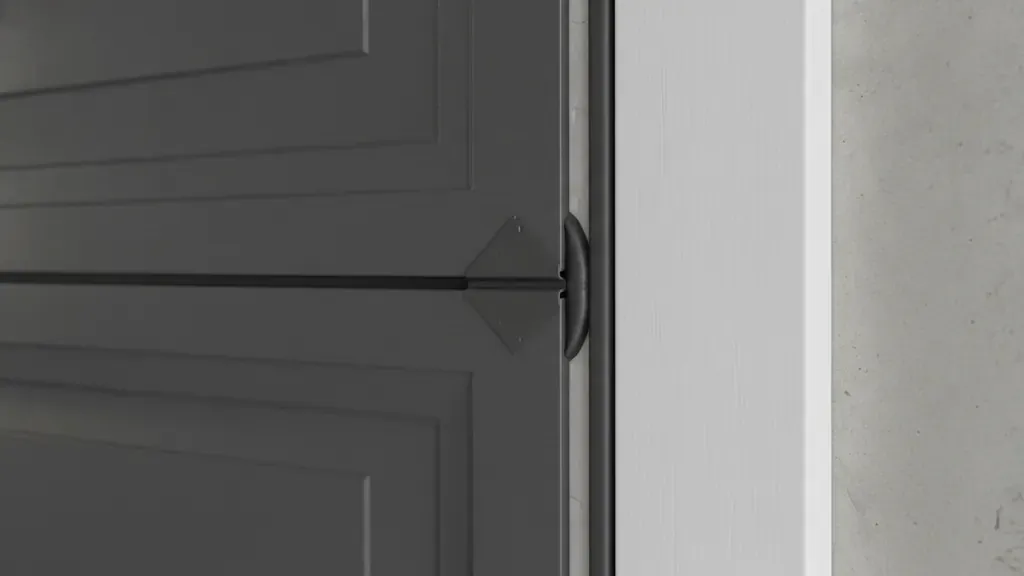
Do not overlook the small openings. The Department of Energy Consumer Guide to Air Sealing the Home recommends using caulk and weatherstripping to control leakage around moving and stationary components. On a garage door, that translates into checking the bottom seal, perimeter weatherstrip, panel joints, and the frame where the door closes.
Q: Will insulating my garage door lower my energy bills?
A: It may reduce heat transfer and help a heated or attached garage hold a more stable temperature, but the amount varies by climate, door condition, air sealing, insulation in the walls and ceiling, and how the space is used. Choose insulation for comfort and whole-garage performance, not a promised dollar savings figure.
R-Value Recommendations By Climate Zone
There is no single R-value that fits every garage. Use the following as practical starting ranges for a homeowner conversation, not as building-code requirements. Local code, the door manufacturer’s tested data, the garage construction, and the intended temperature should control the final selection. Cold-climate buyers in markets such as Albany, Philadelphia, Lehigh Valley, Ottawa, and other northern territories should pay close attention to air sealing and the whole assembly, not just the panel label.
| Garage situation | Practical starting range | What to prioritize |
|---|---|---|
| Detached and unheated in a mild climate | R-6 to R-10, if insulation is desired | Durability, basic seals, and the value of comfort or noise reduction |
| Attached garage in a mixed or cold climate | R-10 to R-12 or higher | Panel insulation, perimeter weatherstrip, bottom seal, and tight joints |
| Garage with living space above | R-12 to R-16 or higher | Complete door assembly, insulated ceiling, and reduced air leakage |
| Heated workshop, gym, or regularly occupied garage | R-12 to R-16 or higher | U-factor when available, wall and ceiling insulation, and a controlled temperature plan |
| Very cold climate or highly conditioned workspace | R-16 to R-18 or higher, subject to the system | Whole-garage design, professional installation, and verified assembly performance |
The ranges above are not a substitute for the insulation targets used elsewhere in a house. ENERGY STAR’s climate-zone insulation recommendations are written for areas such as attics, floors, and walls, not as a direct garage-door specification. They are useful context for why colder climates usually justify more insulation in the building envelope, but a garage door requires product-specific assembly data.
- Mild climate: Choose based on whether the garage is attached, occupied, or exposed to strong heat rather than automatically choosing the highest rating.
- Mixed climate: An attached garage commonly benefits from a meaningful insulated-door upgrade plus better seals.
- Cold climate: Favor a well-sealed, insulated assembly and consider a higher rating when living space or a heated workspace is involved.
- Very cold climate: Treat the door as one part of a larger plan that includes the ceiling, walls, service door, windows, and air sealing.
Q: What R-value should I choose for an attached garage?
A: Start by comparing insulated assemblies around R-10 to R-12, then consider R-13 to R-16 or higher if the garage is heated, regularly occupied, or directly below living space. Confirm the manufacturer’s tested data and ask an installer to evaluate seals and the rest of the garage envelope.
Garage Kings’ garage door service page describes Amarr design and insulation options in several construction configurations. A consultation can connect the door’s available insulation choices with your home layout, local weather, and how you actually use the garage.
Ask Garage Kings which garage door insulation level fits your climate and garage use
Steel Vs Wood Vs Foam-Core Doors: Insulation Comparison
The face material and the insulated core solve different problems. Steel or wood describes the door’s visible construction and structural design, while foam-core describes how insulation is built into a panel. The best comparison starts with the complete door specification rather than assuming that one material has one universal R-value.
| Construction | Insulation considerations | Best question to ask |
|---|---|---|
| Insulated steel | Common sectional construction with room for rigid or injected insulation, thermal breaks, and reinforced panels | What is the tested assembly performance, and how are the joints and seals handled? |
| Wood | Natural material and design flexibility, but thermal performance varies by thickness, layers, windows, and weather sealing | How will the door be maintained and sealed through seasonal movement? |
| Polystyrene foam core | Rigid panels can improve resistance and dampen sound, with performance tied to thickness and fit | Is the panel fitted tightly, and what are the full-door rating and seal details? |
| Polyurethane foam core | Injected foam can fill cavities closely and add stiffness, but the assembly still includes joints, hardware, and seals | What R-value or U-factor was tested for this exact door model? |
For any material, ask for the model-specific rating and construction details. A door with windows, decorative grooves, multiple sections, or a large opening may perform differently from a simple flat sample. DASMA specifically cautions that calculated section R-value does not capture every part of the installed assembly. That is why a lower U-factor, when it is provided for the complete door, can be a useful companion metric.
- Ask whether the quoted R-value is a center-of-section value or an installed assembly result.
- Ask about panel joints, thermal breaks, window construction, and the bottom seal.
- Confirm that the opener, springs, tracks, and hardware are correctly matched to the final door weight.
- Have a professional check balance and operation after installation.
Does A Heated Garage Benefit From A Higher R-Value Door?
Yes, a heated garage usually has a stronger case for an insulated, well-sealed door because heating creates a temperature difference that drives heat flow. The higher rating is most useful when the garage is regularly occupied, attached to the home, or located beneath a finished room. It will not perform as intended if the surrounding walls, ceiling, service door, and weather seals allow major drafts.
Start with the temperature you want to maintain, not with a number picked from a product label. A lightly conditioned parking area may need a different door than a workshop kept comfortable for long periods. In a cold climate, moving from a lightly insulated door toward a better insulated assembly can improve comfort. The best choice still depends on the entire system and the manufacturer’s tested specifications.
What To Check Before Heating The Space
- Insulation and air sealing in the shared wall and ceiling.
- Weatherstripping around the overhead door and the service door.
- Windows, vents, and other openings that can create drafts.
- Safe, code-compliant heating and ventilation for the intended use.
- Door balance, spring sizing, opener capacity, and safe operation.
A higher R-value is a tool for managing heat flow, not permission to skip the rest of the envelope. If you are replacing the door, use the project as an opportunity to compare insulation, seals, windows, quiet operation, and safety features together. The broader Garage Kings buyer’s guide covers the larger replacement decision, while this article keeps the focus on insulation performance.
Garage Door Insulation FAQ
Is R-6.5 A Good R-Value For A Garage Door?
A: R-6.5 may be reasonable for a detached, unheated garage in a mild climate, but it may be too light for an attached, heated, or regularly occupied space. Compare the complete assembly, seals, and climate before deciding.
What Is The R-Value Of An Uninsulated Garage Door?
A: An uninsulated door has little added resistance to heat flow compared with an insulated model, but the exact effective value depends on its materials, construction, joints, windows, and test method. Ask for the manufacturer’s data instead of assuming a universal number.
Do I Need An Air Gap With Garage Door Insulation?
A: Do not add an improvised air gap or insulation kit without checking the door design. Clearances can affect panel fit, weight, balance, hardware, and safe operation. A purpose-built insulated door and correctly installed weather seals are safer ways to improve performance.
What Is The Best Insulation For A Garage Door?
A: Polyurethane and polystyrene are common garage door insulation materials, but the best choice depends on the complete door assembly, climate, budget, use, and desired comfort. Compare model-specific R-value or U-factor data and the seal package.
Is A Higher R-Value Worth It In A Detached Garage?
A: It can be worthwhile if the detached garage is heated, used as a workshop, or needs better year-round comfort. If it is unheated and used mainly for parking, durability and weather sealing may matter more than choosing the highest available rating.
What Should I Ask A Garage Door Installer About Insulation?
A: Ask for the exact door model, insulation material, rated R-value, U-factor if available, panel construction, window details, perimeter and bottom seals, and how the final weight will be balanced. Also ask which garage walls and ceiling need attention for the door upgrade to deliver its full benefit.
Contact Garage Kings for a free in-home consultation about your garage door upgrade