
A useful garage cabinet drawer layout starts with the objects you store and the way you use the garage. Count your categories before counting drawers: small hand tools, parts, household supplies, bulky cases, and items that belong elsewhere each need a different kind of space. This guide shows how to compare the options and check a plan against your actual room.
Discuss your garage storage plans
What should a drawer layout make easier?
A drawer arrangement should make frequently used items easy to find and return. It should also leave room for objects that are too large, long, or awkward to store in drawers. Drawers work best as one part of a storage plan, alongside cabinet compartments and other storage types where appropriate.
Start by naming the work the storage needs to support. A homeowner who repairs bicycles may want separate space for hand tools, small parts, and accessories. Someone who uses the garage for household projects may want a place for tape, batteries, fasteners, and measuring tools. A hobby bench and a space used mainly for vehicle care may call for different groupings.
Garage Kings offers custom steel garage cabinets as part of its storage solutions. When considering a cabinet project, describe the activities and objects involved instead of beginning with a drawer count alone. The services overview can help you consider how storage fits alongside other garage improvements.
How do you inventory what belongs in drawers?
Gather the items you expect to store and sort them into practical groups. You do not need to measure every small tool at the outset. Note the longest, tallest, heaviest, and most awkward objects, because these may determine what can fit. Include cases and packaging when they are part of how you store an item.
- Hand tools: screwdrivers, pliers, measuring tools, utility knives, and similar items.
- Parts and supplies: fasteners, fittings, tape, adhesives, and small packaged goods.
- Care items: cloths, brushes, and vehicle or bicycle accessories kept in the garage.
- Household supplies: batteries, light bulbs, gloves, or project materials.
- Oversized objects: long tools, large cases, and bulky containers that may need a different storage method.
Next, mark each group as frequent, occasional, or seasonal. Put daily and weekly items in the easiest-to-reach drawers near the activity they support. Occasional supplies can go farther from the work area. Seasonal belongings may be better placed in cabinets, racks, or another suitable location rather than taking up convenient drawer space.
Decide whether any groups should remain separate. A household may prefer to keep small parts apart from cleaning products or delicate hobby materials. Follow product labels and household safety guidance for anything stored in the garage; do not assume a cabinet arrangement replaces those instructions.
Which drawer sizes and depths should you compare?
Compare the items you actually own, then consider how easily you can see and retrieve them. Shallow drawers can make small tools and parts easier to scan. Deeper drawers may suit larger objects, but small items can disappear beneath a loose pile. Neither depth is automatically right for every use.
For each category, ask three practical questions: What is the longest item? What is the tallest item? How much clearance do you need to lift it out without catching on the drawer edge? Measure unusual objects and include their handles, cases, and packaging. Confirm the actual interior dimensions of the cabinet option rather than relying on a general label such as “deep.”
Width matters, too. A wide drawer may hold related tools or a broad case, but it can turn into a mixed bin without dividers or trays. Several narrower drawers can keep categories separate, although they may not suit bulky items. Consider whether the drawer opens fully and whether it would interfere with a parked vehicle, workbench, or walkway.
Measure the available wall and floor area. Note doors, windows, outlets, steps, and fixed equipment. On a sketch, show both the cabinet footprint and the space needed to stand in front of an open drawer. The garage remodel planning guide can help you think about how storage relates to the wider room plan.
How do common drawer configurations compare?
Use this table to compare planning approaches, not as a list of fixed product specifications. Available dimensions vary by cabinet system, so verify them before settling on a configuration.
| Configuration | Useful for | Possible limitation | Check before choosing |
|---|---|---|---|
| Several shallow drawers | Small tools, parts, and supplies you want to sort | Bulky objects may not fit; many categories need organization | Can each drawer have one clear purpose? |
| A mix of shallow and deep drawers | A varied collection of small and medium objects | Small contents can get buried in deeper drawers | Which categories truly need extra depth? |
| Fewer, wider drawers | Related items or tools in broad cases | Contents may mix together | Will dividers keep items easy to find? |
| Drawers paired with doors or other storage | Small supplies plus larger or less-used objects | Needs clear zones and assignments | What should be visible, enclosed, or stored elsewhere? |
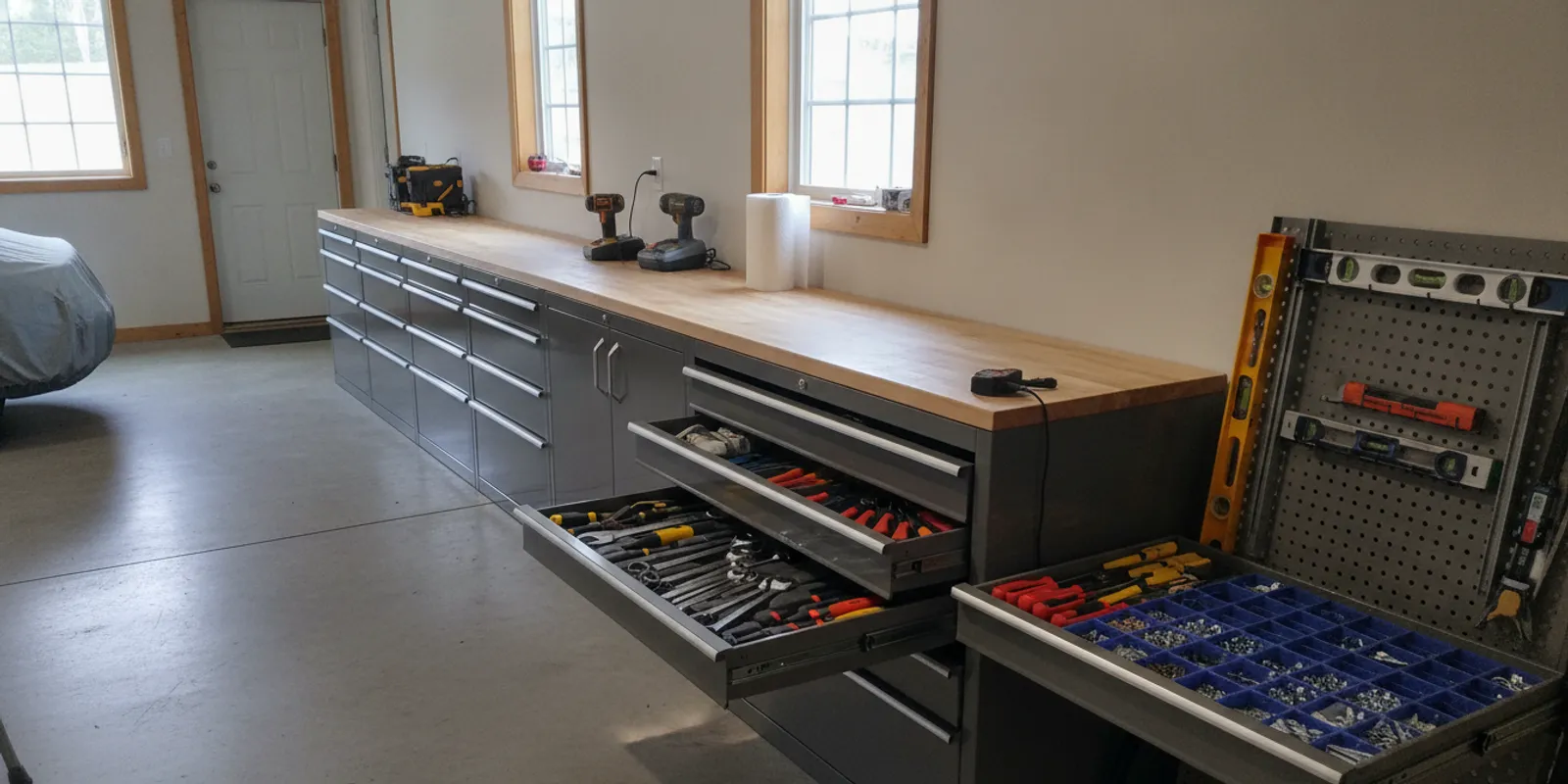
For example, a household with hand tools, a drill case, and seasonal supplies might use shallow drawers for tools and parts, reserve a deeper drawer for a case that fits, and place larger items behind cabinet doors or in another system. Measure the case and check access rather than assuming a drawer will accommodate it.
Now compare two routines. A person who uses a workbench for weekend repairs may reach for pliers, a tape measure, and fasteners repeatedly. Separate, convenient drawers can give those groups a predictable home. A household focused on gardening and seasonal projects might group small supplies by activity, while long-handled tools and bulky gloves go elsewhere. These are examples to adapt, not prescribed dimensions.
Test whether each drawer can have a short, memorable description. “Measuring tools” is a useful category; “miscellaneous” may signal that the group needs to be divided. Ask whether another household member could find and put away items without having to ask where they belong.
Where should drawers go in the garage?
Place drawers near the activity they support. Frequently used repair tools may belong near a workbench. Household supplies may be easier to reach in a different zone. The goal is to avoid crossing a busy parking area or blocking the usual route through the garage just to reach everyday items.
Sketch the garage in zones: parking, work, household or outdoor supplies, and occasional storage. Mark the cabinet position and the area occupied by a fully open drawer. Check the plan with vehicles, doors, and equipment in their usual positions. If a drawer would be difficult to open when the garage is in use, change the location or the planned contents.
Long-handled tools, sports equipment, and large containers may be better suited to hooks, shelves, or racks. Explore small-garage storage ideas to consider options beyond drawers. You can also browse garage storage articles and cabinet articles for related planning topics.
What should you prepare before choosing a layout?
Bring measurements, an inventory, and access needs together before comparing cabinet plans. If more than one person uses the garage, ask what each person reaches for most and what currently gets misplaced. A short conversation can reveal competing assumptions while the plan is still easy to adjust.
- Measure the wall: Record usable width and height, plus obstacles such as doors, windows, and fixed equipment.
- List contents by group: Note especially long, tall, heavy, or bulky objects.
- Set priorities: Identify frequent-use items and decide which should be easiest to reach.
- Mark clearances: Account for vehicle positions, walking routes, work areas, and drawer extension.
- Assign other storage: Set aside oversized or infrequently used objects that do not need a drawer.
- Confirm specifications: Ask about actual interior dimensions, drawer travel, available configurations, and installation requirements.
Leave some breathing room inside each drawer. Packing every space on the first day makes it harder to return items and accommodate a modest change in needs. A layout should be practical to maintain, not merely full.
How can you check the plan before committing?
Use a few simple tests. Compare interior dimensions with the largest item assigned to each drawer. Draw the cabinet and the open-drawer travel on your room sketch. Identify the things you need to reach without moving anything else. If a vehicle or another person would block access, revisit the location or the storage category.
Consider how the system will work after a normal project. Can a tool be put away in one step? Can related parts remain together? Will a wide drawer need a tray or divider? A small organizer can help, but choose it to suit the contents instead of letting the organizer dictate what you store.
Plan to review the arrangement after using it for a few weeks. If one drawer becomes crowded, split its categories or move an occasional item. If a drawer repeatedly stays empty, consider whether its space could serve a more useful role. Small adjustments are easier when the original plan has clear categories and some spare capacity.
How do drawers fit into a complete storage plan?
Drawers are useful for objects that benefit from sorting and quick access. They are less suited to items that are unusually large, rarely used, or easier to identify when visible. Pairing drawers with cabinets or other storage can make a garage easier to use when each area has a clear purpose.
Think through the whole room before choosing a cabinet arrangement. A cabinet run may share space with a work surface, floor improvement, or other project. The garage makeover guide offers another way to consider how storage relates to the room. You can view examples in the Garage Kings project gallery and check Garage Kings locations when you are ready to discuss the project locally.
For general home-improvement information, the National Association of Home Builders is a professional association resource. Make your decision using your own measurements and the cabinet specifications under consideration.
Use a simple mock-up when the room dimensions are hard to visualize. Mark the proposed cabinet width on the wall with removable tape, then mark the drawer fronts and their expected open position on the floor. This is not a substitute for verified specifications, but it can expose a doorway conflict, narrow passage, or awkward reach before a cabinet plan is finalized. Repeat the check with the vehicle parked as usual and with doors or nearby equipment in their normal positions.
It also helps to test a sample category rather than the whole inventory at once. Lay the everyday tools you want together on a bench and separate them into the groups you imagine assigning to drawers. Notice whether a group is too broad, whether an item is much longer than its companions, or whether items need to stay in a case. Then compare that physical grouping with the cabinet’s confirmed interior measurements. This turns “I think it will fit” into a concrete check.
Consider how the layout may change over time. A household may add a new hobby, replace a tool set, or move seasonal supplies elsewhere. Avoid assigning every drawer to a narrow purpose if your needs are likely to shift. A clear main category with a little room for related items is often easier to maintain than a tightly packed arrangement where one new object disrupts the whole system.
What questions should you settle with a cabinet planner?
Before approving an arrangement, make sure you understand what the drawing or proposal represents. Ask whether stated measurements describe exterior cabinet size or usable drawer interiors. Clarify how far drawers extend, whether dividers are included or chosen separately, and what installation conditions affect placement. These details help you compare options on a like-for-like basis without assuming that two cabinets labeled similarly will store the same objects.
Bring a short list of the items that matter most. If one drill case, long measuring tool, or set of supplies drives the decision, identify it explicitly and ask how it fits. Discuss what should remain outside the drawer plan, too. A good comparison accounts for the larger room, rather than treating the cabinet as an isolated box.
If you are reviewing more than one configuration, write down the tradeoffs in plain language. One plan might make small tools easy to sort but leave less room for cases. Another might provide deeper storage while requiring trays to keep parts visible. This record makes it easier to compare the choices later and explain the reasoning to anyone else who uses the garage.
Garage Kings provides garage cabinet solutions; the available configuration and project details should be confirmed for your needs. If the plan also involves a broader room update, review the Garage Kings education blog for related homeowner guidance.
Talk with Garage Kings about cabinet options
Frequently Asked Questions
Are more drawers always better for garage storage?
No. More drawers create more separate places for small items, but they can take space that would better serve larger objects or another storage type. Start with your inventory and compare it with the usable cabinet space.
Should frequently used tools go in shallow drawers?
Shallow drawers can make small tools easier to see and sort. They are a good option when the contents fit comfortably and have a clear category. Check the actual dimensions and access in your garage.
How do I know whether a tool belongs in a drawer?
Consider its size, weight, frequency of use, and ease of removal. Small tools and parts often benefit from grouping in drawers. Long or bulky objects may work better in another storage area.
What should I measure before planning garage cabinets?
Measure usable wall space and note obstacles, work areas, vehicle positions, and walking routes. Measure unusual objects you plan to store and confirm cabinet and drawer specifications before choosing a final arrangement.
A thoughtful garage cabinet drawer layout matches real belongings and routines to the available space. With a clear inventory, verified dimensions, and an access check, you can compare options and plan a setup that is easier to use every day.