

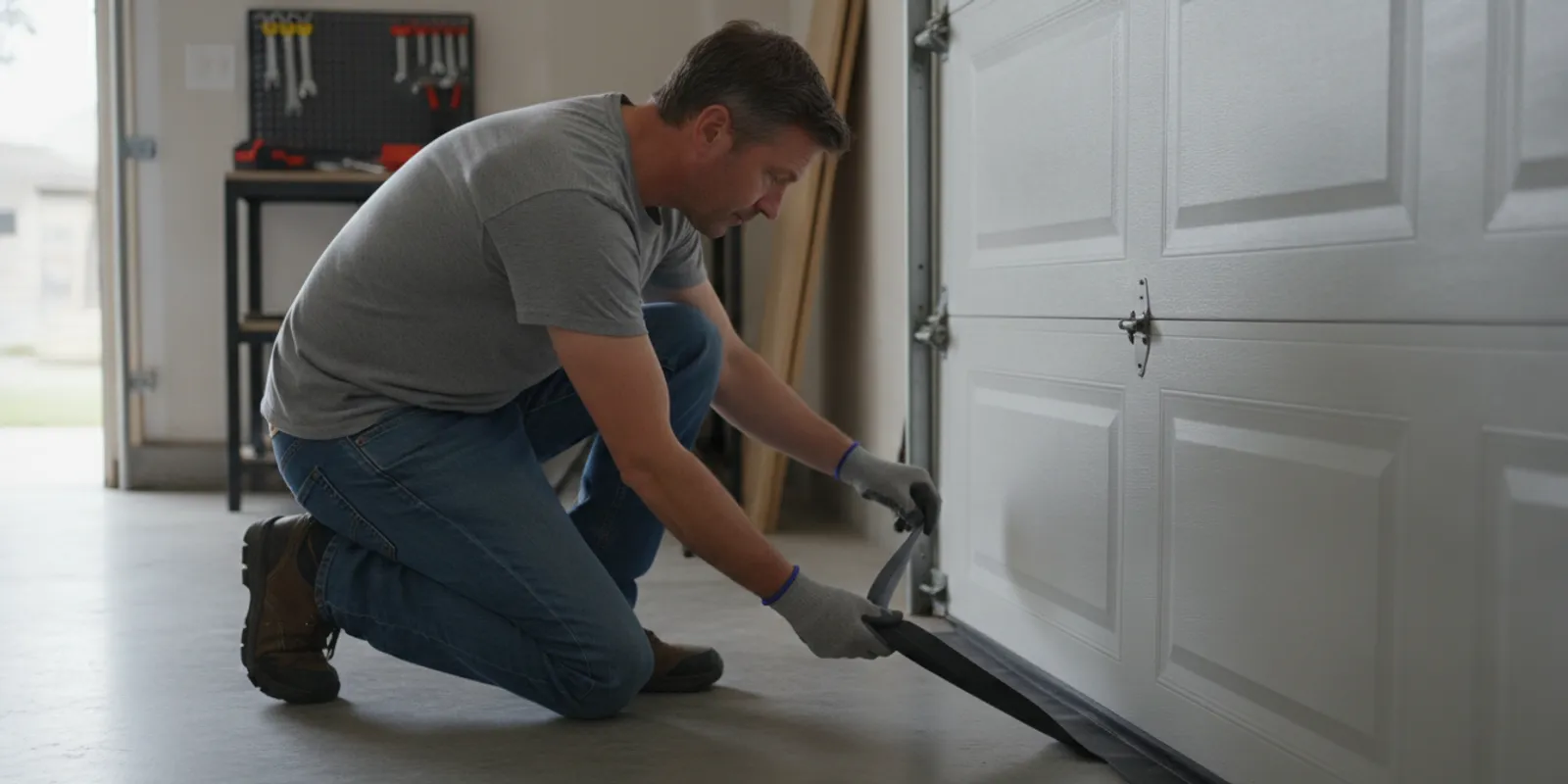
Garage door weather seal replacement can help reduce drafts, water, dust, leaves, and pests entering around a garage door. Before choosing a new strip, inspect the full opening: the bottom seal, perimeter seals, retainer, floor, and door alignment all affect the result. For broader door decisions, see this garage door buying guide as well as this practical checklist.
Request a garage door consultation
What does a garage door weather seal do?
The bottom weatherstrip is a flexible barrier attached to the lower edge of the door. When the door closes, it should meet the floor along most or all of the opening. Side and top perimeter seals close the gaps between the moving door and the frame. These parts work together, but they do not make a garage opening waterproof or correct structural problems.
A seal may reduce the path for ordinary air and debris, but persistent water can come from poor exterior drainage, a low floor spot, a damaged threshold, or an opening that is out of alignment. Treat the seal as one part of the door system. If the door itself is being considered for an update, Garage Kings’ garage door installation information and door visualizer can help with separate door-planning questions.
When should you consider replacing a weather seal?
Inspect the seal with the door closed, then look at the material and how it meets the floor. Replacement may be appropriate if the strip is visibly worn and the door otherwise operates normally.
- Cracks or splits: Damaged material can leave an open path even when it still sits in the retainer.
- Hard, brittle, or flattened material: A seal that no longer flexes may fail to compress against the floor.
- Loose or pulled-out sections: Check whether the strip has slipped from its channel or its attachment has failed.
- Gaps at either corner: Corners can wear differently from the middle and may reveal a poor fit.
- Repeated dirt or water trails: These can point to an entry path, though drainage or floor conditions may also be responsible.
- Folding or catching: Material that bunches during operation could be the wrong profile, incorrectly positioned, or affected by another door problem.
Daylight under the door is a useful clue, not a diagnosis. Floors may slope or have shallow dips, and a door can sit unevenly for reasons that a thicker strip will not fix. Note where the gap occurs and whether it changes across the width.
How can you inspect the seal safely?
Keep the inspection visual and keep hands, feet, tools, and loose clothing clear of hinges, rollers, tracks, cables, and springs. A garage door is heavy and its moving components can create serious pinch or crush hazards. OSHA’s general workplace safety guidance underscores the importance of recognizing hazards and avoiding unsafe work practices; homeowners should not treat door lifting components as ordinary DIY adjustments.
- Use the normal control to close the door. Watch whether it reaches the floor evenly.
- From a safe position, look along the whole bottom edge for cracks, gaps, folds, or a strip that has slipped from its retainer.
- Inspect both lower corners and the side and top seals for tears, loose attachment, or sections that no longer meet the door.
- From inside the garage, look for daylight, moisture marks, dust lines, or leaves near the threshold.
- Operate the door normally and observe for rubbing, snagging, or a change in movement. Do not put objects or body parts in the door’s path.
If the door is crooked, drops, binds, moves with unusual resistance, or makes a new grinding or snapping sound, stop. The cause could involve balance, tracks, rollers, cables, springs, or the opener rather than the seal. Do not loosen cables, remove springs, force the door, or repeatedly cycle it to test a suspected fault. See the homeowner garage door service guide for additional context, and seek a qualified assessment when operation is abnormal.
What should you measure before choosing a replacement?
Record measurements and take clear photographs before removing the existing strip. A product that looks similar may not fit the retainer. If the manufacturer’s instructions or model information are available, check those first. When the existing seal is damaged, photograph the cross-section and the way it attaches before discarding it.
| Check | How to record it | Why it matters |
|---|---|---|
| Bottom edge width | Measure from end to end; note any unusual shape | Sets the approximate length required |
| Seal profile | Photograph the cross-section and attachment edge | Different profiles fit different retainers |
| Retainer or channel | Observe its opening and whether it is bent or damaged | A compatible strip must fit securely without forcing |
| Floor contact | Compare the center and both corners with the door closed | Helps distinguish worn material from an uneven floor or alignment concern |
| Perimeter seals | Note gaps at the sides and top | Shows whether the bottom strip is the only issue |
Measure more than once if the opening seems irregular. Record whether the old seal slides into a track, is fastened in place, or uses another attachment. Do not assume that a retainer can accept a replacement simply because the strip has a similar shape in a photograph. If you cannot identify the profile, bring the measurements and photos to a professional or supplier for a fit check.
Which parts may need attention besides the bottom strip?
Bottom weatherstrip and retainer
The strip should meet the floor without folding under the door or being crushed excessively. If it has pulled out, inspect the retainer for bends, corrosion, or damage. A new strip may not stay in place if the channel itself is compromised.
Side and top seals
Perimeter seals attach to the frame and should meet the door without obstructing its movement. Gaps around the top corners can arise from worn material, a frame issue, or door alignment. Replacing a seal is not a reason to force the door toward the frame.
Threshold, floor, and drainage
A threshold can provide another contact surface, but it cannot correct a major floor depression or poor exterior drainage. Look for where water begins, whether it appears only after wind-driven rain, and whether the outside surface directs water toward the opening. If the floor itself needs separate attention, review Garage Kings’ garage floor coating information; floor coatings and weather sealing address different concerns.
Door and frame condition
A bent frame, loose attachment, damaged panel, or uneven door can create a gap that a replacement strip will not solve. Do not add layers of material or press down harder to mask an uneven opening. The underlying cause should be assessed before more parts are changed.
How do you tell a simple replacement from a larger repair?
A limited replacement is more plausible when the strip is visibly damaged, the retainer appears intact, the door moves normally, and the floor contact is reasonably consistent. The work then centers on matching the profile and fitting the strip as its instructions specify.
A larger service question is likely when the door sits crooked, the gap varies widely, the strip repeatedly tears, the retainer is damaged, or the door binds or makes new noises. Water that continues to enter despite intact seals also calls for checking drainage, threshold, floor, frame, and perimeter contact rather than replacing the same strip again.
| Observed condition | Practical next step | Avoid |
|---|---|---|
| Cracked seal, normal door movement, even contact | Identify the exact profile and plan replacement | Choosing only by appearance |
| Strip loose in a seemingly sound channel | Check attachment and compatibility before fitting | Pulling forcefully on attached parts |
| Large gap on one side or changing contact | Assess floor level, frame, and door alignment | Stacking extra seal material to force contact |
| Door binds, drops, or makes a new sound | Stop operation and arrange a door assessment | Adjusting springs, cables, or tracks without training |
| Moisture remains with an intact seal | Trace drainage, threshold, and surrounding surfaces | Assuming a new strip will resolve every leak |
How can you plan the work and check the result?
Start with product instructions or door manufacturer information where available. Compare the old profile and retainer to the replacement, confirm the measured length, and understand how the ends are meant to fit. Do not cut material until you have checked the full width and the product directions. If the channel is damaged or the door has abnormal movement, pause rather than turning a limited seal project into a hardware adjustment.
Choose a time when the floor and retainer can be seen clearly. Move vehicles and stored items away from the work area, and keep children and pets out of the door’s travel path. Follow the product’s handling and installation directions. The door should be operated only as directed; do not work beneath an unsupported door or interfere with lifting components.
After fitting, observe the seal across the opening. It should contact the floor without being excessively crushed, and it should not bunch or drag as the door moves. Operate the door normally and watch for changes. If the door stalls, reverses unexpectedly, catches the new strip, or behaves differently, stop and arrange an assessment instead of cycling it repeatedly.
For a wider door project, Garage Kings also provides information about garage door installation and replacement. Keep that decision separate from seal maintenance: replacing a perimeter strip does not automatically require a new door, and a new door does not by itself address poor drainage at the threshold.
How should you maintain a new weather seal?
Regular observation is more useful than waiting for a noticeable draft or water trail. Sweep away grit and stones near the contact area. Clean the material gently, following its manufacturer’s guidance, and avoid harsh chemicals unless the instructions specifically allow them.
- Look periodically for cracking, shrinkage, hardening, and separation.
- Check corners after heavy rain or major seasonal changes.
- Keep leaves and packed debris away from the threshold and the exterior approach.
- Watch for rubbing after door, floor, or threshold work.
- Do not paint, glue, or modify the strip unless its instructions call for it.
- If the same gap returns, investigate its cause instead of repeatedly replacing the strip.
A clear area makes inspection easier. If stored items crowd the door, these small garage storage ideas can help you plan a more accessible space. For a broader transformation, Garage Kings’ services overview describes its garage offerings, while the locations page helps identify local territories.
What should you ask before arranging professional help?
Bring the measurements, photographs, and a short description of what you observed. Specific questions help distinguish a simple seal fit from a door, floor, or drainage issue:
- Does the gap appear to come from the bottom strip, or is the floor contact uneven?
- Will the proposed seal fit the existing retainer and door?
- Do the side or top seals also show damage?
- Could the threshold, frame, floor, or exterior drainage contribute to moisture?
- Is the door operating normally, or does it need a separate safety assessment?
- What should I observe after the seal is fitted?
Garage Kings offers garage door services as part of its broader garage transformation work. A consultation can help clarify whether the concern is limited to a seal or is part of a larger door project.
Contact Garage Kings about your garage door
Frequently Asked Questions
How often should a garage door weather seal be replaced?
There is no single schedule for every door. Inspect it regularly and consider replacement when it is cracked, brittle, flattened, loose, or no longer contacts the floor consistently. Sun, weather, use, and the condition of the floor all affect wear.
Can a new bottom seal stop all water?
No. A well-fitted strip can reduce a gap at the bottom, but water may enter through the sides, a threshold, a low floor area, or poor exterior drainage. Trace the entry path before treating the strip as the only cause.
Can I replace the seal myself?
Some homeowners may be able to replace a straightforward strip when the door operates normally and the retainer is sound. Match the profile and follow the product directions. Stop if the door is crooked, binds, drops, has damaged hardware, or changes operation.
Should I replace the side seals at the same time?
Inspect them first. Replacement may be appropriate if they are cracked, missing, or no longer meet the door, but a persistent gap can also indicate a frame or alignment concern. Address the cause rather than adding material indiscriminately.
Use the inspection to choose the right next step
Garage door weather seal replacement works best when you consider the whole opening, not just the flexible strip. Inspect the bottom, sides, retainer, floor, and drainage; record what you find; and seek an assessment if the door operates abnormally or the source of a gap remains unclear.