
The best garage cabinets for tools should make work easier, not simply move clutter behind doors. The right system protects equipment, keeps daily-use tools within reach, and preserves clear paths around vehicles and work areas. Material matters, but so do drawer design, cabinet depth, moisture exposure, security, and installation. Garage Kings helps homeowners connect those choices into a complete garage storage solution built around the space.
Request a free in-home consultation to discuss a cabinet layout built around your tools, garage dimensions, and goals.
How To Choose The Best Garage Cabinets For Tools
The best garage cabinets for tools match the material, storage layout, and security features to your equipment and garage conditions. Steel suits heavy, frequent use. Polymer can help in moisture-prone areas. Wood may fit a finished garage. Choose by tool weight, access needs, available space, and installation requirements.
Begin with a tool inventory. Separate hand tools, power tools, automotive supplies, hardware, long-handled equipment, and seasonal items. Mark the tools used every week, because those should stay in the easiest-to-reach drawers or wall-mounted storage. Less frequently used items can move to higher shelves, tall cabinets, or overhead storage.
Then measure the usable space. Account for garage door movement, vehicle doors, windows, outlets, steps, and walkways. Cabinet depth can affect whether you can park comfortably or reach a workbench. A design that fits one wall may still create a poor workspace if it blocks circulation or leaves no room to open drawers.
| Material | Best Fit | Main Benefit | Planning Check |
|---|---|---|---|
| Steel | Tool-heavy workshops and frequent use | Rigid, durable construction | Confirm load guidance, anchoring, and moisture protection |
| Polymer | Moisture-prone areas and general storage | Rust-resistant, easy-care surfaces | Check shelf support, hinges, doors, and available sizes |
| Wood | Finished garages and furniture-style workspaces | Warm visual appearance | Review finish, ventilation, moisture, and tool weight |
Look beyond the material label. Inspect hinge quality, drawer movement, shelf adjustability, corner construction, finish, and the method used to secure each unit. A coordinated system may combine base cabinets, drawers, a work surface, wall accessories, and overhead storage. That mix is often more useful than choosing one cabinet type for every item.
Are Steel Garage Cabinets Best For Heavy Tools?
Steel garage cabinets are often a practical fit for homeowners who store heavy tools or use the garage as a workshop. Their rigid construction supports frequent drawer and door use, but the cabinet still must be installed correctly. Review manufacturer load guidance, anchor the system as specified, and keep the heaviest items in stable lower storage.
Steel is a strong candidate when a garage holds power tools, automotive equipment, hardware, or a dense collection of hand tools. A steel layout can include drawers for small items, base cabinets for heavier equipment, tall compartments, and a work surface for repairs. Matching finishes can also give the workspace a consistent appearance.
Steel is not automatically the right answer for every application. Cabinet quality varies, and a strong material cannot compensate for an overloaded shelf or poor placement. Check the manufacturer’s load guidance for drawers and shelves. Consider the floor surface, wall construction, and anchoring method before installation. Heavy equipment belongs in stable, accessible locations, not on an upper shelf that requires awkward lifting.
Garages can also expose cabinets to humidity, wet vehicles, road salt, cleaning products, and temperature changes. A durable finish helps, but sensible maintenance still matters. Keep water from collecting near cabinet bases, wipe spills promptly, and store leaking containers away from tools and hardware.
Garage Kings offers custom modular steel cabinet systems designed around the dimensions and uses of the garage. That approach can place heavy tools near the work zone, move infrequently used items elsewhere, and coordinate storage with the rest of the room.
When Are Polymer Or Wood Cabinets A Better Fit?
Polymer cabinets can suit storage areas where rust resistance and easy cleaning are priorities. Wood cabinets may work well in a finished garage where visual warmth matters. Both options require a careful review of shelf support, moisture exposure, tool weight, and installation. The better material is the one that fits the space and the way you use it.
Polymer Cabinets For Moisture Awareness
Polymer can be useful near a damp entry area or for gardening supplies, cleaning equipment, outdoor accessories, and general tools. Its easy-care surface may simplify cleanup when the garage sees wet equipment. Before choosing a polymer unit, inspect shelf spans, support points, hinges, and door alignment. Concentrated weight can affect lightweight construction even when the exterior looks durable.
Polymer also works in a mixed storage plan. A homeowner might use drawers for everyday hand tools, a tall compartment for long-handled equipment, and a closed polymer unit for supplies that need a wipeable surface. The goal is not to put every object in identical boxes. It is to give each category a stable and accessible home.
Wood Cabinets For A Finished Garage
Wood can complement a garage that doubles as a workshop, recreation area, or polished entry zone. Its appearance may be appealing when the room is designed to feel integrated with the rest of the home. Garages are not always climate-controlled, however. Confirm that the construction, finish, ventilation, and installation plan suit the environment before choosing wood for heavy tool storage.
For any material, keep heavy tools low, place frequently used items between waist and shoulder height, and reserve the highest shelves for light equipment. For broader layout ideas, review Garage Kings’ garage storage solutions service. The same planning principles apply whether the final design emphasizes steel, polymer, wood, or a combination.
How Should You Organize A Tool Cabinet?
Organize a tool cabinet by task, frequency, size, and weight. Keep daily-use tools in shallow drawers or nearby wall storage. Place heavier equipment in lower compartments, group chargers with their tools, and use tall storage for long-handled items. Leave some capacity open so the system can adapt as your tool collection changes.
Plan zones before ordering cabinets. A simple sequence prevents the storage system from becoming a collection of unrelated compartments.
- List the work you do. Identify automotive maintenance, household repairs, woodworking, gardening, crafting, and other activities that use the garage.
- Group related equipment. Keep tools and accessories for the same task together so one project does not require searching through every cabinet.
- Set access priorities. Store weekly-use items in the easiest-to-reach drawers and reserve upper storage for seasonal equipment.
- Reserve a work zone. Include counter or bench space for sorting parts, charging equipment, and completing small repairs.
- Protect circulation paths. Check cabinet depth against vehicles, doors, walkways, and the space needed to move safely.
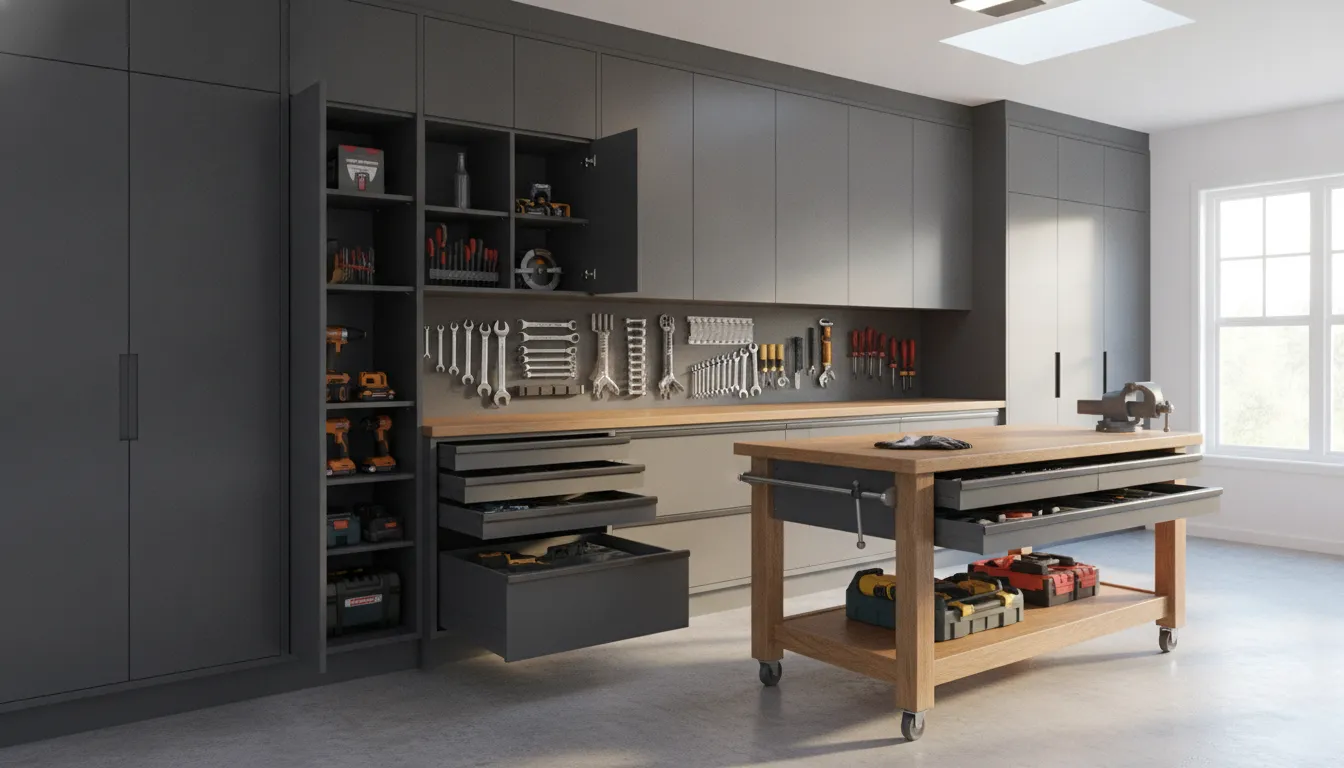
Drawers work well for hand tools, fasteners, measuring devices, and accessories that disappear on open shelves. Adjustable shelves can hold cases, bins, and larger equipment. Tall compartments keep brooms, shovels, and other long items upright. Slatwall panels and hooks keep frequently used tools visible without consuming cabinet space. Overhead storage can hold seasonal items when it has suitable clearance and support.
Consistent placement matters more than elaborate labeling. When every tool has a defined home, cleanup becomes faster and missing equipment is easier to notice. Leave room for future additions instead of filling every drawer on the first day.
Talk with Garage Kings about a storage layout that fits your tools.
Do Garage Cabinets Need Locks For Power Tools?
Locking garage cabinets can add control for power tools, sharp equipment, chemicals, and other items that should not remain openly accessible. A lock does not replace safe storage or supervision. Consider who uses the garage, how often tools are shared, and whether the cabinet can stay convenient for authorized users.
Place sensitive or valuable equipment in a cabinet that authorized users can reach without leaving it exposed on an open rack. Keep chargers, batteries, cases, and accessories together so security does not create a second problem. If children or visitors enter the garage, store hazardous products and sharp tools in appropriately secured locations.
Security planning also includes stability. A tall cabinet should be installed according to its specifications, and heavier items should remain low. Review the doors, locks, hinges, frame, and anchoring together. The finished system should provide practical control without making ordinary tool access unnecessarily difficult.
Think about the order of access as well as the location of each cabinet. Put tools used together on the same project within one zone. Keep batteries and chargers near the tools they power. Store sharp accessories in closed drawers or compartments. This approach reduces trips across the garage and makes cleanup part of the work routine. It also gives you a clear test for a proposed layout: if one common task requires opening several distant cabinets, the system needs another review before installation.
Why Professional Garage Cabinet Installation Matters
Professional cabinet installation can be valuable when storage must fit around vehicles, outlets, windows, uneven walls, concrete floors, or several tool categories. A planned installation coordinates measurements, anchoring, access, and cabinet types. For a simple standalone unit, DIY may be reasonable. A complete garage system requires more detailed planning.
DIY kits can work for a small, straightforward storage need. A full garage system is a larger design problem. It may need to coordinate uneven walls, outlets, windows, vehicle clearance, existing equipment, work surfaces, and wall or overhead accessories.
What A Professional Plan Should Cover
- Measurements: wall length, ceiling height, vehicle clearance, doors, windows, and obstructions.
- Storage mix: cabinets, drawers, work surfaces, wall accessories, racks, and overhead units.
- Load placement: heavy equipment in stable lower locations rather than overloaded upper shelves.
- Access: doors and drawers that open without blocking vehicles, walkways, or adjacent units.
- Finish coordination: cabinet surfaces and colors that work with the floor and overall garage design.
Garage Kings combines storage design with other garage transformation services, including floor coatings and overhead storage. Planning those elements together can help prevent a layout that fills the most convenient wall before the rest of the project is considered. Garage Kings also uses a 3D visualization process during the consultation, helping homeowners evaluate the proposed arrangement before installation.
Professional installation should leave the system aligned, secured, and arranged for the way the garage will be used. Explore Garage Kings’ garage cabinet installation service to see how custom storage can become part of a larger garage plan.
Contact Garage Kings for a free in-home consultation and a garage cabinet plan.
Frequently Asked Questions
What Material Is Best For Garage Cabinets?
Steel is often a practical choice for heavy tools and frequent workshop use because it provides a rigid cabinet structure. Polymer may fit areas where rust resistance and easy cleaning matter. Wood can suit a finished garage where visual warmth is important. Compare construction, load guidance, moisture exposure, and layout before choosing.
Are Steel Cabinets Better Than Polymer Cabinets?
Neither material is best for every garage. Steel commonly fits dense tool collections and repeated use. Polymer can be useful in moisture-prone areas and for general equipment storage. The better option matches the tool weight, environment, access needs, and installation plan.
How Should I Organize A Garage Cabinet For Tools?
Group tools by task and frequency of use. Keep daily-use hand tools in shallow drawers or nearby wall storage, place heavy equipment in stable lower compartments, and reserve upper storage for lighter seasonal items. Include a work surface and leave capacity for tools you may add later.
Should Garage Cabinets Be Installed Professionally?
Professional installation is worth considering when the system must fit around vehicles, doors, windows, outlets, uneven walls, or several storage types. An installer can coordinate measurements, anchoring, access, and the cabinet mix. For a simple standalone unit, DIY may be reasonable. For a complete transformation, planned installation can create a more usable result.
Plan Your Garage Cabinet Layout With Garage Kings
The best garage cabinets for tools are part of a system that makes work easier, protects equipment, and keeps the garage usable. Steel, polymer, and wood each have a place when the material is matched to the environment and storage plan. Start with your tool inventory and measurements, then decide which items need drawers, shelves, closed cabinets, wall storage, or overhead space.
Contact Garage Kings for a free in-home consultation and a storage plan tailored to your garage.