
A garage can be technically organized and still feel difficult to use. The right storage choice depends on what you keep and how often you need it. It also depends on whether you want every item visible or prefer a cleaner space with tools and supplies behind doors.
Request a free in-home consultation.
When comparing garage cabinets vs shelving, cabinets are usually the better fit for homeowners who want enclosed, visually consistent storage and a more finished garage. Wire shelving can be a practical choice for lightweight items that need to stay visible and easy to reach. Many garages benefit from combining both approaches, using closed cabinets for protection and open racks for frequently used gear.
Garage Kings provides professional garage storage solutions, including cabinets and racks, with custom organization and professional installation. A free in-home consultation can help you evaluate the available wall space, storage habits, and priorities before choosing a system. Start by looking beyond the product labels. Focus on the practical differences you will live with every day.
Garage Cabinets Vs Shelving: How Do They Shape Your Storage?
When homeowners compare garage cabinets and shelving, they are deciding how visible, protected, and finished they want the garage to feel. Open wire shelving keeps supplies in view, while enclosed steel cabinets create a calmer appearance. Shelving suits visible, frequently used items; cabinets contain clutter and help organize smaller supplies.
Cabinets reduce visual exposure and give smaller items a defined home. They are useful when you want to separate household supplies from workshop materials or create a cohesive garage transformation.
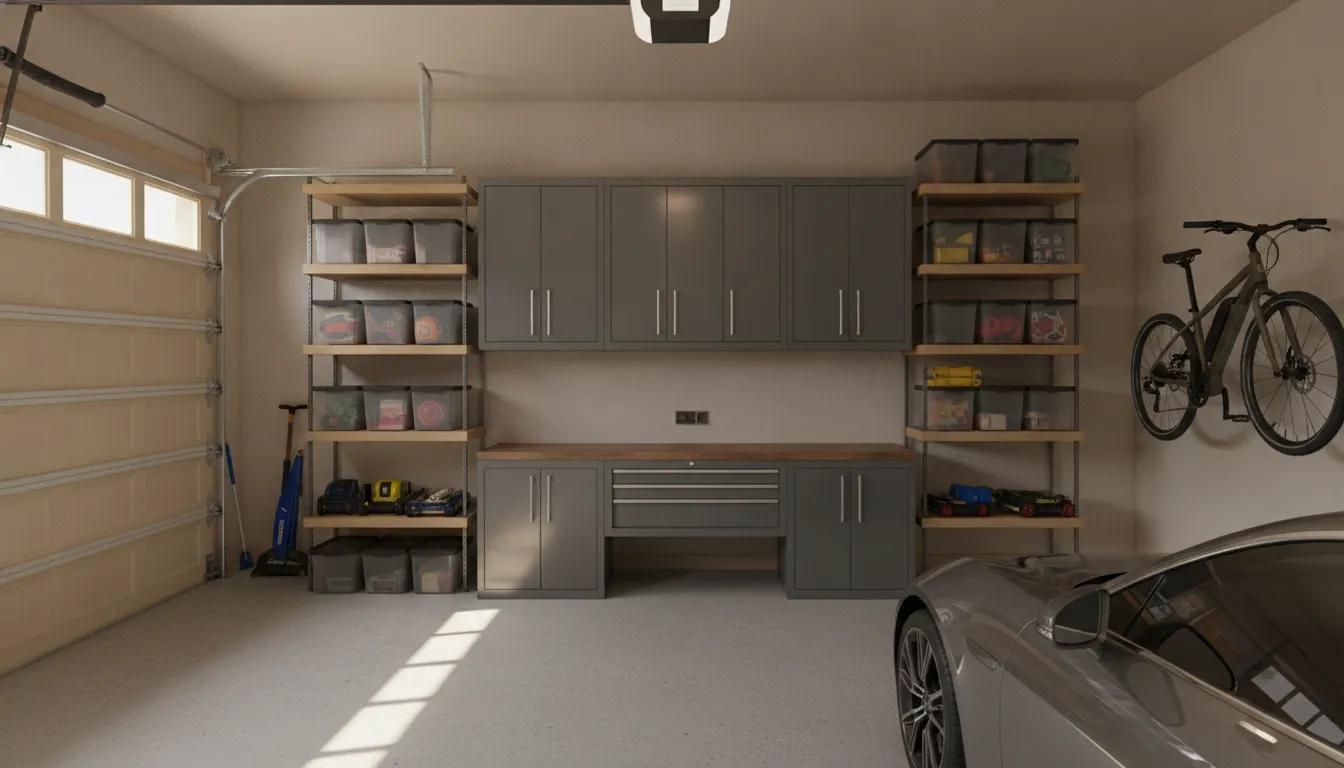
Many homeowners use both formats. Open shelving handles regularly used items, while cabinets contain supplies that create clutter. Reviewing professional garage storage solutions can help clarify which balance fits your routines.
The Hidden Cost Of Wire Shelving In A Garage
Wire shelving can be practical when you want lightweight items visible and within reach. Over time, its appearance, category separation, and ability to adapt affect how useful the garage feels. That is the ownership cost worth considering when weighing garage cabinets vs shelving.
Visibility Can Become Visual Clutter
Open shelves make every container and tool visible, so small lapses in organization are immediately noticeable after a project.
Dust and garage debris can settle on open items, especially infrequently used seasonal equipment. Shelving may suit frequently accessed supplies, but a calmer garage requires more sorting and wiping.
Open Storage Requires More Category Discipline
Wire shelves separate storage by level, but they do not create a clear boundary between categories. Automotive supplies, sports equipment, gardening tools, and household overflow can blend together as available space changes. Bins and labels help, but they add another layer to manage. Without a consistent home for each category, finding one small item can mean moving several others first.
Open shelving works well for visible inventory and regularly used tools. It can also be useful in a mixed system. Ask whether every category benefits from visibility or would be easier to manage behind a door.
Reconfiguration Has A Practical Limit
Wire shelving can be adjusted or expanded as needs change. That flexibility is valuable, but a piecemeal layout can become uneven, and changing one category may force several others to move.
Before choosing open shelving throughout the garage, ask:
- Which items need to stay visible for frequent access?
- Which categories would be easier to keep clean and contained?
- Will future changes require moving several shelves and containers?
- Do you want the storage itself to blend into a finished garage design?
These questions clarify where open access earns its space and where enclosed storage may reduce daily upkeep.
Why Cabinets Work Better In A Garage Environment
A garage has to handle more than storage. It may also serve as a workshop, entry point, hobby space, or place to keep seasonal household items. Enclosed cabinets can make those different uses easier to manage by giving each category a defined place while keeping stored items behind doors.
Protected Storage For Everyday Garage Items
Open shelving makes it easy to see what you own, but every item remains exposed to the surrounding garage environment. Cabinets offer a simple alternative: tools, automotive supplies, cleaning products, and seasonal gear can be stored out of sight and separated from the active work areas. That does not eliminate the need for sensible storage habits, but it can make the space feel more controlled and keep loose items from spreading across multiple shelves.
Doors create a visual boundary around stored belongings, reducing the appearance of clutter while the cabinet keeps supplies organized behind the scenes.
A Consistent Appearance With Planned Zones
A cabinet system lets you plan storage around the way your household uses the garage. One zone might hold hand tools, another could accommodate sports equipment, and a separate area might be reserved for household supplies. The point is not to force every garage into the same layout. It is to create a thoughtful arrangement instead of adding storage one piece at a time wherever space happens to be available.
When frequently used items have a designated cabinet and less-used belongings have their own area, cleanup becomes more straightforward. A professional plan can account for wall space, traffic paths, work surfaces, and access.
Surfaces That Are Easier To Maintain
Garage storage collects dust and can encounter dirt from projects, vehicles, and outdoor equipment. Cabinet surfaces are generally easier to wipe down than a collection of exposed items and open shelves. Keeping supplies behind doors can simplify routine cleaning because there are fewer visible surfaces and fewer loose objects to move before wiping the area.
Garage Kings positions its steel cabinet systems as part of a professional custom organization approach. For homeowners comparing garage cabinets vs shelving, the benefit is protected storage, a consistent appearance, and a layout designed around the garage.
Capacity, Modular Options, And Custom Configuration
Capacity is not just how much a system can hold. It is how efficiently the garage uses its walls, how easily you reach each item, and whether the layout can adapt. Garage cabinets vs shelving is a planning decision, not just a product comparison.
Use Vertical Space Without Losing Access
Cabinet systems turn wall height into organized storage while keeping floor space open for vehicles and projects. Enclosed units group seasonal items, household supplies, tools, or equipment that does not need to stay in view. Interior shelves divide categories so one part of the garage does not become a catch-all.
Open shelving keeps frequently used items visible and quick to grab. That works when access matters more than concealment, but visible storage can become busy without a consistent maintenance plan.
Plan Adjustable Zones Around Real Activities
A modular layout can assign different areas to different routines. One zone might support tools and workshop supplies, while another holds recreation gear or seasonal items. Adjustable interiors accommodate different shapes, and open sections keep larger or frequently handled items within reach. The useful configuration reflects what happens in the garage, not just the inventory stored there.
Before choosing a layout, group belongings by frequency of use, size, and handling needs. Weekly-use items should stay accessible. Awkward or oversized belongings may be better suited to an open rack or floor-level area than a tightly divided cabinet. Zoning makes the system feel more spacious because each category has a logical home.
Combine Closed And Open Storage
There is no requirement to choose one format for every wall. A hybrid arrangement can place enclosed cabinets around less attractive or less frequently used items. Then use open shelving or racks where visibility and quick access are more important. This balances a cohesive appearance with practical access instead of forcing every possession into either a cabinet or an exposed shelf.
Professional planning can coordinate storage with doors, walkways, vehicles, and work areas. Garage Kings offers garage storage system guidance for homeowners weighing these tradeoffs.
Installation Time And What To Expect
A professional garage storage project starts with planning, not simply bringing home shelves. The goal is to create useful zones while keeping access and appearance in mind. Scope and schedule depend on the layout and site conditions, so a consultation is the best way to understand the project.
- Begin with an in-home consultation. A specialist reviews how you use the garage, what you store, and whether cabinets, open racks, or both fit your routines.
- Measure the available space. Wall lengths, corners, doors, vehicles, walkways, and fixed features shape a plan that protects parking and access.
- Plan the storage zones. Group items by purpose and frequency of use, assigning cabinets and racks different roles instead of forcing every item into one format.
- Select the configuration. Professional garage storage solutions can be arranged around how the household works, rather than a one-size-fits-all product layout.
- Complete placement and installation. Approved components are positioned with alignment, clearances, and intended use in mind.
- Review the finished system. Walk through the layout to confirm that doors, pathways, and high-use areas work as expected.
If you’re comparing garage cabinets vs shelving, an in-home consultation turns a preference into a plan based on your space and priorities. You can request a free in-home consultation to discuss the next step.
Which Option Delivers The Best Long-Term Value?
Long-term value depends on how well the system supports your household. Compare usable floor area, protection, visual consistency, adaptability, and maintenance, not just how much it holds on day one.
Cabinets often make the stronger choice for a cohesive transformation because enclosed storage reduces the visual presence of supplies and creates defined zones. Wire shelving may be better when visibility and quick access matter most.
| Decision factor | Garage cabinets | Wire shelving |
|---|---|---|
| Usable floor area | Planned placement can help organize storage vertically and keep the floor available for vehicles, projects, or household movement. | Open layouts can be flexible, but loose items may spread beyond the shelf footprint when the system is not carefully managed. |
| Protection for contents | Closed doors conceal stored items and provide a practical barrier against everyday garage dust and visual clutter. | Open access makes items easy to see, while contents remain exposed to the surrounding garage environment. |
| Visual consistency | Matching cabinet sections create a cohesive appearance that supports a more finished garage design. | The straightforward open format prioritizes access and visibility over a concealed, uniform look. |
| Adaptability | A thoughtfully planned system can assign different zones to tools, seasonal items, sports equipment, and household supplies. | Open shelves are easy to scan and can suit changing storage needs when item visibility is the priority. |
| Ongoing maintenance | Enclosed areas can make the garage look orderly between cleanups, and smooth cabinet surfaces are generally straightforward to wipe down. | Open shelves make inventory checks simple, but maintaining a tidy appearance requires consistent sorting and return habits. |
The best choice depends on what you want to see when the garage door opens. Shelving supports quick access when tools and supplies should remain visible. Cabinets may better match a finished result when you want fewer visual distractions and a stronger sense of order.
A hybrid system can hold less frequently used items behind cabinets while keeping active-use equipment accessible on open shelving. The right mix should follow your routines rather than a one-size-fits-all layout.
For a planned system that reflects your space and priorities, explore professional garage storage solutions. A free in-home consultation can help you evaluate the tradeoffs before committing to a layout.
Plan your garage storage with a free in-home consultation.
Frequently Asked Questions
Are garage cabinets better than shelving for storage?
It depends on what you store and how you use the garage. Cabinets are often the better fit when you want concealed storage, a consistent finished appearance, and planned zones for household or workshop items. Wire shelving works well when quick visibility and open access matter most. Consider how much dust protection, visual order, and floor space you want before choosing.
What is the cost difference between garage cabinets and shelving?
The difference depends on the materials, configuration, installation, and how much of the garage you are outfitting. Compare total ownership rather than the initial purchase alone, including replacement pieces, future reconfiguration, and the value of protected, organized storage. A free in-home consultation can help match the system to your space and priorities without relying on a generic estimate.
Do garage cabinets provide more protection for items than open shelving?
Enclosed cabinets can help keep stored items out of sight and reduce exposure to the everyday dust and visual clutter common in a garage. Open shelving makes items easier to see and reach, but leaves them exposed. For seasonal decor, household supplies, or belongings you do not access often, cabinet doors may offer the more practical arrangement.
Which is easier to install, garage cabinets or shelving?
Open shelving may involve fewer components, while a cabinet system requires careful measuring, layout planning, placement, and appropriate anchoring. Professional installation can simplify those decisions and help create a cohesive configuration around vehicles, doors, and work areas. The right choice depends on the complexity of your layout and how precisely you want the finished system fitted.
Can I combine garage cabinets and shelving for the best storage?
Yes. A combination can provide enclosed storage for clutter-prone or dust-sensitive items while keeping frequently used tools and bins visible on open shelves. Many homeowners benefit from assigning each format a clear role, then planning the arrangement around access, vertical space, and available floor area. A professional storage consultation can help balance both systems.
Get Started With A Garage Storage Plan
The right storage system should fit your household’s routines. A free in-home consultation can help you discuss your storage needs and consider a cleaner, more functional space. Request your free in-home consultation with Garage Kings.