
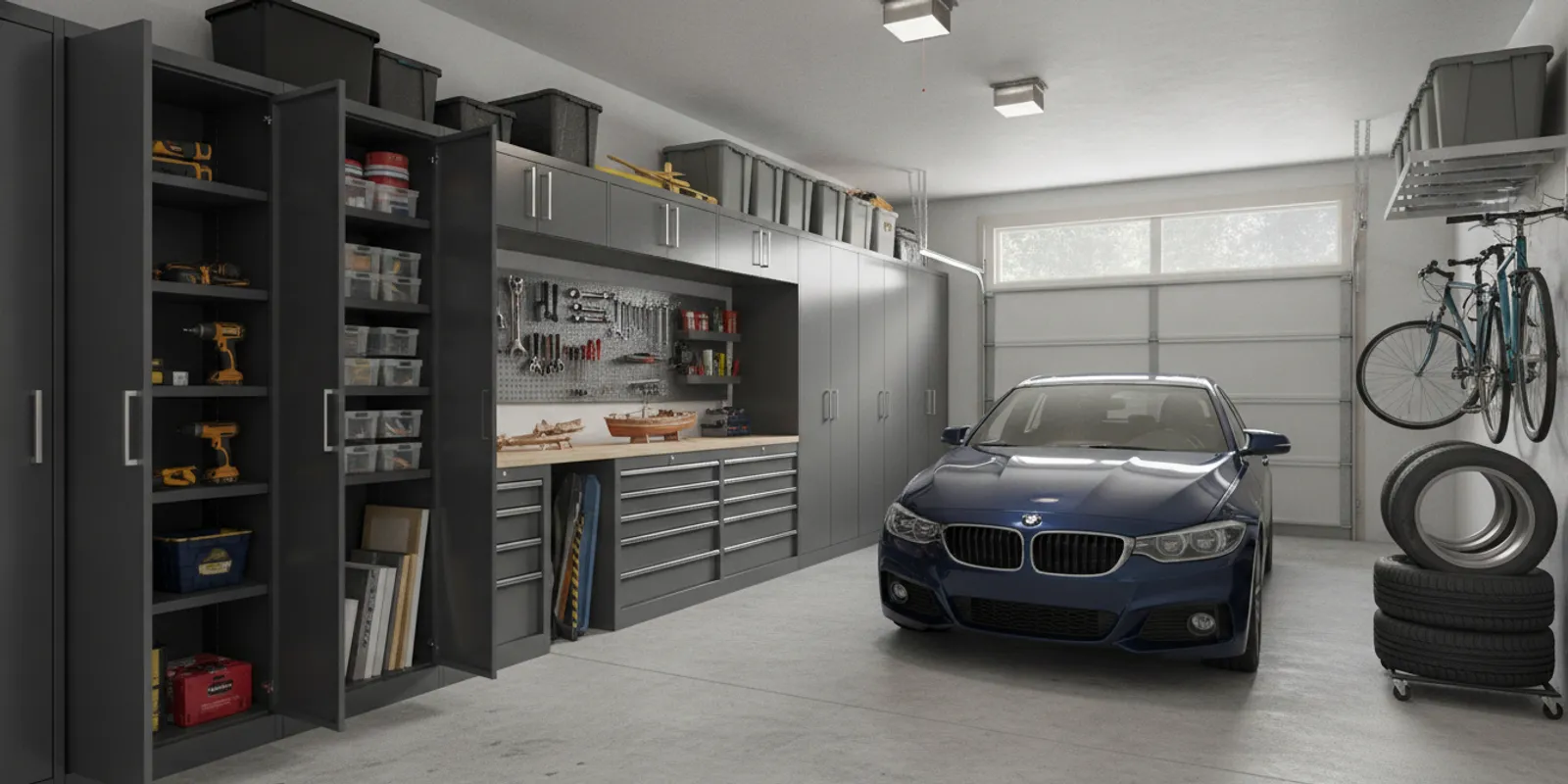
The best metal garage storage cabinets are the ones that fit your actual storage needs, your available wall space, and the way you use the garage. Before you compare finishes or door styles, take stock of what needs a home and how the cabinet system will fit around vehicles, doors, and daily tasks. Explore Garage Kings garage cabinet solutions as you plan the project.
Request a garage storage consultation
What Makes Metal Garage Cabinets A Good Fit?
Metal cabinets can be a practical choice when garage storage needs to handle regular use and a range of household items. Enclosed doors help keep contents out of sight, while a coordinated cabinet run can make a work area feel more orderly. The right setup depends less on a single “best” cabinet and more on whether its size, interior layout, and placement suit the job.
Start by separating the problems you want the cabinets to solve. Maybe tools are scattered across a bench, seasonal supplies are taking over the floor, or frequently used items are hard to reach. A clear problem statement helps you choose cabinets around function instead of buying units that look appealing but do not solve the daily frustration.
- For tools: Plan for secure, easy-to-reach storage near the work surface.
- For household supplies: Group items by task and check that the cabinet layout accommodates their shapes.
- For a shared garage: Leave clear access to the vehicle, entry doors, and equipment used by different household members.
- For a cleaner visual appearance: Consider a continuous arrangement with doors that conceal stored items.
Garage Kings offers more than one type of garage improvement. If storage is part of a larger project, the overview of Garage Kings services can help you see how cabinet planning fits within the broader space.
How Should You Measure And Map The Garage?
Measure the wall and the usable floor area before choosing cabinet sizes. A wall that appears empty may contain a door track, electrical panel, outlet, window, or other feature that affects placement. Record the full wall width and height, then note obstacles and the clearance needed to open doors and drawers.
- Sketch the garage. Mark the vehicle footprint, entry doors, windows, steps, workbench, and fixed equipment.
- Measure the proposed cabinet area. Record wall width and height, and note any trim, pipes, or obstructions.
- Check movement and access. Account for vehicle doors, walkways, and the space needed to carry bulky items in and out.
- Mark utilities and safety equipment. Keep electrical panels, shutoffs, and other items that must remain accessible clear.
- Test the layout at full scale. Use painter’s tape on the floor or wall to represent the proposed footprint, then walk through normal garage tasks.
Do not plan only for the cabinet footprint. A deep cabinet may reduce the room available to open a car door or move a bicycle. Likewise, a tall unit can interfere with overhead equipment or make an outlet difficult to reach. Check the complete installation area, including doors and handles at their open positions.
For more ideas about planning a cohesive space, see the garage makeover planning guide. Keep this cabinet project focused on the wall, access, and storage requirements that matter most to your household.
What Should You Store Before Choosing A Cabinet Layout?
Make a simple inventory before selecting cabinet combinations. You do not need to document every small item. Group belongings into categories and identify the largest, heaviest, most-used, and least-used items in each group. Those details help you decide what belongs in a tall cabinet, a base cabinet, or a wall-mounted unit.
- Daily-use tools: Keep commonly reached items near the work area and at a comfortable height.
- Bulky equipment: Check interior dimensions against the object, including handles and accessories.
- Seasonal items: These can often go in less convenient storage, provided they remain accessible when needed.
- Small parts: Consider whether bins or drawers will keep them contained and easy to identify.
- Household products: Sort items by purpose and consider whether any require separate, secure storage.
Use the inventory to estimate how much enclosed space you need and where it should sit. Avoid filling every available inch on paper. Leaving some room for future items makes the system easier to maintain and reduces the temptation to stack things unsafely. For additional approaches to making limited space work, review these small garage storage ideas, then adapt only the ones that fit your own layout.
Which Metal Cabinet Configuration Fits Your Space?
Cabinet systems can combine tall units, base cabinets, wall cabinets, and work surfaces. Each type solves a different storage problem. Compare the options by what they hold and how they affect movement through the garage, rather than assuming that a larger cabinet run is automatically better.
| Configuration | Useful for | Planning questions | Potential trade-off |
|---|---|---|---|
| Tall cabinet | Long-handled tools, bulky supplies, or items that need enclosed vertical storage | Will the height clear the ceiling, tracks, and other equipment? Can you reach the contents safely? | May take up floor space and can be less convenient for small, frequently used items. |
| Base cabinet | Frequently used supplies and storage beside a work surface | Does its position leave a practical work zone and a clear walkway? | Uses floor area that might otherwise be needed for parking or equipment. |
| Wall cabinet | Smaller or lighter items that benefit from being off the floor | Is the mounting location suitable, and can household members reach it comfortably? | Requires careful placement and may not suit heavy or awkward belongings. |
| Cabinet run with work surface | A defined project or repair area with nearby enclosed storage | Is there enough room to work, stand, and open the doors without obstruction? | Needs more deliberate layout planning than a single storage unit. |
| Mixed configuration | Households with a variety of item sizes and storage routines | Can each unit be assigned a clear purpose without crowding the garage? | Too many different units can make the space feel fragmented or difficult to organize. |
Dimensions and load limits vary by cabinet. Use the product information and installation instructions for the exact units under consideration; do not assume that all metal cabinets have the same capacity. Put heavy items only where the manufacturer says they belong, and avoid loading shelves or drawers beyond their stated limits.
Which Features Matter In Everyday Use?
Once the layout makes sense, compare details that affect daily use. The useful features are those that address a real need rather than adding complexity.
Construction And Finish
Inspect how the cabinet is constructed and what the manufacturer says about its intended environment and care. Consider whether the finish will suit the garage and how it should be cleaned. Ask how the doors, hinges, drawer slides, and handles are designed to work under ordinary use. Where specifications are available, compare them directly instead of relying on a general label such as “heavy duty.”
Interior Organization
Think about the size and shape of your belongings. Adjustable shelving, drawers, or other interior components may be useful when they match what you plan to store, but their availability and configuration depend on the cabinet system. Check shelf spacing and interior measurements against your inventory. A unit with many compartments is not helpful if the objects you own do not fit.
Doors, Drawers, And Security
Consider which openings make sense in the available space. A swinging door needs room in front of the cabinet; a drawer needs enough clearance to extend. If keeping contents secured is important, verify what locking features the specific model includes and what they are intended to secure. Do not assume a cabinet has a lock or a particular security rating unless that is documented by its manufacturer.
Mounting And Installation
Find out how each cabinet is meant to be installed and what wall or floor conditions it requires. Some configurations may need to be anchored or attached according to the manufacturer’s instructions. Confirm whether the proposed location and installation method are suitable for the wall and the unit, and ask who will complete the work if professional installation is part of the project. Garage Kings provides professional garage storage solutions; you can learn more about garage cabinet options before discussing the details of a particular layout.
For general product-safety resources, the U.S. Consumer Product Safety Commission is a government starting point. Follow the cabinet maker’s instructions for placement, loading, installation, and any required anchoring, since those directions apply to the specific product.
How Can You Plan A Cabinet System Around Daily Routines?
Give each cabinet a clear role based on who uses it and what they do in the garage. Place frequently used items where they can be reached without moving other belongings. Group related items together, such as equipment for a particular project, rather than distributing them across several units. If more than one person uses the space, agree on the categories and locations before the cabinets are filled.
Keep a practical work zone open. A cabinet system should support the garage’s other uses, not block them. If you work at a bench, place related supplies close enough to reach while leaving room for the task. If the garage is mainly for parking, preserve vehicle clearance and avoid letting doors, drawers, or stored objects intrude into the path of a car.
Storage can also use the upper part of the room, but it should be planned as part of the overall layout. Compare the proposed cabinets with the guide to overhead garage storage if you are deciding how to use vertical space. Keep the cabinet plan distinct from overhead storage: each should have a defined role, and neither should compromise access or safe movement.
What Should You Ask Before Selecting A System?
Bring your measurements, inventory, and rough layout to any product discussion. Specific questions make it easier to evaluate whether a suggested configuration meets your needs.
- What are the exterior and interior dimensions of each proposed unit?
- What are the stated shelf, drawer, and overall load limits?
- What installation surface and attachment method does the manufacturer specify?
- How much clearance is required for doors and drawers to open?
- Which accessories or interior components are included, and which are optional?
- What care is recommended for the cabinet finish and hardware?
- How will the layout preserve access to vehicles, doors, utilities, and work areas?
- Who handles installation, and what preparation should the homeowner complete?
Ask for the proposed arrangement to be explained in terms of your actual inventory. If a recommendation depends on an assumption—such as the weight of stored items or the composition of a wall—clarify it before moving forward. You can also browse examples of completed Garage Kings projects for ideas about how storage can be incorporated into a garage transformation. A project photo can inspire a layout, but your measurements and use patterns should determine whether it works in your space.
How Do You Compare Cabinet Options Fairly?
Use the same checklist for every system you are considering. First, confirm that the unit fits the measured location. Next, verify that the interior works for the items you intend to store. Then compare the documented construction, capacity, features, installation requirements, and care instructions. This sequence keeps a visually appealing finish from distracting from a poor fit or an unsuitable storage arrangement.
Separate essential requirements from preferences. A clear walkway, suitable dimensions, and documented loading instructions may be essential. A particular color or handle style may be a preference. Writing down the difference makes trade-offs easier to discuss and helps you avoid paying attention to features that do not change how the garage functions.
Finally, review the full plan in context. If the project involves several types of storage, map each one to a specific category of belongings. Garage Kings also shares cabinet-related articles and ideas that can help you continue comparing approaches, but product specifications and installation instructions should guide decisions about a particular system.
Talk with Garage Kings about your garage storage plan
Frequently Asked Questions
Are metal garage cabinets suitable for every garage?
Not automatically. Check the available wall and floor space, the garage’s fixed obstructions, and the items you want to store. Then confirm that the specific cabinet’s dimensions, intended use, and installation requirements suit the location.
Should I choose tall cabinets or several smaller units?
Choose based on what you need to store and how you need to reach it. A tall unit may suit some bulky or long items, while a mix of base and wall cabinets may support a work area. Measure the full arrangement and check access before deciding.
How do I know what weight a cabinet can hold?
Consult the product specifications and installation instructions for the exact cabinet. Capacity can differ between units and between shelves or drawers. Do not estimate a load limit based on appearance or transfer one model’s specifications to another.
Do garage cabinets need to be anchored?
Follow the manufacturer’s installation instructions for the specific cabinet and location. Those instructions should identify the required attachment method and any conditions that affect installation. If you are unsure whether the wall or floor is appropriate, ask a qualified installer before loading the unit.
What should I do before a garage cabinet consultation?
Measure the proposed area, list the main categories of items to store, and note any doors, vehicles, utilities, or equipment that affect the layout. Photos or a simple sketch can also help explain how you use the space. With those details, you can discuss a cabinet arrangement that fits your garage rather than choosing by appearance alone.
A careful plan starts with measurements and routines, then matches cabinet configuration and documented features to the items you need to store. With those decisions made before selection, metal cabinets can become a more useful and orderly part of your garage.